Onimaru Kunitsuna
1 2015-08-06T00:53:57-07:00 Madeleine Philbrook 793490c7e41f4e0efe523b50970c1632a02f214b 5497 1 Onimaru Kunitsuna plain 2015-08-06T00:53:57-07:00 Madeleine Philbrook 793490c7e41f4e0efe523b50970c1632a02f214bThis page is referenced by:
-
1
2015-07-28T03:53:37-07:00
Religion
8
Contains information regarding the religious themes featured in the NDS version of Chrono Trigger
plain
2015-08-07T03:27:47-07:00
Although Slattery never reintroduced the explicit religious terminology found within the original Japanese script (see SNES Religion), he still made an effort to rework elements of Japanese religious culture (as well as instances of Indian, Greek, Norse, and Chinese mythology) depicted in the various weapons and items throughout the game. Many of these articles were rebranded with inauthentic North American equivalents which strived to enforce Nintendo of America’s censorship policies of the time. In fact, many of these examples incorrectly utilized terms from Hinduism in their constructions of various weapons. As such, the following examples down below reflect the strive for greater accuracy in the Nintendo Dual Screen (NDS) script, which ultimately impacted the religious nature of Chrono Trigger, articulating more Buddhist and Hindu references from Japanese culture to North American gaming communities. For more information on name changes, please view this comprehensive list.
Japanese Name: 「ざんまとう」 (Zanmato)
SNES Name: Demon Edge
NDS Name: Zanmato
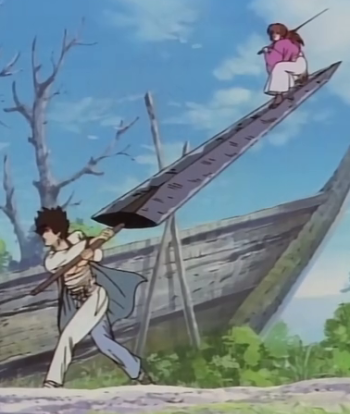
「斬魔刀」 zanmato, is a possible kanji representation of the above sword that literally means "magic-killing sword" or "demon-killing sword". It is very similar to the popularized 「斬馬刀」 zanbatou, or “horse-killing sword,” which has been referenced in Japanese manga and anime like Rurouni Kenshin and Inuyasha. In this instance, the original North American localization pinpoints “demon” and utilizes it to construct “Demon Edge.”Japanese Name: 「てんおうけん」 (Ten’ou Sword)
SNES Name: Star Sword
NDS Name: Empyrean Blade
「天王」 ten'ou, or “heavenly king,” (a Buddhist term) is a possible kanji representation of the above sword. In fact, the planet Uranus is 「天王星」, which may indicate the translation by Ted Woolsey, “Star Sword.” During retranslation however, “Empyrean” was chosen as a more accurate substitute, which refers to “the highest heaven,” and is “supposed by the ancients to contain the pure element of fire.”1Japanese Name: 「やしゃ」 (Yaksha)
SNES Name: VedicBlade
NDS Name: Yaksha Blade
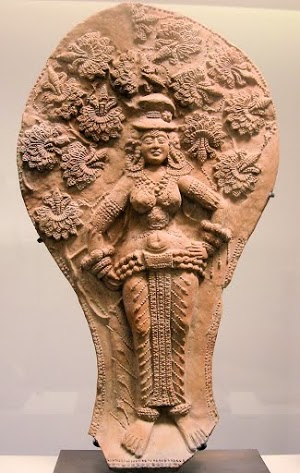
「夜叉」yaksha, (also spelled yaksa), are Buddhist deities. These yaksha were first worshipped in India, and in Hindu mythology, they are considered to be: “a class of generally benevolent but sometimes mischievous, capricious, sexually rapacious, or even murderous nature spirits who are the custodians of treasures that are hidden in the earth and in the roots of trees. They are powerful magicians and shape-shifters.”2
In the Vedic period, the worshipping of yaksha was popular and coexisted with various other religious practices featured in India at that time — this is probably why the original English rendition of the weapon resulted in the combined usage of “Vedic” and “Blade.”Japanese Name: 「おにまる」 (Onimaru)
SNES Name: Kali Blade
NDS Name: Onimaru
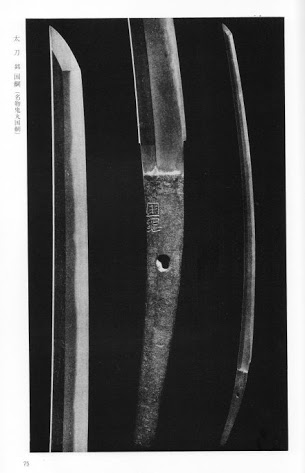
「鬼丸」 onimaru, is made up of 「鬼」 oni, an “ogre” or a “demon,” and 「丸」 maru, “circle.” These oni are “a type of demonic creature often of giant size, great strength, and fearful appearance.”3 They were most likely introduced to Japan via Buddhism, and are “characteristically thought of as pink, red, or blue-grey in colour, with horns, three toes, three fingers, and on occasion with three eyes.”3 Another interesting note, is that onimaru is the name of one of the famous 「天下五剣」 tenka goken, “Five Swords under Heaven.” From the Muromachi era (1392-1573), these katanas are honored and treated as national treasures of Japan.4 Lastly, there is no apparent connection to the original North American localization’s use of “Kali,” except that it is the name of the Hindu goddess of death.4Japanese Name: 「すざく」 (Suzaku)
SNES Name: Shiva Edge
NDS Name: Suzaku
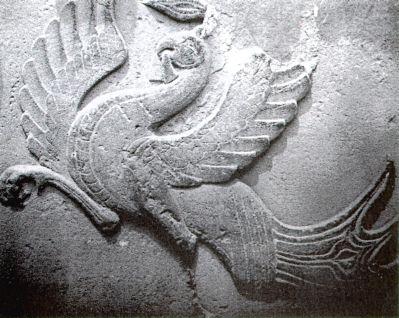
One of the four mythological gods of the Chinese constellations, 「朱雀」 suzaku, is revered as a firebird, commanding fire and the southern sky.5 Once more, the original English script takes inspiration from Hinduism, with “Shiva” representing a major Hindu deity.6
Works Cited:
[1] "empyrean." Dictionary.com Unabridged. Random House, Inc. 28 Jul. 2015.
[2] "yaksha". Encyclopædia Britannica. Encyclopædia Britannica Online. Encyclopædia Britannica Inc., 2015. Web. 28 Jul. 2015.
[3] "Tenka Goken (Five Famous Japanese Swords)." Samurai Japan. Inoue Corporation Ltd., n.d. Web. 29 July 2015.
[4] "Kali". Encyclopædia Britannica. Encyclopædia Britannica Online. Encyclopædia Britannica Inc., 2015. Web. 28 Jul. 2015
[5] "The Chinese Sky." International Dunhuang Project. International Dunhuang Project, n.d. Web. 29 July 2015.
[6] "Shiva". Encyclopædia Britannica. Encyclopædia Britannica Online. Encyclopædia Britannica Inc., 2015. Web. 28 Jul. 2015.