Scalar's 'additional metadata' features have been disabled on this install. Learn more.
Modern Architectures of North AmericaMain MenuHelp! Help! Help!SuburbiaArchitecture Relating to the Natural EnvironmentPatients, Prisoners, PoliticsIdentity: What Lies Beneath Style and FormChange and AdaptationErica Morawski - The Hotel Nacional de Cuba: Making Meanings and Negotiating NationalismsAmanda - Organic Architecture/F.L. WrightSteph - Moorish Revival ArchitectureBrittney - Sustainable Urban DesignsThe Shift: Art Deco & Modernismby Bayleigh BoganTransition to Streamline ModerneSydney - The Coppelia Ice Cream Shop in Havana, Cuba: A Cultural Moment ManifestedKatie - LevittownGenevieve - The Multifaceted Development of Creole ArchitectureThe Former Church of the Holy Communion: A Specific Example of Change and Adaptation of a Single Building Over TimeRe-Purposing a Religious BuildingZarah Ferrari: Tule Lake Segregation Center: Rising Above an Unjust SystemZarah FerrariLaura - The Suburban Kitchen in Levittown, PABy Laura Krok-HortonMarianna Mapes, Disease and the Body Politic: The National Leprosarium at Carville, LouisianaLiz - Eichler, Neutra, and the mid-century Californian SuburbV. Nash- Berkeley City Women's Club (1929), Berkeley, CA, Julia MorganJulia Morgan was a West Coast architect.Metropolitan Museum of Art: A Transition to ModernismBrendan - Academy of Music
Simplicity
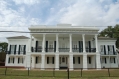
12016-03-08T08:40:53-08:00Marianna Mapes6544b040bd84b408df1fddd4a53375d6aaa4e41e81804plain2016-03-26T17:04:45-07:00Marianna Mapes6544b040bd84b408df1fddd4a53375d6aaa4e41eThough the leprosarium was not an asylum, comparisons to asylum architecture yield rich insights into Carville's design, which crystallizes the “architectural paradox” of asylums: “On the one hand, it was possible to assert that asylums should be unassuming and utilitarian, expressing the economic constraints of the state. On the other hand, they might better offer magnificence, thereby enhancing the hospital’s status in society and enticing the public to respect them as civic enterprises” (Yanni 19-20). The notion of “civic enterprise” does not resonate very strongly here because the leprosarium quite deliberately set itself apart from civic engagement; its role, unlike that of, e.g., tuberculosis sanitariums, was not to rehabilitate patients for their eventual return to society, but to isolate them indefinitely. Therefore, Carville was not the sort of high-profile site that required a grand architectural presence to bolster its clinical legitimacy or civic contributions.