Thanks for your patience during our recent outage at scalar.usc.edu. While Scalar content is loading normally now, saving is still slow, and Scalar's 'additional metadata' features have been disabled, which may interfere with features like timelines and maps that depend on metadata. This also means that saving a page or media item will remove its additional metadata. If this occurs, you can use the 'All versions' link at the bottom of the page to restore the earlier version. We are continuing to troubleshoot, and will provide further updates as needed. Note that this only affects Scalar projects at scalar.usc.edu, and not those hosted elsewhere.
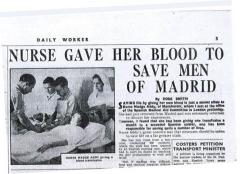
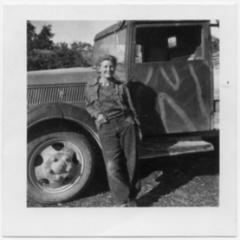
1media/artists of Madrid.jpgmedia/artists of Madrid.jpg2018-12-15T20:10:12-08:00Andrea Davise50475e163fb87bc8bd10c6c0244468fd91e8da53163433Abby Pucikplain8318142019-05-12T09:37:30-07:00Andrea Davise50475e163fb87bc8bd10c6c0244468fd91e8da5Britain had agreed to be non-interventionist when it came to the Spanish Civil War. Despite this many of it's citizens still aided the fight against the Nationalist forces. Many women from all over Britain felt the draw to volunteer and offer aid during the Spanish Civil War especially to help the fight against the conservative ideas that Fascists had on where women belonged in the hierarchy. According to archives MI5 recorded around 4,000 names of British and Irish people that went to join the war. [1] Some like Felicia Browne were combatants in militias. Browne went to Spain with a friend initially to find artistic spots to sketch and paint. She even went to the International Peoples Olympiad that was held in protest of the Olympics in Berlin. Her political ideals grounded in the British Communist Party pushed her to stay and fight when war broke out. Evelyn Hutchins was a British woman that contributed by driving trucks and ambulances. In a personal interview with her she describes how many thought she was too small to be doing such an important job but she continued to fight for the cause by driving trucks despite the comments on her size and gender. Her male family members had no problem getting to Spain but Evelyn had to get her own money and convince people to let her go. She had wanted to go before even the men did. Most women served as nurses such as Madge Addy. She grew up in Chorlton and became a hairdresser. Later on she would become a nurse that would see horrible injuries during the Spanish Civil War and even an agent during World War II.Many of these women fought in their occupations to the best of their abilities to attack fascism when their own country would not even help them. Throughout this project I will explore the narratives of the women who did more than many who stayed in England to fight against Fascism. In their actions they were also attacking the Fascist idea of a subordinate woman. They were independent and strong enough to deal with the battles that would surround them. These women risked their own lives at a chance to make a difference in Spain.
This page has paths:
12018-10-16T10:34:38-07:00Andrea Davise50475e163fb87bc8bd10c6c0244468fd91e8da5Thematic ExhibitsAndrea Davis24Student Final Projectsvisual_path2021-01-13T16:32:30-08:00Andrea Davise50475e163fb87bc8bd10c6c0244468fd91e8da5
12019-04-07T17:48:12-07:00Evelyn Hutchins leaning against her truck.2This is a photo of Hutchins in front of her truck. In her interview she describes how many took pictures of her like this because she was so small compared to what she drove.media/Evelyn Hutchins 1.jpgplain2019-05-06T18:08:25-07:00
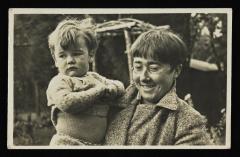
12019-04-07T19:10:34-07:00Felicia Browne holding a child2Browne holding a child in 1936.media/felicia anad child.jpgplain2019-04-07T19:13:30-07:00
12019-04-07T19:54:00-07:00Madge Addy Featured in the Daily Worker2This is a clipping from the Daily Worker about her giving a blood transfusion to help a patient in Spain. It says that she has also been giving her own blood at least once a month to help the injured.media/newspaper of madge addy.jpgplain2019-04-07T19:59:55-07:00