Iran Axis of the Resistance
1 media/IMG_0364_thumb.png 2024-12-06T10:36:57-08:00 Mathew Montiel 1bd08b38abd0416fde72ca7549fad0255db93a73 45871 2 Iran’s Axis of Resistance plain 2024-12-06T10:37:19-08:00 Mathew Montiel 1bd08b38abd0416fde72ca7549fad0255db93a73This page is referenced by:
-
1
media/ali khamenei.jpg
2024-09-30T08:52:20-07:00
Ali Khamenei
21
image_header
2024-12-06T11:41:34-08:00
In 1963 protests against the U.S. installed autocratic government led by Shah Mohammad Reza Pahlavi were in full swing. A young Ali Khamenei was an avid participant and was often imprisoned for his role in the protest. However, Khamenei had a stake in this revolution a bit unique to those protesting next to him. Before the 1953 coup, Khamenei had begun his advanced Islamic studies under Shi’i scholars like Ruhollah Khomeini. Following the coup and subsequent exile of Ruhollah, Khamenei stayed in close contact with the religious scholar. Following the 1979 revolution and the ousting of the Shah, Khamenei was appointed to the Revolutionary Council and then became the deputy minister of defense. Khamenei was a strong loyalist to Khomeini, constantly voicing his support for the Ayatollah and showing his full support for the Islamic Republican Party. In 1981, the President of Iran, Mohammad ALi Raja’i was assassinated, Khamenei began his path to the presidency and in 1981 he was elected president of Iran and reelected in 1985. After two, mostly ceremonial, presidential terms, and due to Khomeini’s declining health, Ali Khamenei succeeded Ruhollah Khomeini as Supreme Leader of Iran.
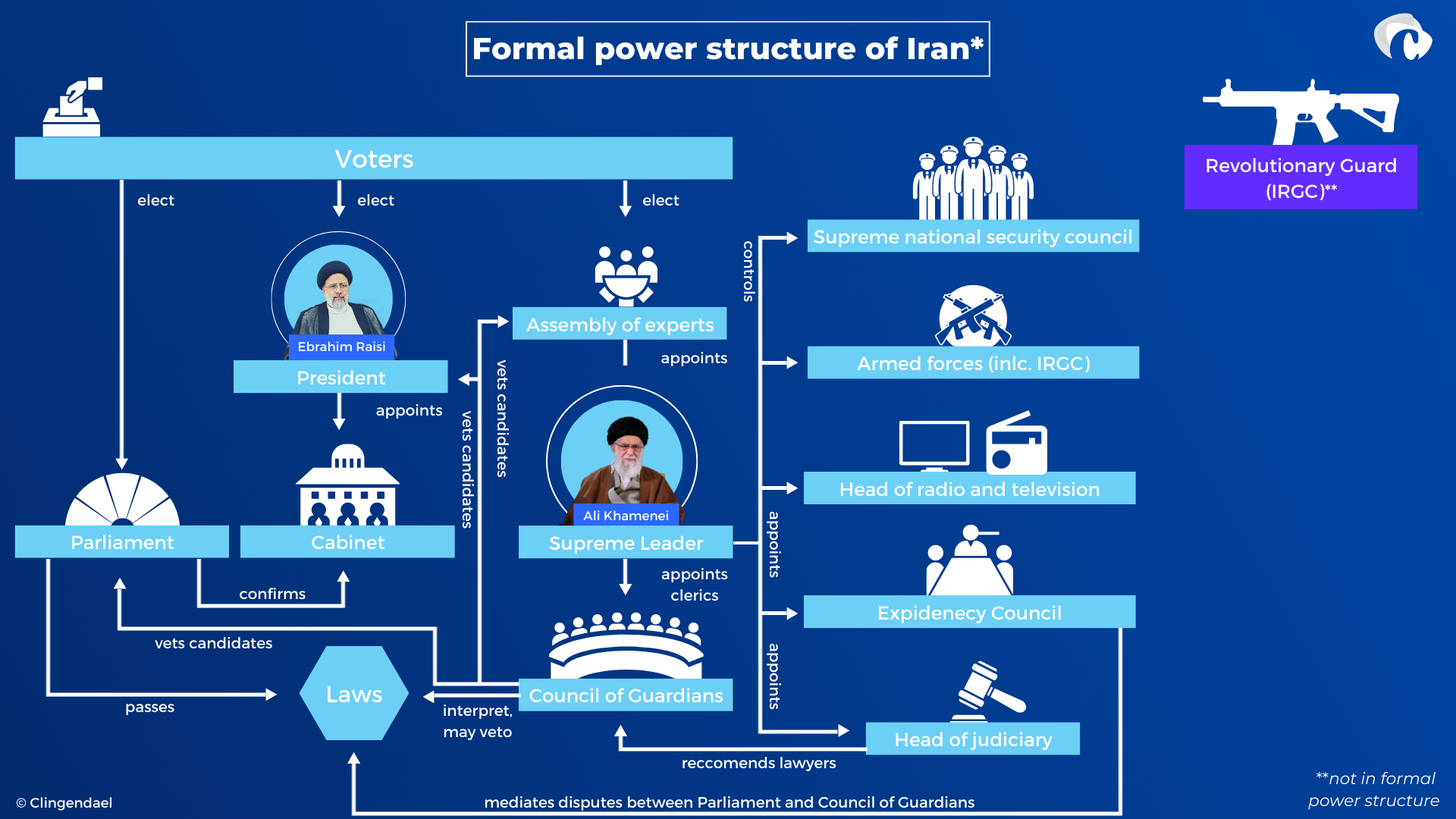
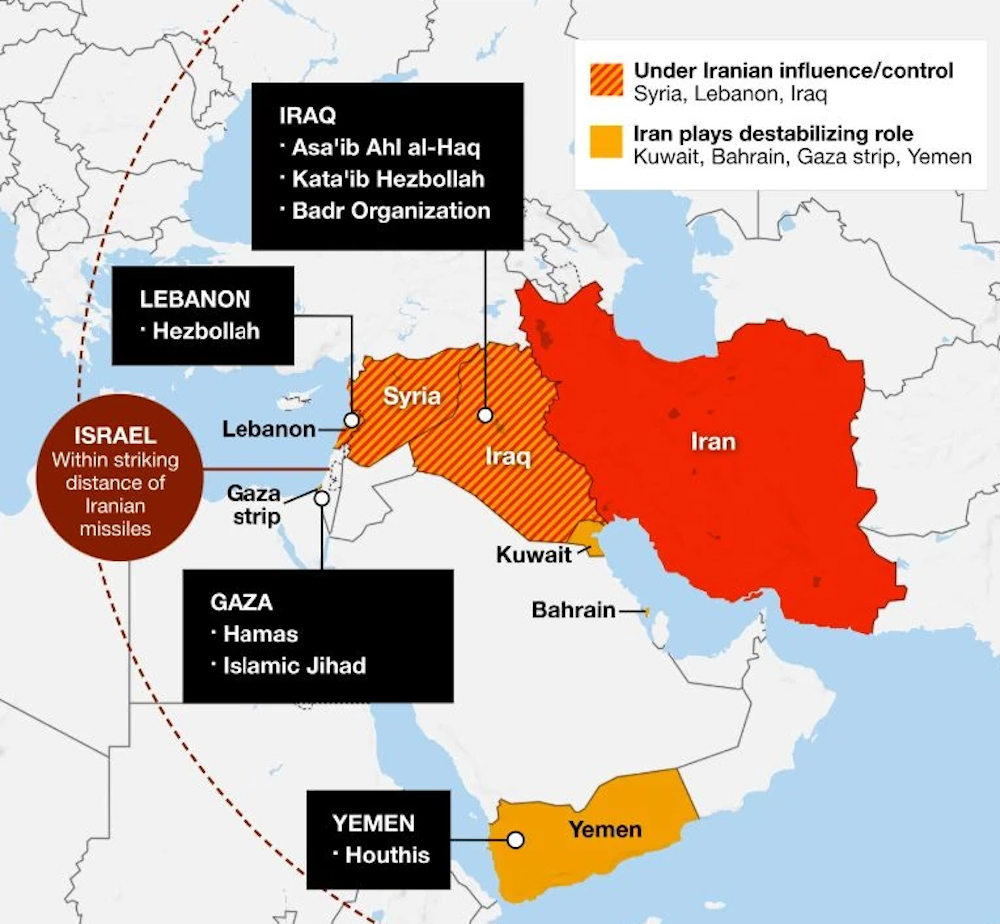
Ali Khamenei is currently the Supreme Leader of Iran. With the highest authority in Iraq, Khamenei has power over all branches of the Iranian government, including the military, judicial branch, and media. The supreme leader also has policy, national security, and foreign affairs authority. Kamenei was trained as a Cleric in Shi’a Islamic studies and studied under Ayatollah Khomeini. During the 1979 Iranian Revolution, Khamenei played a crucial role in shaping the government, with Khomeini following the revolution. Before becoming supreme leader, Khamenei served as president of Iran under Khomeini. The President of Iran is elected and has minimal and limited authority, with almost every action requiring the supreme leader’s approval. Following the death of Khomeini in 1989, Khamenei was chosen as the next supreme leader. Since he took the role of Supreme Leader, Khamenei has proven himself through his consolidation of power through the IRGC, judiciary, and control over the Guardian Council and Assembly of Experts. Khamenei holds a strong anti-US and anti-Israel stance, leading to his support of various terrorist organizations around the Middle East. Groups such as Hezbollah, the Houthis, and small Iraqi groups have all become proxies for Iran, carrying out attacks on US and Israeli interests. Khamenei is also a strong advocate for an Iranian nuclear program,m which has led to high international tensions and several sanctions. Under Kamenei’s rule, Iran faces substantial economic challenges as well as suppression of the media, activists, and certain ethnic groups.Regarding the Women, Life, Freedom movement, it is safe to say Khamenei will not be participating. An established traditionalist, Khamenei has made concrete distinctions between the rights given to men and women. Unlike his predecessor, he doesn’t believe in sexual equality and believes men and women have distinct roles in society. In May 2013, Khamenei made a statement that generally stated that women could be educated and culturally and politically adept, but the state should not be proud of or pursue a large number of women in political, business, and labor-intensive roles. Khamenei’s outright belief in sexual inequality and the distinction between rights given to men and women are most prevalent in his ruling on clothing. In May of 2013, again, Khamenei made a statement on modest clothing. He states that modest clothing like the hijab is what prevents corruption. Khamenei states that corruption is a disaster for both men and women and can be prevented by modest clothing and moderating the interactions between men and women. However, Khamenei goes on to state, “This moral corruption humiliates women, while they are not aware of it.” Overall, Khamenei’s doctrine on women tends to take on traditional Shia values and assumes women are fragile vulnerable people in need of strong men to rely on.
The reading situated Iran’s “quasi-revolutionary state” within a bubble of unresolved political issues whose origins can be traced back to the 1979 revolution(Rivetti and Saedi). Khamenei, being the supreme leader of Iran, embodies the system that WLF opposes. This caused Khamenei’s regime to be put under great strain from the pressure of the WLF movement and the international community. Additionally, Khamenei's reaction to the uprisings, which included public demonstrations, military and police brutality, and internal control mechanisms, wasn't productive either and actually led to a widespread rejection of the Islamic Republic Authority as a whole.
-Mathew Montiel