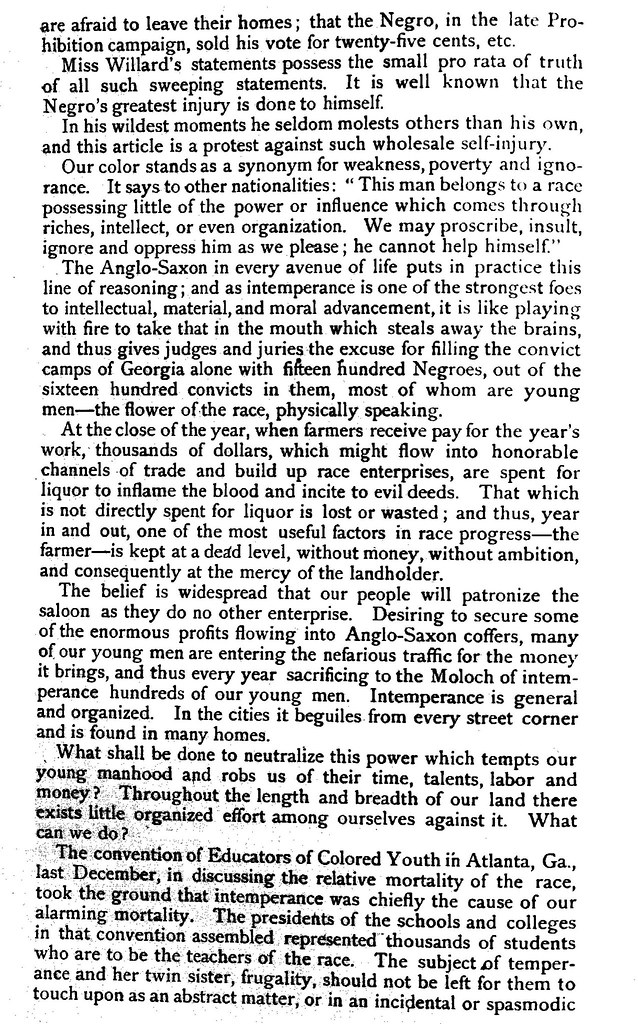
12019-02-15T16:24:23-08:00The Center for Women's History and Leadership396bd2bebf501b08ca215cf721fbba097eb2e1a2304252plain2019-02-15T16:31:34-08:00The Center for Women's History and Leadership396bd2bebf501b08ca215cf721fbba097eb2e1a2Here Wells refers to the system of sharecropping, in which landowners allowed poor farmers to cultivate their property in exchange for a portion of the crops as rent. After the Civil War, this system became widespread in the South. High interest rates and exploitative landlords often ensured that sharecroppers became indebted and, sometimes, unable to leave the land. Wells argues that money spent on liquor made this problem worse, especially for black farmers.
Contents of this annotation:
12019-01-09T15:46:20-08:00The Center for Women's History and Leadership396bd2bebf501b08ca215cf721fbba097eb2e1a2Symposium -- Temperance 22AME Church Reviewplain2019-02-14T19:12:20-08:00The Center for Women's History and Leadership396bd2bebf501b08ca215cf721fbba097eb2e1a2