Thanks for your patience during our recent outage at scalar.usc.edu. While Scalar content is loading normally now, saving is still slow, and Scalar's 'additional metadata' features have been disabled, which may interfere with features like timelines and maps that depend on metadata. This also means that saving a page or media item will remove its additional metadata. If this occurs, you can use the 'All versions' link at the bottom of the page to restore the earlier version. We are continuing to troubleshoot, and will provide further updates as needed. Note that this only affects Scalar projects at scalar.usc.edu, and not those hosted elsewhere.
1media/2017.004.001.jpg2018-07-10T05:49:40-07:00Audrey Maier0f8f4f35e42fcdb6d08eabfaff98566fef8bbb7f308635plain2018-08-06T02:23:56-07:00Audrey Maier0f8f4f35e42fcdb6d08eabfaff98566fef8bbb7fAfter thirty years of segregation at the Bryn Mawr School, three women worked to integrate or combine the Bryn Mawr and Mission Schools. The first woman was Rafaela Rey. She was a PTA parent and a member of many community organizations. Rey had attended Bryn Mawr School and did not want her daughter to have an unequal education like she did. The second woman was Fernanda Cruz, a teacher at Bryn Mawr School. The third woman was Ruth Davis who was persuaded by Rey to join the school board and change the segregation policy. Together these women worked to reverse segregation. In 1942 the Bryn Mawr School was closed.
5. How does our current Bryn Mawr School community benefit from the brave civic engagement of these three women?
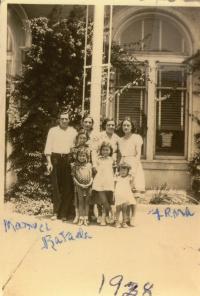
12018-07-10T04:47:41-07:00The Rey Family3A family portrait of the Landeros Family, including Manuel Rey and his wife Rafaela Landeros Rey, their daughters and Rafaela's sister Irma. Rafaela Landeros Rey was a community activist who was integral to desegregating Bryn Mawr School.media/2017.001.007.jpgplain2018-08-08T21:26:54-07:00