Scalar's 'additional metadata' features have been disabled on this install. Learn more.
Her Story
Main Menu
Her Story
Introduction
Histories
War and Women's Sexuality
Women in Kenya and the Democratic Republic of Congo
Women in Indonesia and around the world
Bibliography
Agnes waruguru waithira
a572b4a2b781d81b1ecaafb10db9515e3f726b8e
Gikuyu and Mumbi
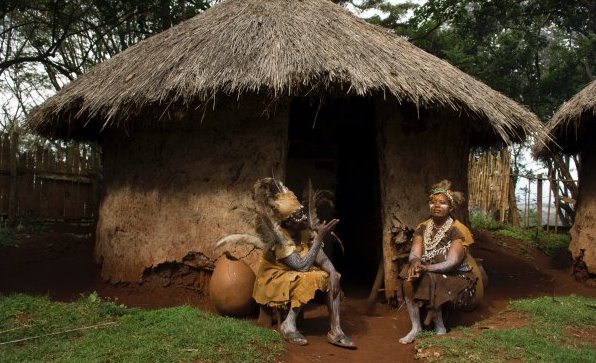
1 2017-10-29T16:40:08-07:00 Agnes waruguru waithira a572b4a2b781d81b1ecaafb10db9515e3f726b8e 25267 3 Fictional representation of Gikuyu and Mumbi plain 2017-11-20T14:39:32-08:00 Agnes waruguru waithira a572b4a2b781d81b1ecaafb10db9515e3f726b8eThis page is referenced by:
-
1
2017-10-29T16:43:35-07:00
Histories
14
plain
2017-12-18T08:38:51-08:00
The Gikuyu people of Kenya believe that a man, Gikuyu was the founder of the people. He had a wife named Mumbi who gave birth to nine daughters. The girls were able to start their own families, retaining a domineering role in the society. The Gikuyu lived under a matriarchy to honor Mumbi who populated the earth and according to legend, women became domineering and ruthless fighters. They were physically strong and often oppressed the men’s sexuality by taunting them and forcing them into polyandry. Because of the sexual competition and jealousy, many men were put to death and shamed for committing adultery and other minor offences. Due to the women’s physical strength, men planned a revolt at a time when most of the women in power were pregnant. The men used seduction and sex to incapacitate the women and cheat them out of power. Sexuality has always been problematized for women; sex and women are portrayed as uncouth and disruptive. Moreover, the “injustices” carried out by sexually liberated women only humiliates and subject’s men to extensive and cruel forms of punishments. Often at times, there is a societal belief and danger that is accompanied by women in socio-political organizations. They are believed to be destructive to men and society therefore it’s important that their power is regulated.
A few years before the Indonesian revolution in 1965, the Gerwani (Gerakan Wanita Indonesians), one of the largest women’s organizations pushing for gender equality, was formed. During this period, Soeharto and his army published media that depicted Gerwani as a “ group of corrupt and violent women full of lust and rage. They are shown gouging out the eyes of army generals with razors and this violent sequence suggest that they proceed to castrate men , after which they celebrate by dancing around the generals’ dead bodies and engage in an orgy.”¹Again, women’s sexuality is treated as an exposure to betrayal to themselves and society, as their passions lead to injustices and other misuse of power. It is important that these stories are shared in order to avoid feeding into the amnesia that society has constructed around listening to the narratives of women. Ignoring the voices of women depersonalizes and penalizes them for the violence they face during times of power shift and war. Listening to women’s stories creates an environment of conversations where people can interrogate power and social disorder brought by the silencing of women. -
1
2017-10-29T16:42:30-07:00
Histories
1
plain
2017-10-29T16:42:31-07:00
The kikuyu people of Kenya believe that a man, Gikuyu was the founder of the people. He had a wife named Mumbi who gave birth to nine daughters who had families, retaining a domineering role in the society. The Gikuyu lived under a matriarchy to honor Mumbi who populated the earth and according to legend, women became domineering and ruthless fighters, they were physically strong and often oppressed the men’s sexuality by taunting them and forcing them into polyandry. Because of the sexual competition and jealousy, many men were put to death and shamed for committing adultery and other minor offences. Due to the women’s physical strength, men planned a revolt at a time when most of the women in power were pregnant. The men used seduction and sex to incapacitate the women and cheat them out of power. Sexuality has always been polemized for women; sex and women are portrayed as uncouth and disruptive. Moreover, the “injustices” carried out by sexually liberated women only humiliates and subject’s men to extensive and cruel forms of punishments. Often at times, there is a societal belief and danger that is accompanied by women in socio-political organizations. They are believed to be destructive to men and society therefore it’s important that their power is regulated.
A few years before the Indonesian revolution in 1965, the Gerakan Wanita Indonesia (Indonesian Women’s movement/ Gerwani), one of the largest women’s organization pushing for gender equality was formed. During this period, Soeharto and his army published media that depicted Gerwani as a “ group of corrupt and violent women full of lust and rage. They are shown gouging out the eyes of army generals with razors and this violent sequence suggest that they proceed to castrate men , after which they celebrate by dancing around the generals’ dead bodies and engage in an orgy.” Again, women’s sexuality is treated as an exposure to betrayal to themselves and society as their passions lead to injustices and other miss use of power. It is important that these stories are shared in order to avoid feeding into the amnesia that society has constructed around listening to the narratives of women. Ignoring the voices of women depersonalizes and penalizes them for the violence they face during times of power shift and war. Listening to women’s stories creates an environment of conversations where people can interrogate power and social disorder brought by the silencing of women.