Bhutan's Forgotten People Part 2 Clip
1 2020-06-20T13:39:52-07:00 Danielle Wollerman f629cbb78acffc24b05d6b8b0b578d081573ac30 37533 4 plain 2020-07-27T06:51:13-07:00 Danielle Wollerman f629cbb78acffc24b05d6b8b0b578d081573ac30Contents of this annotation:
- 1 2020-06-20T13:38:10-07:00 Danielle Wollerman f629cbb78acffc24b05d6b8b0b578d081573ac30 Bhutan's Forgotten People Part 2 2 “Bhutan's Forgotten People (Part 2) | 101 East.” Youtube.com, Al Jazeera English, 2 June 2014, www.youtube.com/watch?v=OZuHdsZEVF4. plain 2020-07-27T10:41:52-07:00 Hilary Bussell 2ad9df3f7f156a31101e0b2bfe104964b8682b6b
This page is referenced by:
-
1
media/Bhutan Map Use this.jpg
media/Bhutan Map Use this.jpg
2020-06-20T10:50:42-07:00
Bhutan
50
This contains the overall historical context of refugees from Bhutan.
image_header
2020-07-27T09:44:25-07:00
History of Bhutan
Bhutan is often described as a picturesque place where the people are among the happiest in the world. This glosses over the mistreatment of the Nepalese Bhutanese citizens by their government.
In the 1970s and 1980s the Bhutanese government began to enact policies with the goal of ridding Bhutan of the ethnic Nepalese. The ethnic Nepalese, Lhotshampas, were seen as threat to the current monarchy. The Human Rights Watch report "Trapped by Inequality: Bhutanese Refugee Women in Nepal" shares the set of policies that led to the expulsion of the Lhotshampas.The Bhutanese government, a hereditary monarchy dominated by the Ngalongs, perceived the growing ethnic Nepalese population and their formation of a political party as a threat to Bhutan’s cultural and political order.2 The Citizenship Acts of 1977 and 1985 included several provisions permitting the revocation of citizenship. The government began enforcing the 1985 Act in a discriminatory manner through a 1988 census, resulting in the mass denationalization of thousands of Lhotshampas in violation of international human rights law.3 The census was implemented only in southern Bhutan, and reports suggest that local government officials made arbitrary census classifications designed to push the Nepali-speaking community out of Bhutan. The government of Bhutan also introduced a “one nation, one people” policy in 1989 that forced the practice of Drukpa culture nation-wide through a compulsory dress code and the termination of Nepali language instruction in schools.4
Mistreatment escalated after the implementation of these policies and eventually people had to choose to flee or risk being evicted, jailed, tortured, killed, or raped. The government even forced people to sign documents stating that they were leaving of their own free will. About a third of Bhutan's population fled the country. The same Human Rights Watch report published the testimony of a woman forced to sign one of these documents.The head of the village called me to his house for the census. I was sick and unable to go. He came with a policeman and arrested me. I spent seven days in jail. They made me carry stones, plough, and cook lots of food. On the sixth day my daughter came to visit me. The policeman said I had to give him my daughter. I was sleeping with my daughter and the policeman came with a gun at midnight. My daughter and I screamed and the policeman ran away. Then my neighbors came and stayed with me. After seven days, the policeman took me to the dzongdha [district official]. They gave me documents to sign, I didn’t know what it said because it was in the Dzongkha script. The officer gave me Rs. 6000 [U.S.$231] and told me I had to leave. He said, “all your neighbors have gone to Jhapa [Nepal], you also go.”9
Many Lhotshampas want to return to their homeland but the Bhutanese government creates a system to keep them out. They organize the refugees into 4 categories. You can be a citizen, voluntary migrant, non-nationals, or criminal. Only 2.5% of people were granted citizenship. The rest were dispersed between the other 3 categories and told they could not return.
Nepal and India—both areas where a majority of Bhutanese refugees fled to—did not welcome them with open arms. They were hostile and adamantly opposed to letting them work or settle in their countries. Instead, they set up refugee camps. These camps have been home to the Bhutanese refugees for decades. Many people have resettled in secondary countries like the United States and Australia.
The largest population of Bhutanese refugees in the United States are in Columbus Ohio. There are about 20,000 Bhutanese refugees living in the area.
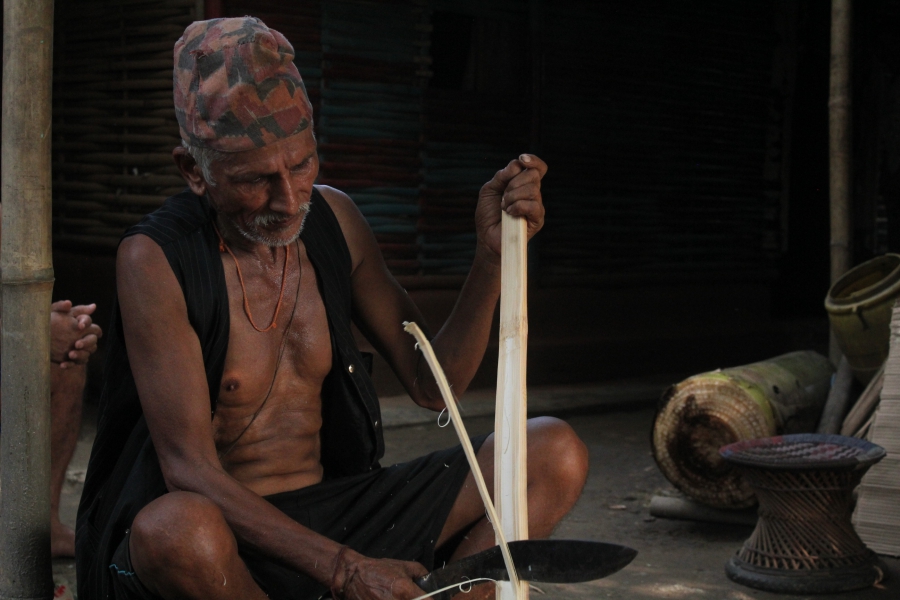
Resettlement is difficult and comes with many challenges. Language, work, and mental health are some of the most prominent issues. In part 2 of the Al Jazeera documentary "Bhutan's Forgotten People", they talk to refugees resettled in the US about mental health.
In another video, they interview resettled Bhutanese refugees about the difficulties they experience with the English language and working in the US.
According to the United Nations High Commissioner for Refugees (UNHCR), there were about 108,000 Bhutanese refugees in Nepalese camps in 2007. In 2015—the most recent numbers—there are under 18,000 Bhutanese refugees remaining. Some of those who remain hold onto the hope that they can eventually return to Bhutan. This is unlikely to happen, but many wish to remain as close to their homeland as possible.