Thanks for your patience during our recent outage at scalar.usc.edu. While Scalar content is loading normally now, saving is still slow, and Scalar's 'additional metadata' features have been disabled, which may interfere with features like timelines and maps that depend on metadata. This also means that saving a page or media item will remove its additional metadata. If this occurs, you can use the 'All versions' link at the bottom of the page to restore the earlier version. We are continuing to troubleshoot, and will provide further updates as needed. Note that this only affects Scalar projects at scalar.usc.edu, and not those hosted elsewhere.
The Eugenic RubiconMain MenuIntroductionTurning People into PaperworkMapping the Eugenics Dataset: Census vs. Institution populationsPoetic Engagementsgenerative experiments with sterilization documentationEugenics Data Through Sound and TouchEthnic Bias in Eugenic Sterilization Practice: An Analysis of Sterilization Records from State Institutions in CaliforniaResearch poster by Nicole L. Novak MSc, Kate E. O’Connor MPH, Alexandra Minna Stern, PhDCredits and ParticipantsLists the rich community that has been integral to this projectJacqueline Wernimontbce78f60db1628727fc0b905ad2512506798cac8Natalie Lirab265331e979b935e5218526f925c1f26e07f710aAlexandra Minna Stern02eaf6970a5182f25b99ead86d8b2d4b0cbe5c21
Visualizing the Language of Eugenics
12015-12-16T10:53:05-08:00Jacqueline Wernimontbce78f60db1628727fc0b905ad2512506798cac8749216plain2016-05-10T08:52:45-07:00Jacqueline Wernimontbce78f60db1628727fc0b905ad2512506798cac8Among the challenges that we face with this project are finding ways to meaningfully convey the impact of this collection without violating HIPAA regulations. As a first step, Cassidy Gardner began working in the summer of 2015 on visualizations using the free tool Wordle. Wordle is an off-the-shelf web based tool that allows for the input of data and some light customization - as such it is a great first step but should not be taken as producing a highly customized product. Further, this exploration was underway concurrent with the final stages of data entry and cleaning. So what is represented here is a very large subsection of the nearly 20,000 records that are the basis of this project - roughly 18,000 records - but not the full set. We will be working in future iterations on visualizations with the full data set.
The first set are about place - one considers country of origin other than the United States and the other captures data about state of birth for those who were born in the U.S.
The next set get at some demographic data - here religious affiliation and marital status.
Finally, and in many ways the most disturbing, are the evidence used to support a sterilization recommendation. First are the diagnoses of patients who were recommended for sterilization. Of particular note are the "not-feebleminded" and "normal," but it's worth noting that the protocols for diagnosis of clinical conditions were very different in the early 20th century and would rarely hold up in modern clinical assessments in the same way.
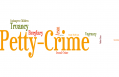
In addition to using clinical diagnoses to support sterilization recommendations, many facilities used criminal activity as evidence of mental incapacity, in this visualization we see the kinds of reported criminal activity captured with the records.
This page has paths:
12015-12-18T10:06:05-08:00Jacqueline Wernimontbce78f60db1628727fc0b905ad2512506798cac8Table of ContentsJacqueline Wernimont4plain2015-12-18T10:11:58-08:00Jacqueline Wernimontbce78f60db1628727fc0b905ad2512506798cac8
12016-01-22T06:28:35-08:00Jacqueline Wernimontbce78f60db1628727fc0b905ad2512506798cac8Poetic EngagementsJacqueline Wernimont5generative experiments with sterilization documentationplain2016-05-10T08:55:39-07:00Jacqueline Wernimontbce78f60db1628727fc0b905ad2512506798cac8