Style and "Substance"Main MenuPhilosophy and the ArtsWhat can philosophy do for the arts?Ontological FractalOntological MappingArt CommentaryStudent ObservationsArchaic Eternal ReturnPresocratic ClassicalSocratic Late ClassicalPlatonicNominalist RenaissanceAneesah Ettressaef5effc74a7015f877dd59f557cf7172f5a72eaJmedina29ac3fc10003fb639ac412984b59b01a5b826e161Ian Lehineb028c384a69e4b92166e7791b002fa3f2cee5818Published by Aneesah Ettress
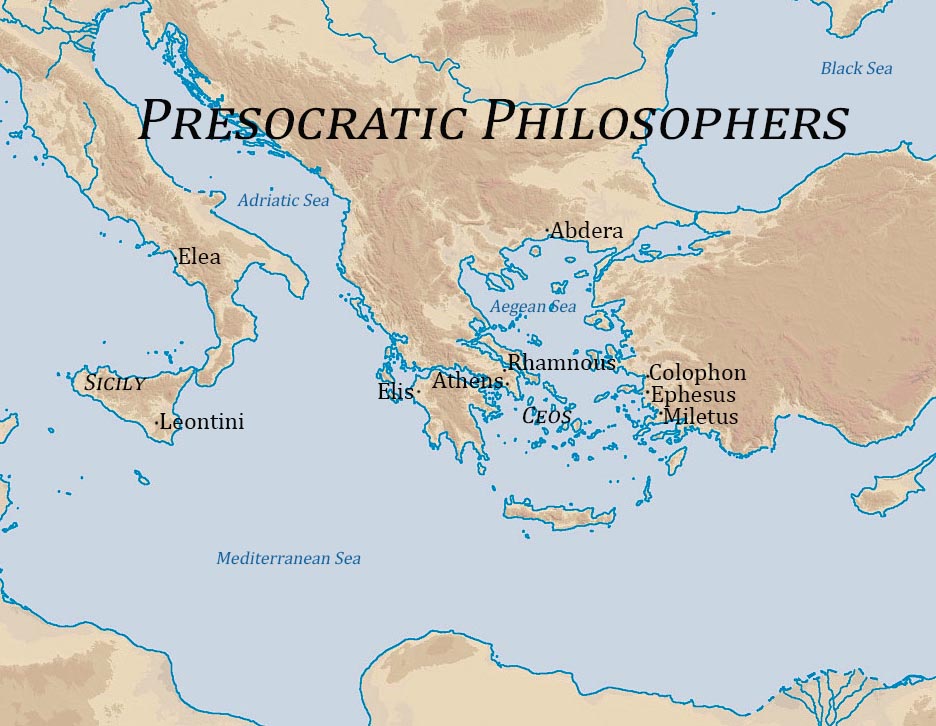
Presocratic Philosophers
12017-02-01T20:11:26-08:00Aneesah Ettressaef5effc74a7015f877dd59f557cf7172f5a72ea148585Map of Ancient Greece, 624-525 BCEplain2017-02-12T16:25:23-08:00Reed College02-02-2017Humanities 110: Greece and the Ancient Mediterranean37.948931, 27.367641Reed CollegeAneesah Ettressaef5effc74a7015f877dd59f557cf7172f5a72ea
This page has annotations:
12017-02-02T14:37:57-08:00Aneesah Ettressaef5effc74a7015f877dd59f557cf7172f5a72eaMilesian PhilosophersAneesah Ettress7The ancient geographical context of the Milesian philosophersplain2017-02-12T16:26:53-08:00Aneesah Ettressaef5effc74a7015f877dd59f557cf7172f5a72ea
12017-02-01T10:59:13-08:00Presocratic Classical36timeline2017-10-10T13:48:29-07:00The ontology of the Presocratics is the immanent compresence of opposites. Thales, Anaximenes, Anaximander, Heraclitus, and Pythagoras demonstrate this principle which is reflected in classical art. For a more enriching take on the Presocratic philosopher, Pythagoras, watch the first 15 minutes of Episode 5 of The Ascent of Man, "Music of the Spheres".