Thanks for your patience during our recent outage at scalar.usc.edu. While Scalar content is loading normally now, saving is still slow, and Scalar's 'additional metadata' features have been disabled, which may interfere with features like timelines and maps that depend on metadata. This also means that saving a page or media item will remove its additional metadata. If this occurs, you can use the 'All versions' link at the bottom of the page to restore the earlier version. We are continuing to troubleshoot, and will provide further updates as needed. Note that this only affects Scalar projects at scalar.usc.edu, and not those hosted elsewhere.
Style and "Substance"Main MenuPhilosophy and the ArtsWhat can philosophy do for the arts?Ontological FractalOntological MappingArt CommentaryStudent ObservationsArchaic Eternal ReturnPresocratic ClassicalNominalist RenaissanceAneesah Ettressaef5effc74a7015f877dd59f557cf7172f5a72eaJmedina29ac3fc10003fb639ac412984b59b01a5b826e161Ian Lehineb028c384a69e4b92166e7791b002fa3f2cee5818Published by Aneesah Ettress
Socratic Late Classical
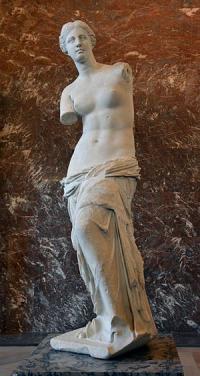
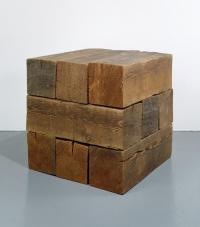
1media/irascible-2006.jpg2017-03-27T13:50:30-07:00Aneesah Ettressaef5effc74a7015f877dd59f557cf7172f5a72ea1485816Platonictimeline2017-10-10T13:38:48-07:00Aneesah Ettressaef5effc74a7015f877dd59f557cf7172f5a72eaIn the implicit ontology of Socrates and the explicit ontology of Plato, we see the sensual come into its own exemplified in late Classical art. This contrasts against the presocratic classical activity of the body, evident in the Doryphorus or Diadoumenous sculpture. Rather in the Socratic late Classical sculpture, we have bodies as such, resting in their being. Moreover, we can clearly see Plato's ontology reflected in the contemporary minimalist art of Carl Andre and others, where there is matter as such which only arises vis a vis the "Forms". Through an exploration of the Socratic ontology and late Classical art, we have returned to a transcendent quality previously reflected in the art of the Archaic period. To delve deeper into this ontology read through Phaedo 86 and examine the three late Classical and three Contemporary artworks in this timeline.
" [86a] divine in the well attuned lyre, but the lyre itself and its strings are bodies, and corporeal and composite and earthy and akin to that which is mortal. Now if someone shatters the lyre or cuts and breaks the strings, what if he should maintain by the same argument you employed, that the harmony could not have perished and must still exist? For there would be no possibility that the lyre and its strings, which are of mortal nature, still exist after the strings are broken, and the harmony, [86b] which is related and akin to the divine and the immortal, perish before that which is mortal. He would say that the harmony must still exist somewhere, and that the wood and the strings must rot away before anything could happen to it. And I fancy, Socrates, that it must have occurred to your own mind that we believe the soul to be something after this fashion; that our body is strung and held together by heat, cold, moisture, dryness, and the like, [86c] and the soul is a mixture and a harmony of these same elements, when they are well and properly mixed. Now if the soul is a harmony, it is clear that when the body is too much relaxed or is too tightly strung by diseases or other ills, the soul must of necessity perish, no matter how divine it is, like other harmonies in sounds and in all the works of artists, and the remains of each body will endure [86d] a long time until they are burnt or decayed. Now what shall we say to this argument, if anyone claims that the soul, being a mixture of the elements of the body, is the first to perish in what is called death?”Then Socrates, looking keenly at us, as he often used to do, smiled and said: “Simmias raises a fair objection. Now if any of you is readier than I, why does he not reply to him? For he seems to score a good point. However, I think [86e] before replying to him we ought to hear what fault our friend Cebes finds with our argument, that we may take time to consider what to say, and then when we have heard them, we can either agree with them, if they seem to strike the proper note, or, if they do not, we can proceed to argue in defence of our reasoning. Come, Cebes,” said he, “tell us what it was that troubled you.” “Well, I will tell you,” said Cebes. “The argument seems to me to be just where it was, and to be still open to the objection I made before."
1media/1160px-Sanzio_01.jpg2017-02-12T15:54:17-08:00Aneesah Ettressaef5effc74a7015f877dd59f557cf7172f5a72eaStyle and SubstanceAneesah Ettress13book_splash2017-10-10T13:41:34-07:00Aneesah Ettressaef5effc74a7015f877dd59f557cf7172f5a72ea
Contents of this tag:
1media/1160px-Sanzio_01.jpg2017-02-12T15:54:17-08:00Aneesah Ettressaef5effc74a7015f877dd59f557cf7172f5a72eaStyle and Substance13book_splash2017-10-10T13:41:34-07:00Aneesah Ettressaef5effc74a7015f877dd59f557cf7172f5a72ea
12017-03-25T13:32:11-07:00Jmedina29ac3fc10003fb639ac412984b59b01a5b826e161Aphrodite of Knidos8Praxiteles, 300-400 BCE, marble, National Museum of Rome, Rome , ITplain2017-07-20T11:29:45-07:00Aneesah Ettressaef5effc74a7015f877dd59f557cf7172f5a72ea
12017-03-08T15:01:46-08:00Aneesah Ettressaef5effc74a7015f877dd59f557cf7172f5a72eaAphrodite of Milos5Alexandros of Antioch, 130 BCE, marble, 203 cm, Louvre, Parismedia/Venus de Milo.jpgplain2017-07-20T11:34:10-07:00Aneesah Ettressaef5effc74a7015f877dd59f557cf7172f5a72ea
12017-03-25T13:32:08-07:00Jmedina29ac3fc10003fb639ac412984b59b01a5b826e161Condensation Cube5Hans Haacke, 1965, 76x76, plexiglass and water, Barcelona Museum of Contemporary Art, Barcelona, ESplain2017-07-20T11:03:45-07:00Aneesah Ettressaef5effc74a7015f877dd59f557cf7172f5a72ea
12017-07-20T11:09:48-07:00Aneesah Ettressaef5effc74a7015f877dd59f557cf7172f5a72eaIrascible2Mel Bochner, 2006, oil on canvas, New York City, NYmedia/irascible-2006.jpgplain2017-07-20T11:36:38-07:00Aneesah Ettressaef5effc74a7015f877dd59f557cf7172f5a72ea
12017-07-20T11:00:13-07:00Aneesah Ettressaef5effc74a7015f877dd59f557cf7172f5a72eaTrabum2Carl Andre, 1977, douglas fir, 30.5 x 30.5 x 91.4 cm, Guggenheim Museum, New York City, NYmedia/AGUGGENHEIMIG_10313464113.jpgplain2017-07-20T11:03:05-07:00Aneesah Ettressaef5effc74a7015f877dd59f557cf7172f5a72ea