Thanks for your patience during our recent outage at scalar.usc.edu. While Scalar content is loading normally now, saving is still slow, and Scalar's 'additional metadata' features have been disabled, which may interfere with features like timelines and maps that depend on metadata. This also means that saving a page or media item will remove its additional metadata. If this occurs, you can use the 'All versions' link at the bottom of the page to restore the earlier version. We are continuing to troubleshoot, and will provide further updates as needed. Note that this only affects Scalar projects at scalar.usc.edu, and not those hosted elsewhere.
The Black Panther, 1966-2016Main Menucrystal am nelsona8c0d4166981909bee5f6307ade72fc185ed6296Cathy Thomasc194c1b18a8a0b957192be5b5fcddc54e7171304Kiran Garcha330f0fd93233f7f8a54631b3efe31dda36bdbfdf
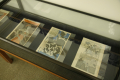
Vitrine #14: The Front Line: Representations of Mothers and Homemakers in the Revolution
12016-11-19T22:04:06-08:00crystal am nelsona8c0d4166981909bee5f6307ade72fc185ed6296123216plain2016-11-20T13:51:36-08:00crystal am nelsona8c0d4166981909bee5f6307ade72fc185ed6296
Minister of Culture Emory Douglas, a former member of the Black Arts Movement (1965–1975), contributed a majority of the artwork featured in the Party’s newspaper, The Black Panther: Black Community News Service. Although he employed numerous artistic styles in his work, he is most noted for working in a pop art style. He used bold, hard lines and bright colors for his backgrounds and layered them with realistic portraiture to depict the everyday struggles of black Americans living in urban areas. Many of his posters depicted women and children in domestic settings, and common themes were the right to decent and affordable housing, access to healthy and affordable food, and rearing children to be young revolutionaries. Douglas’ sensitive treatment of women and the home in his artwork acknowledges the labor of black women caregivers and that work they do in the homes is no less radical or crucial to the movement as women activists organizing in the streets.
12016-11-19T20:28:00-08:00Vitrine Number 14, 3rd Floor, California Room1The Black Panther Party's newspaper provided powerful images of mothers and homemakers' struggles with police brutality and the urban housing crisismedia/Vitrine-14.jpgplain2016-11-19T20:28:00-08:00