OdessaMain MenuCafé Culture in the "Jewish City"The History of OdessaA history inextricable from the Odessa caféOdessa CafésIsabella Buzynski4c5090420af98824ad786b6dac1f314b9e9f95a8
Satana
12018-12-29T00:00:21-08:00Isabella Buzynski4c5090420af98824ad786b6dac1f314b9e9f95a8309681plain2018-12-29T00:00:22-08:00Isabella Buzynski4c5090420af98824ad786b6dac1f314b9e9f95a8Quoted in Roshanna Sylvester, Tales of Old Odessa: Crime and Civility in a City of Thieves (DeKalb: Northern Illinois University Press, 2005).
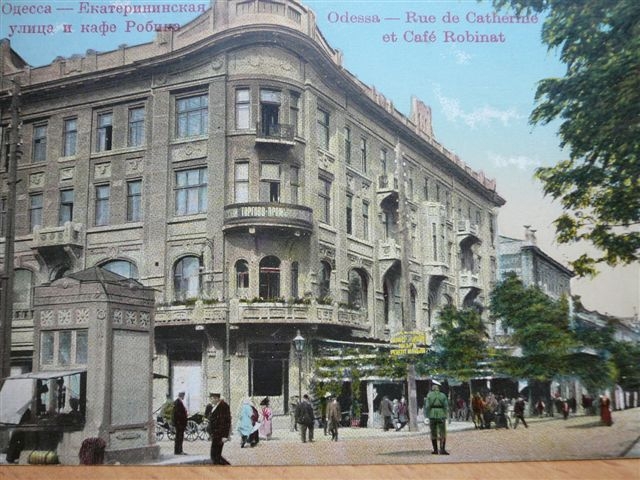
Café Robina was founded in the 1890s across from Café Fanconi. It was one of the most famous and fashionable cafés in Odessa, becoming an important component of Odessan identity and, in particular, cultivating an image of middle-class respectability. This provoked satirical observations by writers, many of them Jewish, such as in a feuilleton by a writer under the pseudonym of Satana (Satan) in Odesskaia pochta:
“Every Odessan, regardless of social position, considers it necessary to go to the Robina or Fanconi at least once in their lives . . . To live in Odessa and not go to the Robina is like being in Rome and not seeing the pope.”
Local Odessa journalists even began to speak about a certain social type: the Robinisti, the habitué of Café Robina. The most typical Robinisti was presumably a young man, son of the middle class, well bred and well educated, who should have been the pride of polite society but was its nemesis. According to journalists, Robinistis were always immaculately dressed, giving every appearance of gentility, but in fact were devious, cynical men. The journalist Satana pointedly unmasked the young men as social frauds: “Look at them. They have chic visiting cards, collars brilliant and elegant, ties that are something delicious. All signs stamp them as higher gentlemen. But if you probe one, you will find a rogue, a thorough rogue.”