The Technological Development: The Recent Forms of Makeup Advertising
Nowadays, the boundaries of different medias got blurred, and the form of advertising becomes even more diverse. Advertisements have infiltrated into every aspect of our life.
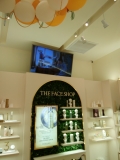
The Face Shop as a physical archive, displayed different stages of advertising at the same time. There are printed advertisements decorating everywhere of the store, magazines placed on the front table for people to read, videos about Korean stars talking about the benefits of makeups, and websites introducing each product comprehensively. The Face Shop’s website is written on each printed advertisement, and on website we can see advertising videos and digital version of the prints. The Face Shop works as a media ecological system to show how multiple forms of medias can be used to advertise the products at the same time, and how one media platform can be used to advertise another.
This page has paths:
- The History of Makeup Advertising Xilan Kong