Metaphysics Peace
1 2016-03-13T07:09:11-07:00 Alex Monier c78d65802b9fe92b9ae570d03bd456a519d4b1f0 8094 2 By Mario Castillo plain 2016-03-13T07:10:24-07:00 Alex Monier c78d65802b9fe92b9ae570d03bd456a519d4b1f0This page is referenced by:
-
1
2016-03-13T07:04:44-07:00
Latino Art and Murals around the City
8
gallery
2016-03-14T18:00:06-07:00
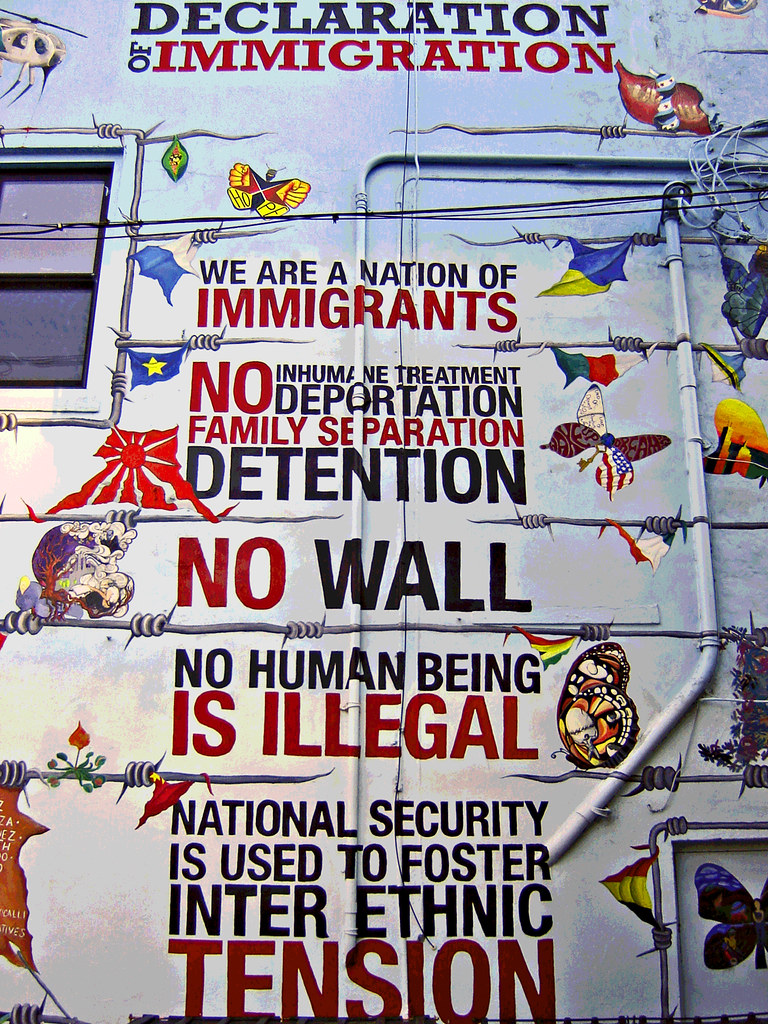
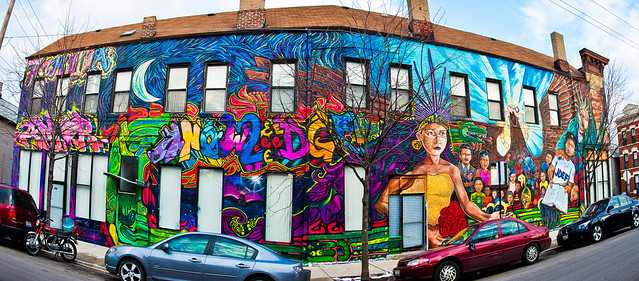
Walking around Chicago, one can easily see why it is well known for its public murals. Over the years there have been several big mural movements from various different ethnic groups, including a Latino one. Many of these artists focused on murals in particular during the Chicano Era. Often, these mural projects would involve the entire community and have everyone in the neighborhood contribute to the mural. This helped to strengthen the community and give them a sense that this art was theirs. In Chicago, murals sprung up all over buildings, especially the older, decrepit ones that were suffering from the effects of the rust belt over time. Artists document the civil rights issues of the time, and point out a variety of social issues with their paintings.
Mario Castillo started the first wave of Chicano Chicago murals in 1968 with his mural Metaphysics (Peace). This mural commented on the scarring left on America by World War II – doing this ironically by creating something of beauty to point this out. Although his mural no longer remains, it paved the way for several other artists to begin making murals. In the wake of deindustrialization and the overall gentrification of Chicago, outdoor art in Pilsen in particular flourished. The walls of the streets became canvases for artists painting things of cultural importance to the Latino community. These artists compiled various Aztec, Mayan, Christian, and other Native American into one style and took a great amount of influence from the Mexican street artists: David Alfaro Siqueiros, Diego Rivera, and Jose Clemente Orozco. The 1970s became a golden age for the muralists of Chicago. The ongoing mural project worked in tandem with the urban renewal project and helped fill in the spaces that would have simply been urban blight without it. (1)
These murals had a very similar style to the ones in Los Angeles; however, they had their own distinct flair as the political climate in Chicago was vastly different than the one in Los Angeles. Rather than focusing on protesting the interstates, it protested the gentrification of the city and rebelled against the deindustrialized era. Many factory owners began exploiting Latino labor in order to reduce costs and increase profits. The art often expresses the strength of the community and emphasizes that they must join together if they are to escape the poverty of the city together. The murals unified the communities by requiring a group effort to be made in order to paint them. This also gave a sense of community ownership to the murals, and by extension the neighborhoods these murals were painted in themselves, affirming in their minds that the Latino community belonged in Chicago. These murals breathed life into the concrete jungle of the city, beautified blight, and gave the community hope, much like it did in Los Angeles. However, the murals reflected a very different sea of issues that were faced by the people in Chicago.
The National Museum of Mexican art is also located in Chicago. This museum, started in 1982, is entirely dedicated to Chicano art and culture within the United States and puts it on display. This museum, located in the middle of the Pilsen neighborhood, displays the Mexican cultures influence on art within the United States. This museum is also the only one of its kind officially recognized. The museum puts on three big festivals each year including the Del Corozon, Dia de los Muertos, and the Sor Juana festivals. These festivals further celebrate Latino life and culture in Chicago. The museum also briefly ran a Latino owned music station for the immediate community. The museum is yet another example of how Chicago's Latino population prominently displays their excellence in the humanities and is even recognized nationally for its promotion of culture. On the links below, you can see how the art in Chicago compares to Latino art in other cities around the country. (2)
1) Rodriguez, Marc Simon. Latino Mural Cityscapes: A Reflection on Public Art, History, and Community in Chicago after World War II. N.p.: n.p., n.d. Academia. Web. 19 Feb. 2016.
2) Chon Noriega. and Ana Lopez. Ethnic Eye: Latino Media Arts. Minneapolis: University of Minnesota Press, 1996. Project MUSE. Web. 22 Feb. 2016.