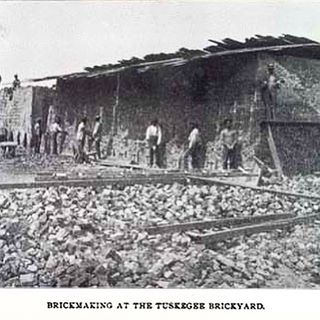
Tuskegee Brickmaking
1 2018-04-16T22:52:22-07:00 Maureen Gray ab288c53aefb942d3e6102c32f4d6e3a10268d3b 19701 1 Brickmaking at Tuskegee plain 2018-04-16T22:52:23-07:00 FBMD23000984030000e9090000990a00004f0b00009f300000f7390000d1480000d55200000c5c0000186d0000 Maureen Gray ab288c53aefb942d3e6102c32f4d6e3a10268d3bThis page is referenced by:
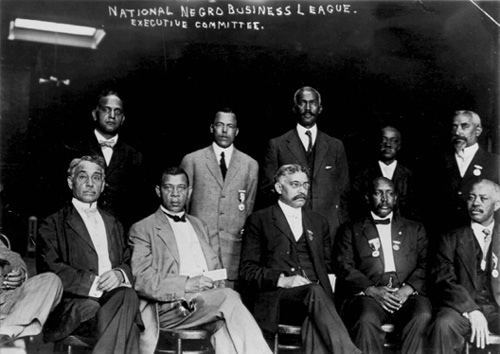
- 1 media/Tuskegee Blacksmith.jpg 2018-03-30T23:41:35-07:00 Economic Equality 10 image_header 2018-06-01T23:20:47-07:00 “Brains, property, and character for the Negro will settle the question of civil rights,” wrote Booker T. Washington in 1884. He believed no race superior to the other; only ignorance separated the two. Negroes were ignorant of academia while whites were ignorant of Negroes’ capabilities. By teaching black students a trade in which white customers could observe their expertise, the white community would come to see the African American talent without belligerence. Booker T. Washington’s educational strategy taught skills needed in everyday life but had become scarce since the end of slavery. Skills honed during slavery were still necessary.Blacksmiths that had been slaves now received a fee and the respect of their white customers. The trick was to find a niche and for black workers to fill it to the best of their ability. For example, Tuskegeeans discovered a shortage of bricks to build their school, so the students learned to make bricks. Quickly, a large portion of Alabama’s white population was demanding Tuskegee bricks to upgrade their own homes and businesses. In 1900, Booker T. Washington, with the support of industrialist Andrew Carnegie, founded the National Negro Business League to promote entrepreneurship among African Americans. Since white banks frequently refused to loan venture capital to Negroes, the League could provide a network to start black owned businesses.