Thanks for your patience during our recent outage at scalar.usc.edu. While Scalar content is loading normally now, saving is still slow, and Scalar's 'additional metadata' features have been disabled, which may interfere with features like timelines and maps that depend on metadata. This also means that saving a page or media item will remove its additional metadata. If this occurs, you can use the 'All versions' link at the bottom of the page to restore the earlier version. We are continuing to troubleshoot, and will provide further updates as needed. Note that this only affects Scalar projects at scalar.usc.edu, and not those hosted elsewhere.
James Lee Dickey: An Analysis of One African-American's Leadership in Jim Crow TexasMain MenuJames Lee Dickey: An Analysis of One African American's Leadership in Jim Crow TexasIntroductionSlave No MoreFreedman after Bondage 1865 - 1955African American LeadershipContenders for the TitleJames Lee DickeyThe Leadership of James Lee DickeyLocations in Dr. James Lee Dickey's StoryGoogle locations for Dr. Dickey's BiographyMaureen Grayab288c53aefb942d3e6102c32f4d6e3a10268d3b
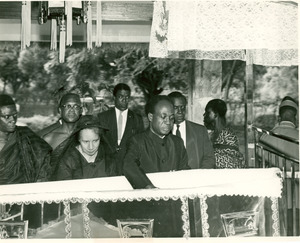
Du Bois casket
12018-06-11T23:32:52-07:00Maureen Grayab288c53aefb942d3e6102c32f4d6e3a10268d3b197011Dr. WEB Du Bois was buried in Ghana August 29, 1963plain2018-06-11T23:32:52-07:00Maureen Grayab288c53aefb942d3e6102c32f4d6e3a10268d3b
This page is referenced by:
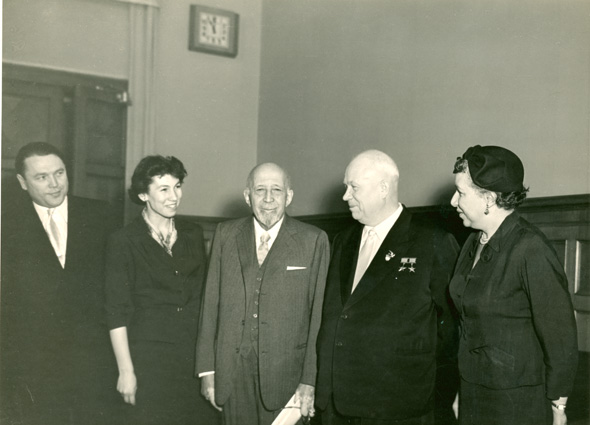
1media/Moscow edited.jpg2018-04-07T02:24:57-07:00Exploring Communism9image_header2018-06-11T23:42:41-07:00In 1934, Du Bois resigned from the NAACP and The Crisis. He returned to Atlanta University as head of the Sociology Department still advocating literary education for the Talented Tenth. For a brief time, he supported the Pan Africa Movement but opposed its leader, Marcus Garvey. Socialism intrigued him so he began a decades long relationship with socialism and communism, even traveling to the Soviet Union where he abhorred the poverty but admired the government’s recognition of the worker. In 1936, he travelled around the world, even visiting Nazi Germany. He saw Japan’s dominance in Asia over Russia as an allegory of Negroes dominating whites in America. During his years at Atlanta University, Du Bois wrote prolifically, publishing one of his greatest works, Black Reconstruction in America. He remained at Atlanta University until 1943 when he returned to the NAACP. His dream project was to create the Encyclopedia of the Negro and in 1961, the country of Ghana offered to sponsor it. At the age of 92, WEB Du Bois repatriated to the west African nation to write his master work. Sadly, his life closed before he could complete it.