Scalar's 'additional metadata' features have been disabled on this install. Learn more.
Ghost Metropolis: Los Angeles from Clovis to Nixon
Main Menu
Regimes: Ruling the Los Angeles Region from the Late Pleistocene to the 21st Century
Places and Paths of Los Angeles
Manna From Hell: Power and Politics from Region to World Power
Shadows: Visual Cultures and Mass Media of a Regional and Global Power
Segregated Diversity: The Geosocial Formation of Social Justice in the Late Twentieth Century
Richard 37th: Nixon, Los Angeles, and World Power
The American 1989: Los Angeles at the Climax of the 20th Century
Narrative Essay
Bibliographies, Filmographies, Gazeteers, Indexes
Mapping the Past: Theory, Methods, Historiography
Path
Credits
Root
Phil Ethington
e37d40405599cccc3b6330e6c4be064cc03ef7a5
This is for Rodney King
1 2017-08-08T16:56:22-07:00 Phil Ethington e37d40405599cccc3b6330e6c4be064cc03ef7a5 677 2 187 is the California Penal Code for homicide. Rodney King's name evokes Martin Luther King, Jr's, along with a message of brotherly love that contrasts sharply with the death-warning to the LAPD. Uncredited photo embedded from "Poligrafi" https://polygrafi.wordpress.com/2013/04/30/rodney-king-symbol-of-police-brutality-and-the-1992-los-angeles-riots/ plain 2017-08-08T16:59:13-07:00 Phil Ethington e37d40405599cccc3b6330e6c4be064cc03ef7a5This page has tags:
- 1 2018-08-15T15:28:40-07:00 Phil Ethington e37d40405599cccc3b6330e6c4be064cc03ef7a5 1990s Phil Ethington 2 Decadal Tag structured_gallery 2018-08-15T15:31:13-07:00 Phil Ethington e37d40405599cccc3b6330e6c4be064cc03ef7a5
This page is referenced by:
-
1
2017-07-25T16:48:00-07:00
Reaganism and Rebellion: The American Uprising of 1988-1992
449
image_header
2019-04-09T04:06:18-07:00
Introduction
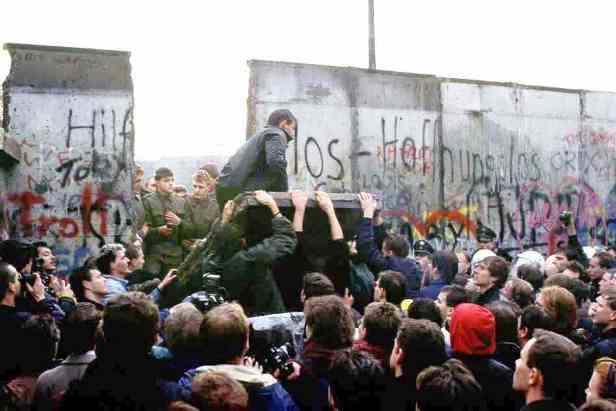
The year 1989 ended an entire global epoch that began almost exactly two centuries earlier, in the American (1774-1787) and French (1789-1794) Revolutions. While 1989 was the banner year, epitomized by the Fall of the Berlin Wall, that event is best understood as the apogee of an arc of upheavals, ending the repressive and authoritarian hegemony of the two "superpowers" the U.S.A. and the U.S.S.R.
The opening act was against Richard Nixon's client-dictator, Ferdinand Marcos, in the Filipino People's Power revolution of 1983-1986. It spread to China and Poland next. The Tiananmen Square democracy protests and massacre from 15 April to 4 June, 1989 were simultaneous with the 4 June semi-free elections in Poland. The Berlin Wall fell on 9 November, and that epoch-making Maurfall was the first domino to knock down the Iron Curtain. Next was the Velvet Revolution in Czechoslovakia, from 17 November to 29 December; then F. W. de Klerk's meeting with the imprisoned Nelson Mandela in December, which led to his release on 11 February 1990. Mikhail Gorbachev held multi-party elections in the USSR that May, and that December Lech Wałęsa, leader of the formerly outlawed 10-million strong Solidarity Union was elected President of Poland, ending Communist rule there. On 25 December, 1991, "the Soviet hammer and sickle flag lowered for the last time over the Kremlin." The final act took place in Los Angeles, on 29 April 1992, where Americans rose up to overthrow their own most notorious metropolitan police state in response to the unpunished police beating of motorist Rodney King.
The American Uprising of 1988-1992, like those in Europe and Asia, erupted after years of intolerable repression. It took place in Los Angeles exactly at the moment that it reached the apogee of its power over the United States and the international world. This essay draws together threads of historical change that reached their apogee in the 1980s, and crested in the 1992 Uprising, three years after the Fall of the Berlin Wall. It was the same global movement against authoritarian police-state regimes worldwide.
LA's leadership in the manufacture of mass political movements on the right; in mass media politics and propaganda; and in aerospace warfare technologies, made it the perfect center of power for the United States in the last half of the 20th century. From that center flowed the crisis of 1988-1992: the historical turning-point during which the deepest contradictions of the United States and the Los Angeles metropolis reached a point of critical mass and exploded, rocking the world system that its leaders and corporations had put in place.
Los Angeles played the role of its career, mediated in a movie of its own making. It was both the object and the site of America's political culture. At stake at the planetary level was the end of the Cold War. At stake for Los Angeles was the meaning of its own social geography; of an immigrant diversity that stood for the future of the United States; of its staggering economic inequality; of its militaristic police force that led American cities in the imposition of authoritarian rule in non-white neighborhoods; of its newly-uncensored movies and its rebellious music.
This essay begins with the rise of Reaganism as headquartered in Los Angeles, and then examines the police-state governance of the City under Mayor Tom Bradley in the 1980s. Rap's rebellious rise is mapped in detail as the revolutionary invasion of the mass-mediated public sphere, also headquartered in Los Angeles. The last section maps the outbreak of the 1992 Uprising, not as a "riot" that so many authors of analyzed, but as a rebellion against authoritarianism that followed logically from the uprisings in Manila, Warsaw, Beiing, Berlin, Prague, and Moscow.