Scalar's 'additional metadata' features have been disabled on this install. Learn more.
Exploding Tongues: Language, Art, and the Russian Avant-garde
Main Menu
Back to Futurism: Russian Artist Books
Introductory Page by Chris Gilman
BookENDS: A Working Theory of Textuality as Cultural Dominant, 1912-
An Introduction and Conclusion to a Semester's Investigation into the Book Arts as an Avant-garde Practice
Book Case Studies
Collaborative Research by Case Studies
Big Bang: Timeline of Russian Avant-Garde Book Arts and Their Cultural Impacts
A Timeline of Russian Avant-Garde Book Arts and Their Cultural Impacts
CoaRse CaLIBration
ARTS 227 "Introduction to Letterpress Printing" (Pedersen) and CSLC134/RUSN334 "Exploding Tongues" (Gilman)
NthOlogy
A limited edition collaborative book arts project by students of ARTS 227 (Pedersen) and CSLC 134/RUSN 334 (Gilman), Spring, '17
MANIFESTERS (AB & Kelly): A portfolio of process and products
Appendix: A Path Through Russian Avant-Garde Books
Christopher Gilman
1985b99a2acd541caa12a10c3ebf6896565283ab
Dexter Blackwell
92e005ca94195f836c6089cf147faff4c74fa79e
Zoe Foster-La Du
c1c8954189fb3ee4ab6e36bfb90fae86777eab97
Stephen Heim
7069d17c035042745c96bc6c7619096cd7b33da4
Kelly Kirkland
e1805e502570d093d70f00df18f145c99290d0a3
Ian Lehine
b028c384a69e4b92166e7791b002fa3f2cee5818
Timothy Lewis
13880d3d99b4b71ce85be63e69a6d44e38853d68
Jmedina2
9ac3fc10003fb639ac412984b59b01a5b826e161
Taylor Robinson
aa08dd3939f1f1c6162c5518ae531385e51659af
Evan Sarafian
042e10782d9a6d3f0001a4b35abb02f58ad84684
Craig Dietrich
2d66800a3e5a1eaee3a9ca2f91f391c8a6893490
ILiADS (Institute for Liberal Arts Digital Scholarship)
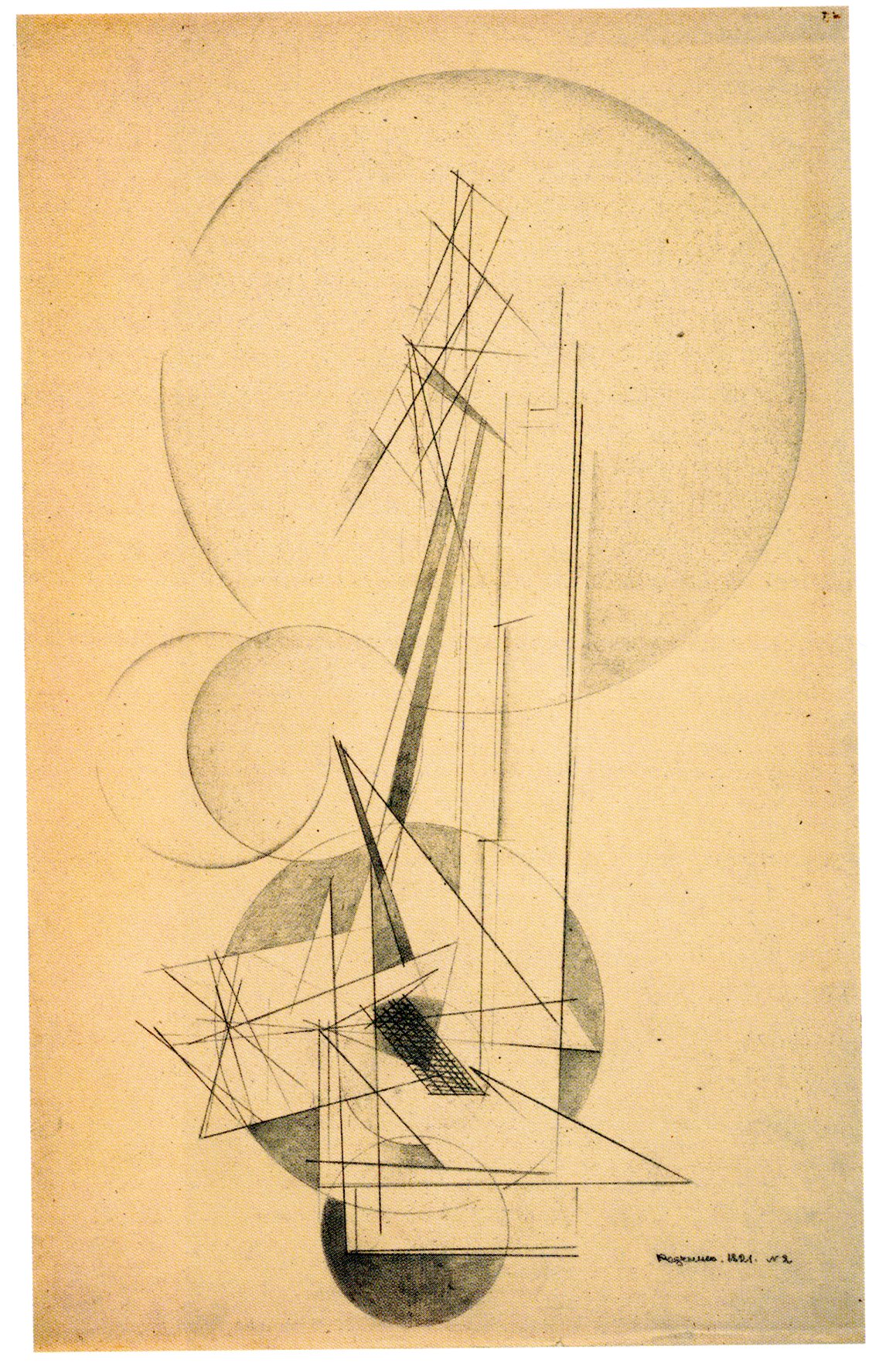
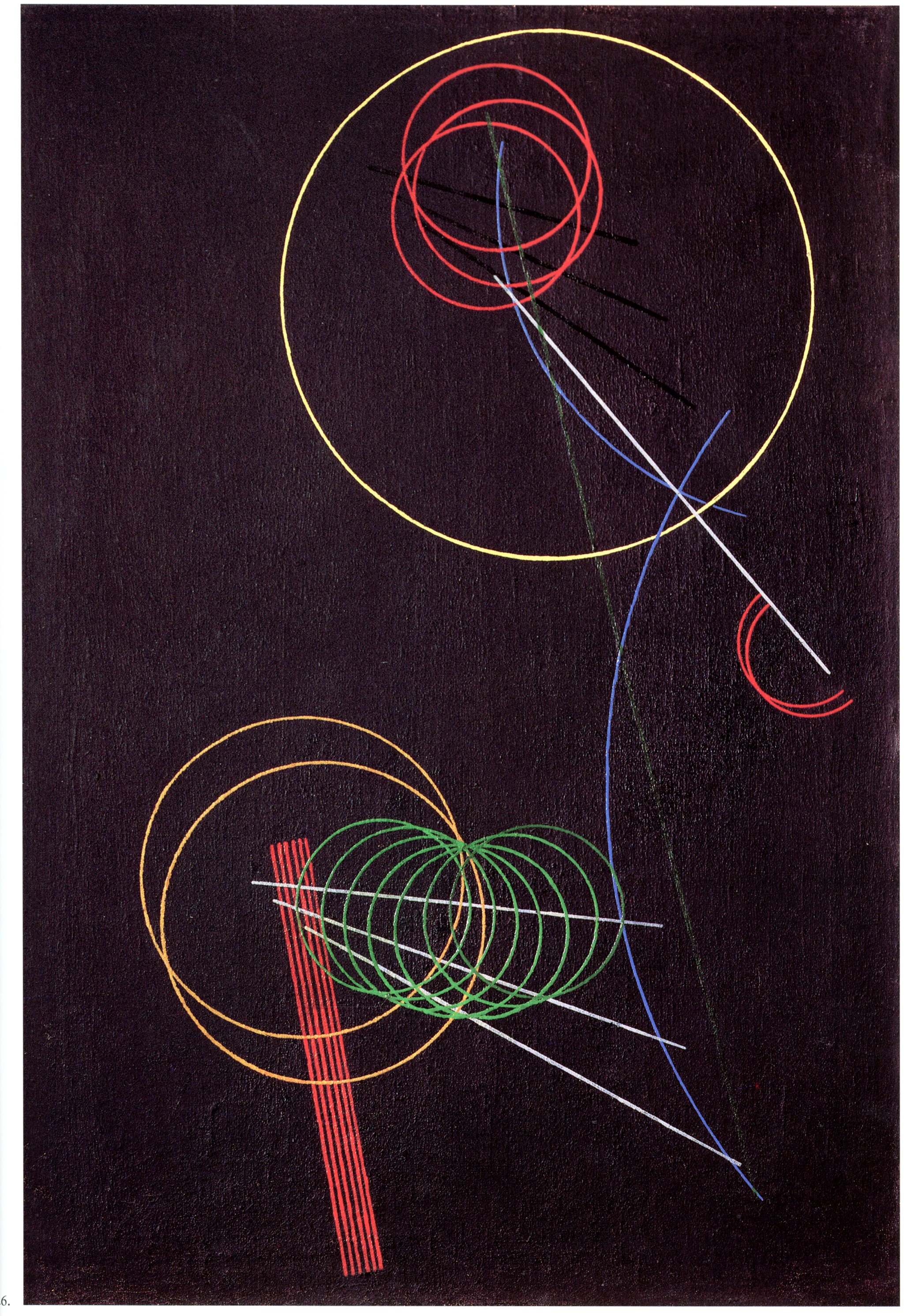
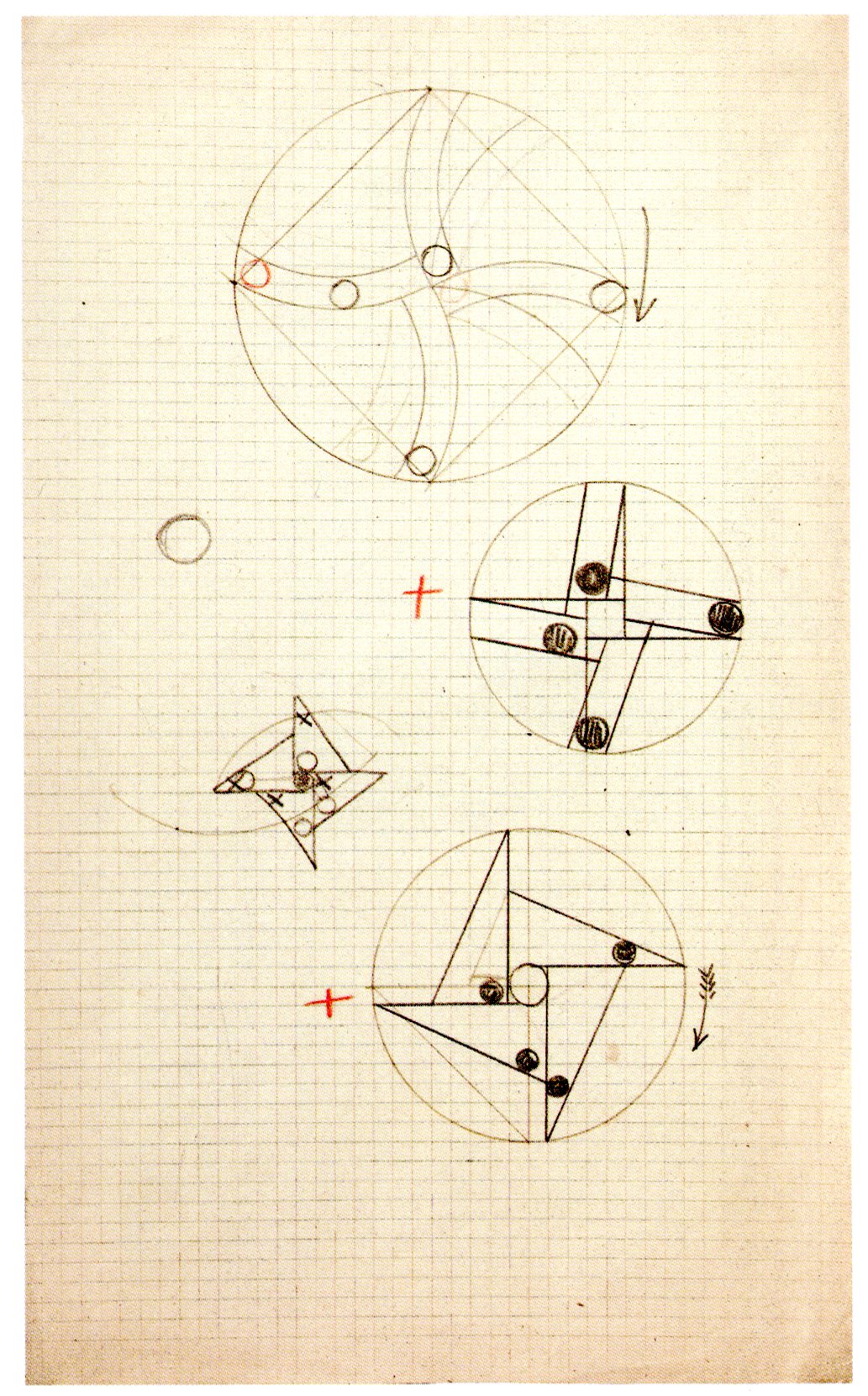
Constructive composition No. 2
1 2017-04-27T13:32:36-07:00 Zoe Foster-La Du c1c8954189fb3ee4ab6e36bfb90fae86777eab97 12041 2 Aleksandr Rodchenko, 1921 plain 2017-04-27T13:33:01-07:00 Zoe Foster-La Du c1c8954189fb3ee4ab6e36bfb90fae86777eab97This page has annotations:
- 1 2017-05-13T18:21:52-07:00 Zoe Foster-La Du c1c8954189fb3ee4ab6e36bfb90fae86777eab97 Yellowed Paper Zoe Foster-La Du 2 plain 2017-05-13T18:25:34-07:00 Zoe Foster-La Du c1c8954189fb3ee4ab6e36bfb90fae86777eab97
- 1 2017-05-13T18:21:00-07:00 Zoe Foster-La Du c1c8954189fb3ee4ab6e36bfb90fae86777eab97 Outline of a Perfect Circle Zoe Foster-La Du 2 plain 2017-05-13T18:25:36-07:00 Zoe Foster-La Du c1c8954189fb3ee4ab6e36bfb90fae86777eab97
- 1 2017-05-13T18:21:30-07:00 Zoe Foster-La Du c1c8954189fb3ee4ab6e36bfb90fae86777eab97 Perfectly Straight Lines Zoe Foster-La Du 2 plain 2017-05-13T18:25:37-07:00 Zoe Foster-La Du c1c8954189fb3ee4ab6e36bfb90fae86777eab97
This page is referenced by:
-
1
2017-04-13T10:58:18-07:00
All's Well That Starts Well, It Never Ends
45
by Zoe Foster-La Due
plain
2017-05-23T18:15:27-07:00
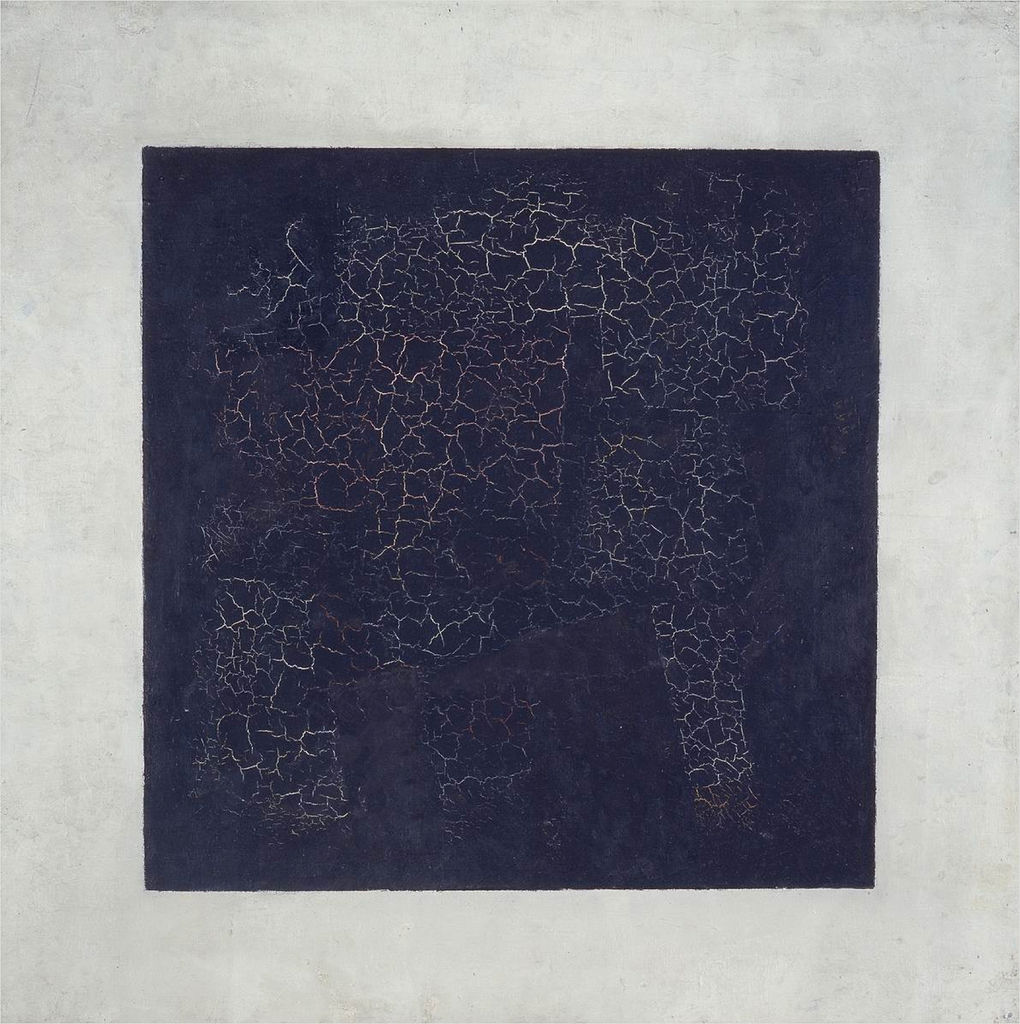
Russian avant-garde was a genre that picked up the revolutionary energy of the late 19th century and early 20th century, continuing until the Soviet state grew strict in their preference of Socialist Realism in the 1930s. Kasimir Malevich heavily influenced many artists between 1912 and the 1920s. His genre of Suprematism was a key aspect of the Russian avant-garde. Known for its simple geometric shapes, Suprematism hoped to portray pure artistic feeling rather than depict actual objects. Zaum poetry hoped to do the same. By taking pure sound and abstracted words, the writers of Zaum discarded meaning for poetry based in feeling.
Nina Gurianova, in The Aesthetics of Anarchy, makes a clear distinction between early Soviet Avant-garde and Constructivism. She claims that the early avant-garde is an autonomous era with little connection to the Constructivism of the post-revolution era. This distinction is important, however, we cannot completely separate the two, even just for the reason that many key actors of both periods overlap. For example, many Constructivists were students of Malevich, and some Suprematists themselves evolved from Suprematism to Constructivism.
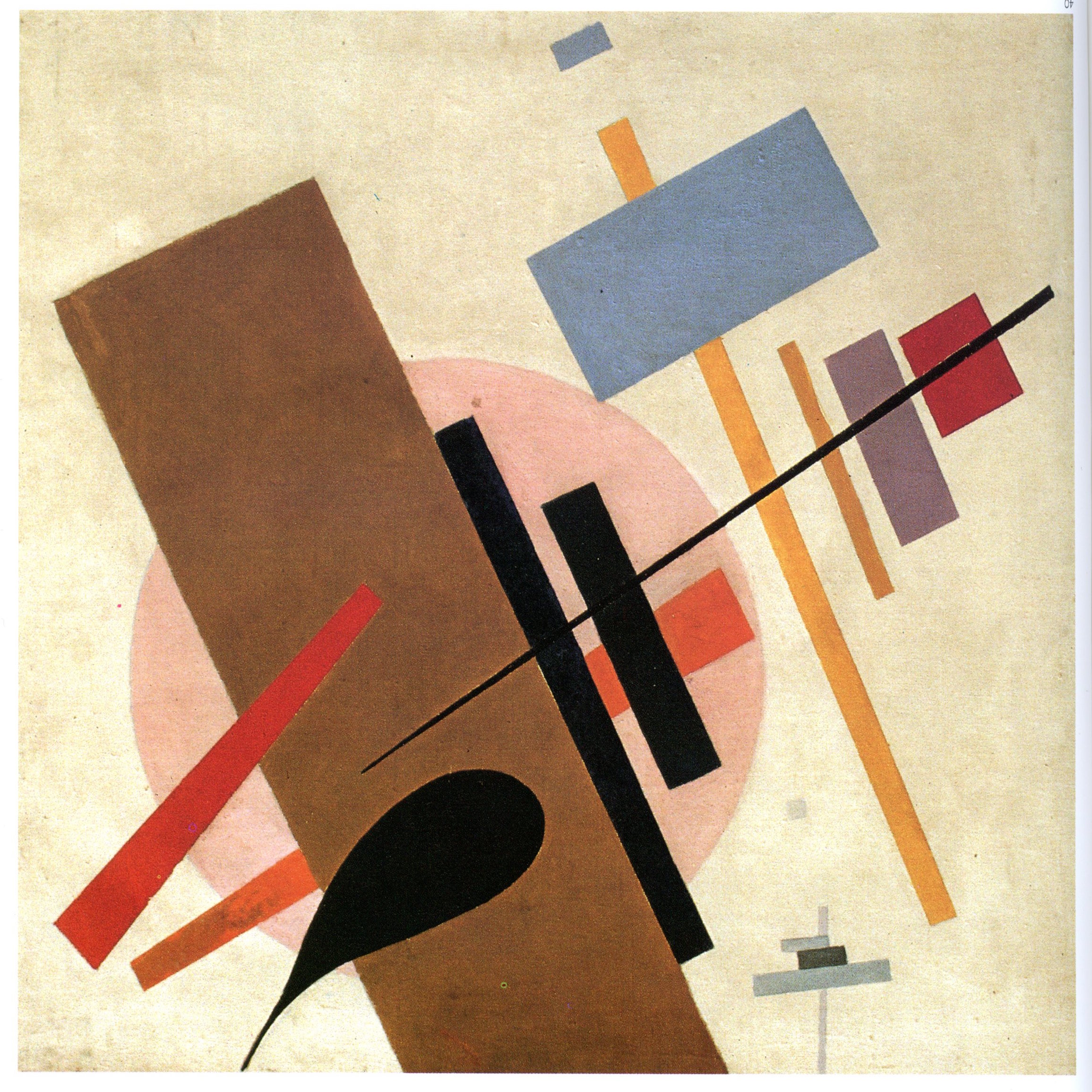
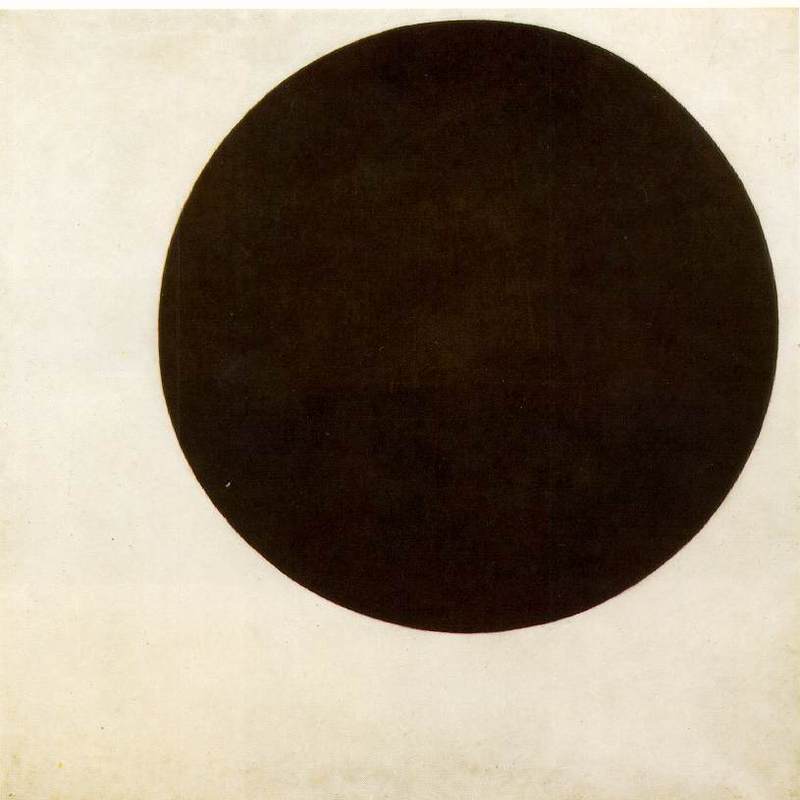
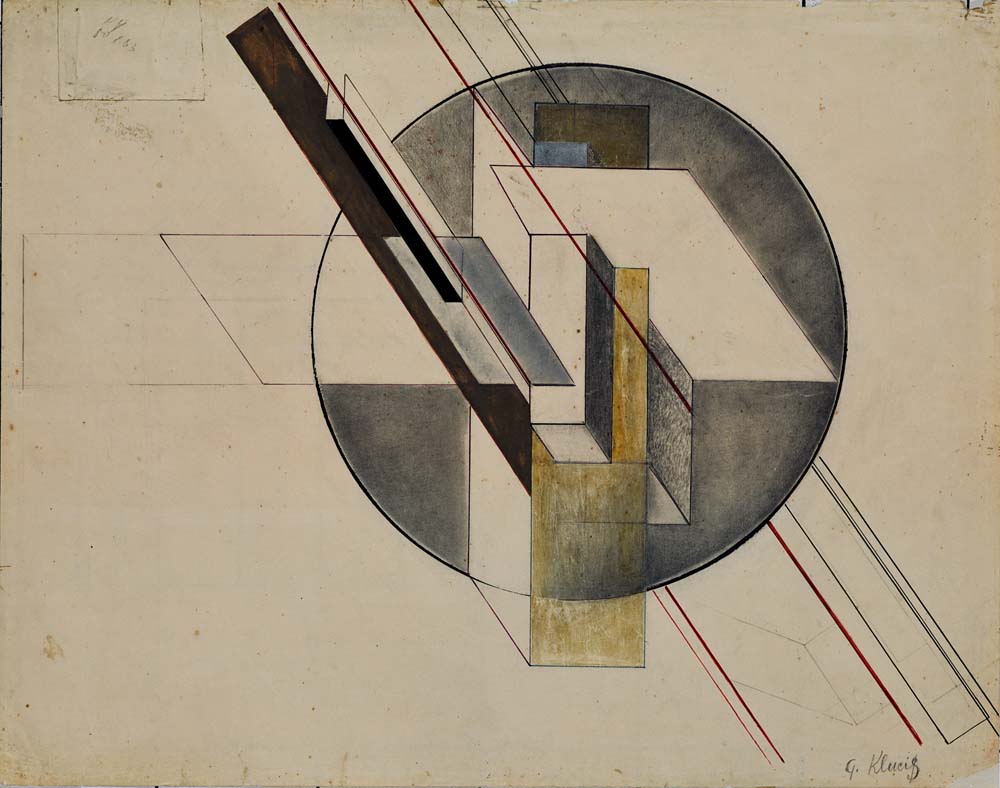
Circles are a shape that held prominence throughout the Russian avant-garde. Their appearance is seen in the early era mostly through Malevich and in the Constructivist era through artists such as Aleksandr Rodchenko, El Lissitizky, Gustav Klutsis, and more. However, what does the circle represent? Is it an abstract representation of an object? Or is it meant to merely represent an idea?
Anarchism, Counter-Hegemony, and the Early Russian Avant-garde 1912-1917
The Aesthetics of Anarchy, as described by Nina Gurianova, capture a mood of alogism. In other words, the early Russian avant-garde can be defined by their nihilistic lack of meaning. In this lack of meaning, they hoped to challenge the boundaries of what art can be. They had no desire to reinstate a program of rules surrounding art, rather they wanted to break away from any set of ideas of what their art should be. Gurianova, when writing about the subgenres of the early Russian avant-garde, states "There is only one feature that can be applied equally to all of them: an anti-teleological desire for freedom of artistic conscience, not limited by any pragmatic political, social, or aesthetic goals." Thus, the early avant-garde era was counter-hegemonic. Hegemony can be defined as an influence or dominance over a population. This dominance is maintained by asserting a set of ideologies which the population adheres to, making any resistance to societal norms counter-hegemonic.
An example of this early period is Victory over the Sun, an opera performed in 1913. It is said to be one of the main influences of Malevich's Suprematism, making it a key point of the early avant-garde era. The title refers to the authors' desire to overcome the artistic norms of the time, symbolized in taking over the sun. Malevich and Matiushin, two main contributors to the opera, were quoted saying:
“The meaning of the opera has to do with the overthrow of one of the great artistic values--in this particular case, the sun … The Futurists want to free themselves from this ordered quality of the world, from the connections thought to exist in it. They want to transform the world into chaos, to smash the established values to pieces and from those pieces create new values by making new generalizations and discovering new, unexpected, and invisible connections. Take the sun--this is a former value--it therefore constrains them, and they want to overthrow it.”
The circle, if it symbolizes the sun, represents something to be overthrown. The sun, an object which everything revolves around, must be taken over in order to free the world from hegemony. Thus, the circle is a representation of hegemony. However, their desire to take the pieces of the world and create new values illuminates the cyclical nature of counter-hegemony.
The set of Victory over the Sun helped to confuse the audience, thus furthering the agenda of disrupting cultural norms. Gurianova writes:
"Malevich and Kruchenykh’s intention was to manipulate spotlights from the stage projectors in order to make the backdrops look three-dimensional: ‘The ambiguity of the spatial relationship, especially in perception of depth, undoubtedly was increased by the ‘tunnel effect’ created by the receding centers of the backdrops’ … This metaphor of infinity in the opera embodies the quest to destroy the old for the sake of creating anew, which ‘inspired shock in some minds and liberated others’”
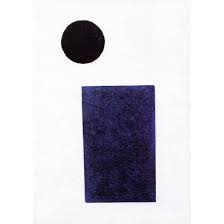
A spotlight, a tunnel, a black hole in which things fall into or out of, all of these are ways in which the circle can obscure dimensionality. The fourth dimension and the challenging of spatial relations were important to the Futurists, and the circle was one tool with which to do that. This can be seen not only in the set for Victory over the Sun but in Malevich's Suprematist paintings as well. Due to the fact that the circles in his paintings are not just circular lines, but actually filled in shapes, they provoke questions of dimension. Are you looking into a hole? Through a tunnel?
Victory over the Sun also helped inspire the abstraction of Suprematism. Gurianova writes, “The next step in the development of this painterly construction is the transformation of the ‘anatomical structures’ of things into abstract shapes.”
Circles and Zaum
The aesthetics of anarchy are present in the alogism of zaum. Those that were writing zaum poetry wanted to escape from the communicative function of language and focus on its purely aesthetic values. Thus, this poetry consisted of sounds and made up words. Both accidental and deliberate errors could be seen throughout the art.
The connection between circles and zaum can be seen in the fact that zaum is an abstraction of language.
Shklovsky claims that "transrational language is a language of pre-inspiration, the rustling chaos of poetry, pre-book, pre-word chaos out of which everything is born and into which everything disappears.” This notion is reminiscent of the circle as a hole which distorts dimensionality, into which things are able to fall. Additionally, the chaos of being born and then disappearing is a cycle which can thus be represented by the circle.
“A Futurist book became a true paradox: a material form to capture chaotic flux, immediacy, spontaneity -- all the immaterial, ephemeral elements of life.” In other words, the Futurist book was a perfect way to express their desire for a counter-hegemonic art form.
Constructivism and Marxist Hegemony 1918-1925
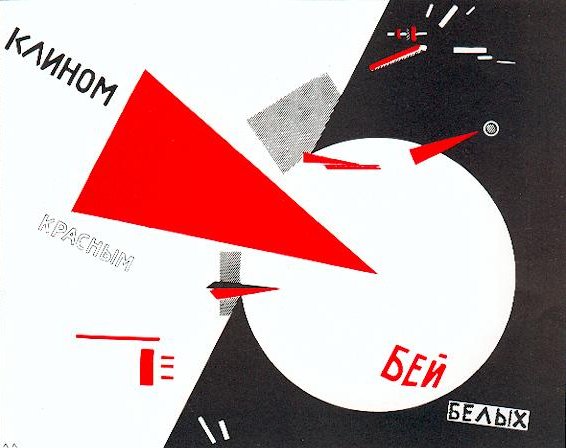
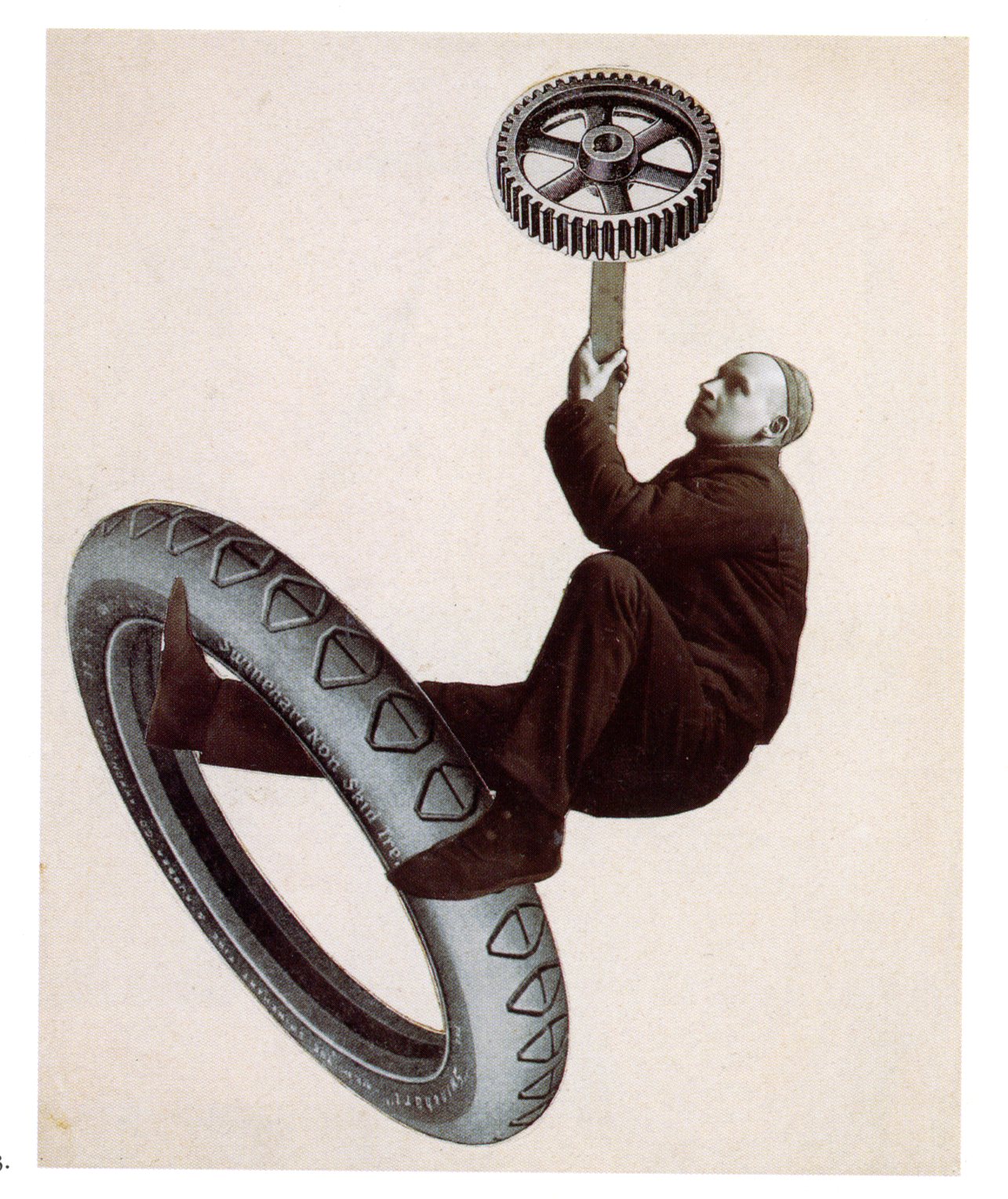
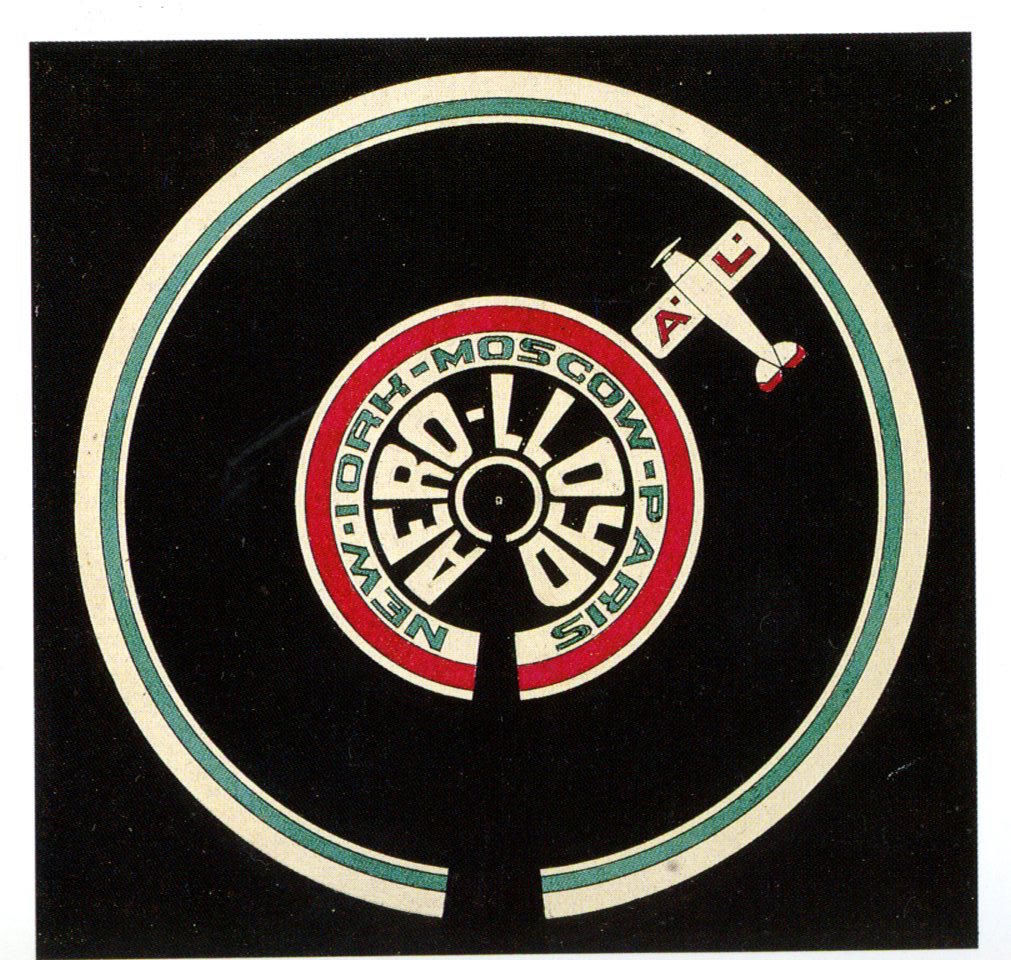
Once the revolution happened there became a need to reinstate a new hegemony. In the art world, this began with Constructivism. As Gurianova puts it, "The anarchic nihilism of alogism yielded to a quest for the assertion of the universal.” Constructivism became a means to promote industrialization. For Rodchenko, this means that his circles were created with a mechanical tool, a compass. Unlike Malevich, his circles were not filled in. Rather, they were simple lines, as if part of a diagram. In fact, he did a drawing of a "perpetual motion machine" whose motion results in the shape of a circle. Another example of the utility of Constructivism is the fact that Rodchenko made several textile designs. In the propaganda art of Klutsis and Lissitzky, circles often appeared as the planet earth. This indicates the desire to spread Marxism internationally as a new hegemony that takes over the world.
Conclusion
Following the appearance of the circle from Malevich to Lissitzky and Klutsis, there seems to be significant meaning being placed in this shape. In Malevich's work, it may stand in as a symbol for the sun or be used to subvert dimensionality. While for Lissitzky or Klutsis, it may appear as a planet. For Rodchenko, it may be symbolic of the mechanical nature of Constructivism. In other places, it may merely be a circle. As a shape that may be turned infinitely without change, it is also a symbol of free rotation. The ability to rotate a shape 360 degrees challenges our linear, left to right, top to bottom process of viewing and reading. This challenging of a hegemonic process, mixed with the later use of the circle in propaganda, calls to question the counter-hegemonic aspects of the circle. While the notion of free rotation might suggest counter-hegemony, the usage of the circle to represent the entire planet in Soviet propaganda suggests a reinstatement of a new hegemony. A rapidly changing world, a world constantly in chaos and in flux, will never stay the same for long. What was once counter-hegemonic may rapidly transform into a new hegemony. The circle, not just a tool for subverting dimensionality or an example of the mechanical nature of Constructivism, is a symbol of the cyclical nature of the world we live in.