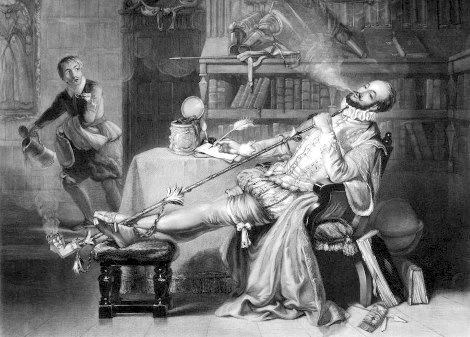
A Pipe of Tobacco (1736)
Christopher Columbus had located the American continents by 1492 in an expedition funded by the Spanish crown. Not too soon after, many European nations such as France, Portugal, the Netherlands, and England joined Spain in establishing colonies in North and South America. These new world colonies would export various rare and unknown materials to their mother nations. Englands American Colonies quickly became renown for various cash crops such as indigo, sugar, rice and most notably tobacco, with tobacco quickly becoming British Americas top export. British America exported these cash crops as well as manufactured goods to England, but after the start of the English Civil War in 1642, many British Americans started to pen trade with other Europeans such as the French and the Dutch. At the conclusion of the English Civil War, the English government passed the Navigation Acts of 1651, which was a series of legislation that forbade any of England's colonies from trading with any other European powers. As the population of British America increased, and the production of American goods continued to climb, American cash crops and manufactured goods began to become staple commodities in English society and culture. Though usually reserved for the upper classes, as time went on Tobacco became more and more of an important commodity within England, and many works from the time period would reflect the importance of Tobacco on English society. A prime example of this would be the before mentioned A Pipe of Tobacco which parodied many contemporary poets by replacing their themes with the theme of Tobacco. The Navigation Acts of 1651, changed Englands culture forever by forcibly introducing Colonial products into British society, having a rippling effect on England's culture forever.
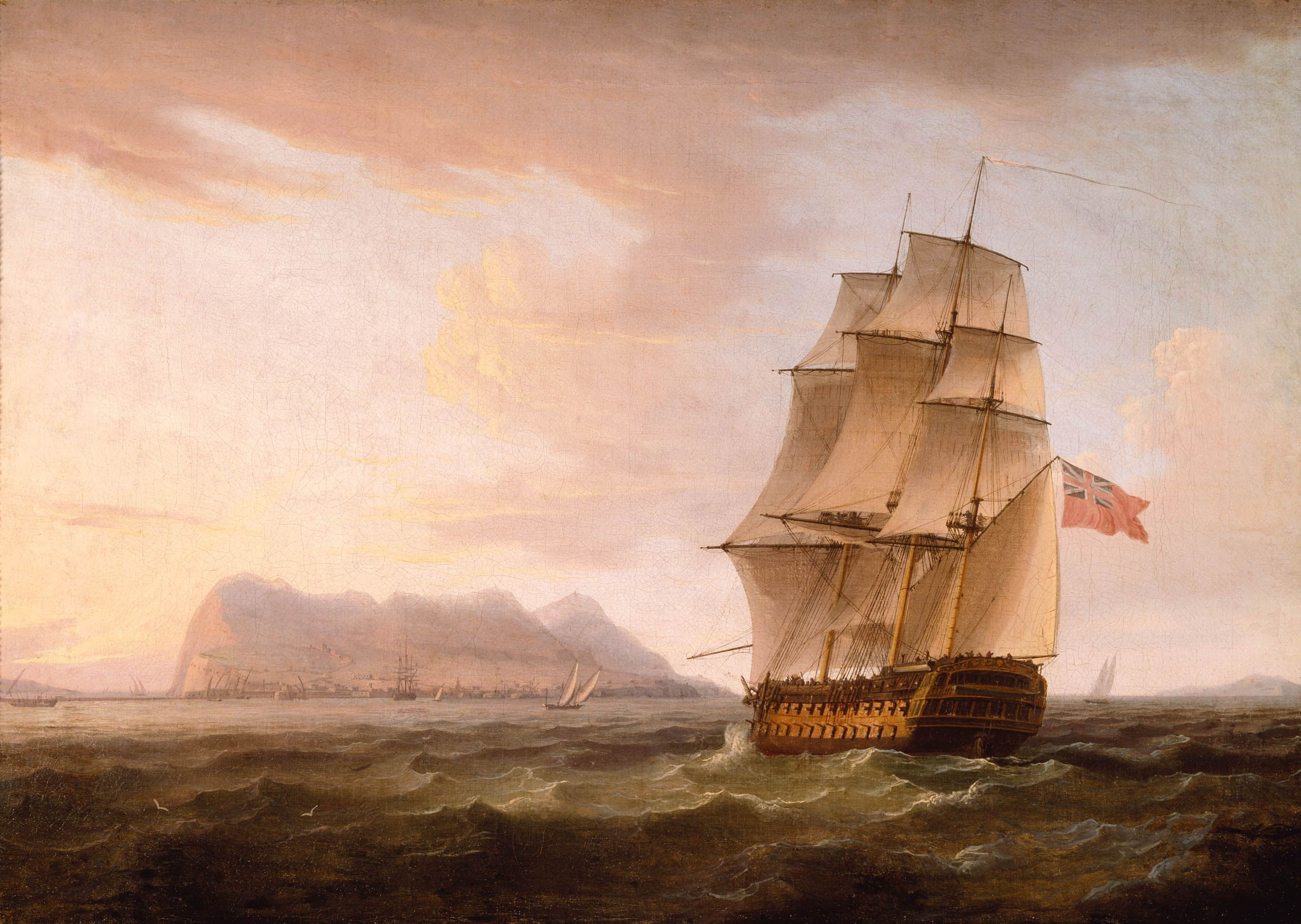
The novel A Pipe of Tobacco is split into six sections, which each section containing an imitation of a previous work from the above mentioned contemporary poets. Imitation I appears to be the main poem in the novel, as its the only poem to have a title, being A New-Year's Ode. A New-Years Ode is also the only in the poem in the novel to have a shifting metrical foot type and a metrical foot number, with these shifts being the foot type constantly changing from iambic to trochaic, as well as the foot number changing from pentameter to tetrameter often throughout the poem. The opening lines of A New-Years Ode reference battles and horror. This is contrasted with the next few lines referencing tobacco as a blessing of peace, continuing by asking if any nation has ever been blessed as England to have access of new world exports. The poem references the Virginia Fleets and how the British fleet protects the commercial ships. The sense is that the Atlantic has been subjugated by the British fleet, alluding to the success of the Triganular trade towards the economy of Britian. Finally, the poem ends with acknowledging the importance of a strong naval presence, as while other European powers fight amongst themselves, the Bitish have the opportunity to live safely on their island with no worry but to smoke and drink.
Imitation II, Imitation III, and Imitation V all reference the pleasures that come with tobacco, all containing many lines that state tobacco in a positive light. Imitation II highlights its idea with many of the lines within the poetry. Lines such as "Little Tube of mighty power, charmer of an idle Hour" and "happy thrice, and thrice again, happiest he of happy men". Picturesqe commentary like this allows insight towards the perception of tobacco as a luxury and as a relief of the mind. This theme continues in Imitation III, which calls Tobacco a "fountain pure of limpid truth that looks at the very soul with each puff allowing imagination to burn". It is easy to associate these lines with the relaxation that comes with the smoking of tobacco products. Tobacco was a key element in the lives of aristocrats and enlightenment philosophers both in Britian and in her Colonial possessions, and because of this it was sought out similarly to how a nice whiskey would be sought out. It is no secret many notable faces of this time period had a huge investment in tobacco, with Thomas Jefferson and George Washington both personally owning tobacco plantations. Imitation V continues in light of Imitation II nad III, naming Tobacco "Europes' last peace, when all statesmen fail." This theme
seems to be open to much interpretation, but I believe that it can allude to the fact that many enlightenment progressives would be able to deter war with their philosophies, in which these ideas were being supported by tobacco consumption.
Finally, Imitation IV and Imitation VI, gives the reader a sense of Tobaccos role in English culture, and some of the stigmas surrounding tobacco domestically and internationally. Imitation IV goes into great detail showing someof the stigmas within English society towards tobacco consumption. Imitation IV states that women despise tobacco for the smell that it causes, going further as to say pipes affect women much more soner than they do men and that women would rather gossip about the towns drama than smoke from the pipe. Besides the smell other points that get mentioned as the cons of smoking include bad teeth and bad breath. Browne counters his point by calling those who do not smoke "from the leaf of knowledge" as ignorant, and latter states ow those who despise smoking continueto drink away. Through this, we see some of the stigmas within English society regarding tobacco consumption in play. Women were ofenly not included among tobacco consumers as some women loathed the properties of the substance, while many others were neglected the opportunity to parake in smoking as it was seen more as a gentlemens activity. We also see recognition of some of he negatve traits associated with smoking such as bad breath and teeth, though many people considered tobacco healthy at the time, the recognition of negative traits is an interesting thing to point out especially considering Browns bias towards Tobacco consumption. Lastly, Imitation VI gives us a glance of tobaccos role on British nationalism and identity. French America had become well known for its exportation of beaver furs, while Spanish America regularly exported large shipments of gold and silver back to mainland Spain. British America had become reknown for its cash crops and because of the Navigation Acts of 1651, Colonial products could only travel between English territories for trade. This caused certain crops such as indio and tobacco to become mostly unique to Britan and this helped in shaping national identity for British people. In Imitation VI, Browne thanks the queen for tobacco exportation to britian. In another line, Browne suggests that he cares not for what the French or the Spanish are doing, rather instead encouraging Britian to continue in its direction stating in the final line of the novel "Britons, if undone, can go, Wherer tobacco loves to grow."
In conclusion, there is more to add
This page has paths:
- Preface & Table of Contents Christopher Gilman