Year Walk
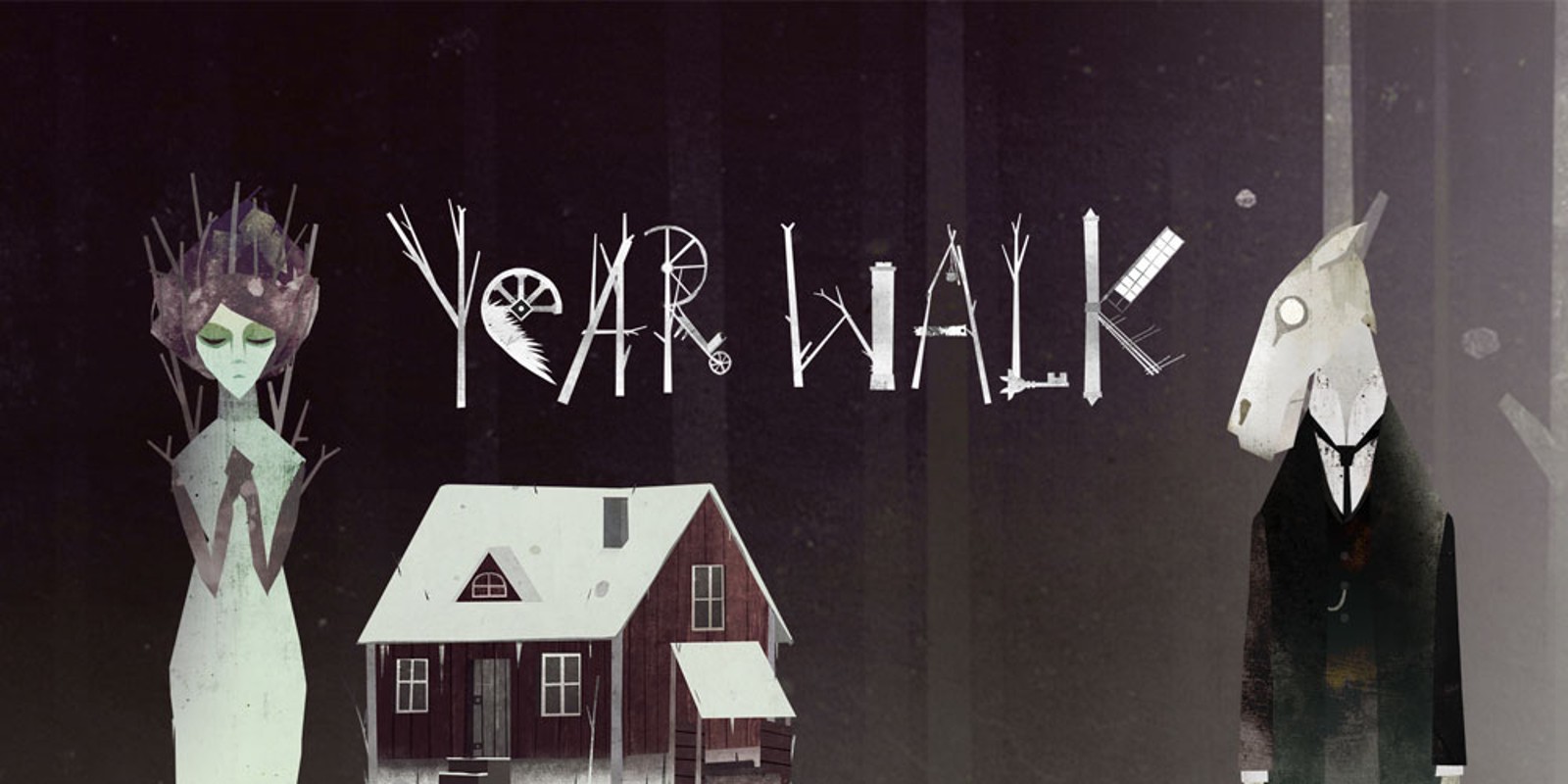
1 2018-08-13T09:30:17-07:00 Samantha Taylor 4c3cab16aa65ca361079efd8261ceefa5c0a6267 30037 1 Year Walk artwork showing The Huldra and The Brook Horse (Year Walk 2013) plain 2018-08-13T09:30:18-07:00 Samantha Taylor 4c3cab16aa65ca361079efd8261ceefa5c0a6267This page is referenced by:
-
1
media/Video-Game-Controllers-Collection-Free-Stock-Vectors-Small.jpg
2018-07-21T12:57:58-07:00
Chapter Four
13
Examination of a New Aesthetic
plain
2018-08-13T14:48:43-07:00
Working the concept on from the examples shown in support of a Ludic Aesthetic, it is then necessary to consider the aspects and results of it. In terms of television and film, emerging desires for a different structure and style of production are relatively well documented with well known texts such as Present Shock by Douglas Rushkoff describing changes in attention span and interest as a driver for changing entertainment styles. As outlined in the examples of chapter three above, a filmic style is not necessarily the same thing as a gamic style of production. Films that should make good games, and games that should make good films, often do not. The answer may lie in narratology; in particular, in the triangular relationship between literature, film and gaming, a subject opened here by the work of Espen Aarseth discussed in chapter two. A book and a game have a major similarity in that the understanding taken from both are subject to the user’s own imagination, and inner narrative, while the link between films and games is in the visual conception laying out the plot, characters, scenery, and action; the fact remains however that particularly in RPGs, a game can, like a book, be far more open to interpretation than the time-constrained plot of a film. The fact that a film is predominantly visual and non-interactive means a gamic style would be difficult to achieve, and arguably could only ever be partially successful, as described through Lev Manovich in chapter two. To a non-gamer, a film and a game can look very much alike, whilst to a gamer (and depending on the game), a game and a book could actually hold more affinity.
A possible example of the difficulties inherent in determining the differences between filmic and gamic production styles may be the hauntingly beautiful and little known game Year Walk (2013). Year Walk combines Swedish mythology and folklore to create an arthouse indie horror adventure game. Initially released through mobile application, the developers sold 200,000 copies in its release date of 2013, and its success saw it ported to Steam in 2014. The interesting aspect of Year Walk in term of the Ludic Aesthetic is that it was originally intended to become a film script, but was recreated as a game script following concerned discussion between the writers, clearly evidencing a dissonance between the styles needed to succeed as games as opposed to films. The result is a short game that supports the experiential style that resembles an interactive art piece such as that described through theorists such as Baudrillard in chapter two, where the player is inside the work of art, changing it. Even as a game, Year Walk is significantly yet subtly unusual from others in the genre, in ways that are difficult to define without actually playing. Playing as the protagonist Daniel, the game begins with a meeting between Daniel and his lover Stina, who has been asked to marry another man; their conversation shows that Daniel intends to engage in the folkloric Swedish tradition of year walking, in which they walk the forest and graveyard through the night of New Year’s Eve in a bid to catch a glimpse of the future from the old gods. There is a puzzle box that can be found within the opening sequences of the game; this allows the player to unlock an alternative ending, but this cannot be opened until the player receives clues from completing the first game playthrough. The short game ensues which ends in tragedy, but also provides clues to unlock an additional game section; this introduces the game’s script writer as an additional character, Theodore Almsten, who is investigating an ancient, news mediated case of a fictional murder, and apparently gradually going mad in the process. Clues within this section allow the player to unlock the opening sequence puzzle box for the alternate ending; this allows the player to make the choice of averting the tragedy, in which case the player’s avatar dies and we do not get to see the effects of the altered ending. While sounding convoluted, the plot is starkly simple when played through on several separate occasions, and involves the element of choice and free will on the part of the player, supporting many of the theories of gaming narrative outlined in chapter two. Other than this, the game has all the usual elements of a narrative-driven art house game; stunning stylized graphics, slow pace, and clear narrative in set stages that gives the baseline on which the player can build the internal narrative outlined as necessary to this game style in chapter one.
The reason for the presence of so many horror-based narrative-driven games may be linked both with the genre’s relative newness (the art house genre was only named as such in 2002), and with the testing of action and consequence, which is where these games, and the concept of the Ludic Aesthetic, are most present. A gamer knows they are operating within a game environment that is partially visual and partially imagined, and yet they can become immersed, which means they can test and learn from thought patterns, actions and consequences, and different behavioural modes within a safe space that has no impact on daily life. In this way, unexpected notes of self-awareness can be achieved. In a recent conversation (January 2018) with another gamer, I announced that I would not be purchasing a new horror game, as ‘I don’t much like horror’. My friend replied ‘But I’ve seen your games library. You ONLY play horror. They’re the only games you own.’ At which point I realised for the first time that my Steam library reflected a definite affinity with Lovecraftian-style narrative-driven horror-based games; I further realised that much of the art house games genre actually stems from this basis, and horror is a definite theme for developers testing this area of gaming. In addition to style, the other aspects important to the Ludic Aesthetic are free will, as with the example of Year Walk, and collaboration, which is linked to the philosophical theories of Marcel Mauss and Jeremy Lent outlined in chapter two, and may be responsible for the recent surge in gamic styles.
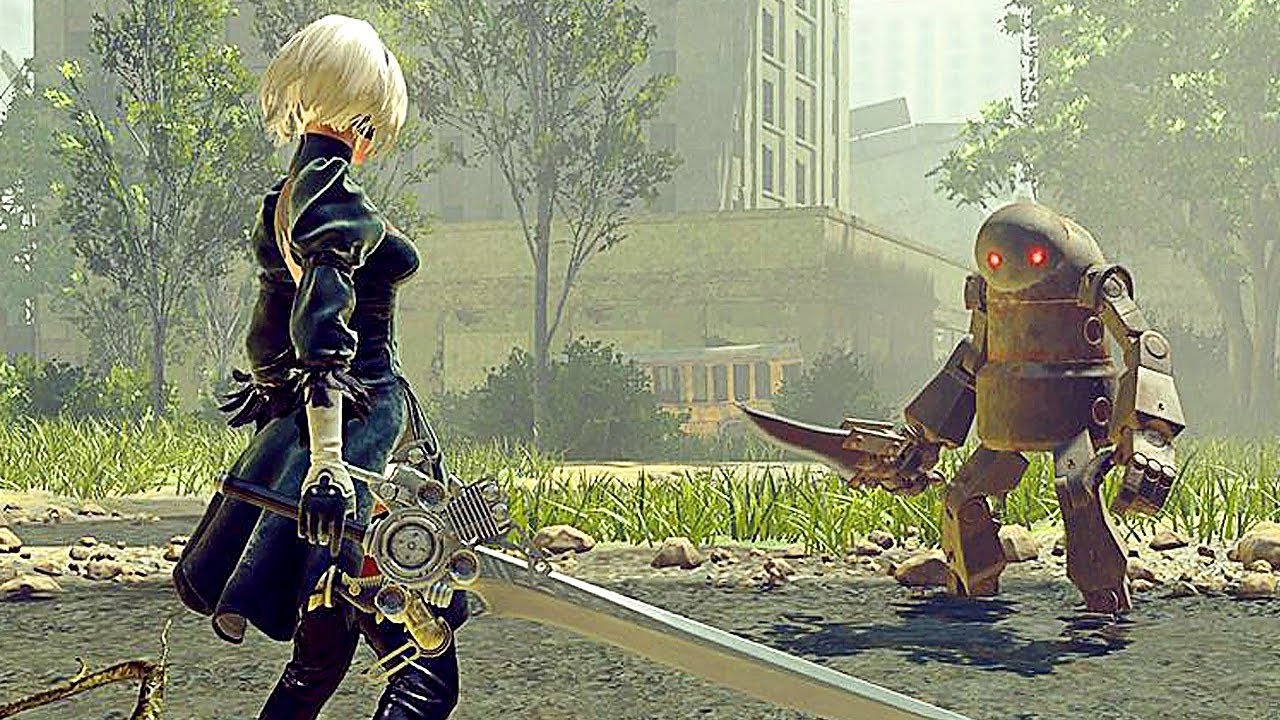
Returning to the concept of action and consequence, the results of a game, even when as soul destroying to an immersed player as those of the games Nier and Nier: Automata in which an NPC the gamer has played with throughout the game can be deleted on the basis of a single incorrect choice, do not particularly affect others or anything outside of that game, except potentially in terms of the ability of other gamers to make the choices needed to successfully complete it. In the discussions on the gamification of teaching, military tactics and online dating in chapter three, the significance of action and consequence is reversed. A student taken to research level without having learnt the skills inherent in self-disciplined lone research would be unequipped to manage the rigours of a research employment post. The potential negative results of online dating gamification are the most dangerously real per individual, and have led to the safety campaign ‘Ask for Angela’, in which the staff of public meeting places are trained to help you exit an unexpectedly dangerous meeting arrangement should you need to ‘Ask for Angela’. These effects are not limited to the game environment but are instead viscerally real. The impact of severe PTSD on military personnel engaged in distance warfare are being balanced against the reduced physical risk to those same personnel; however long-term impacts to selves and families are a clear result of the distance warfare agenda, and will require control methodologies putting in place to alleviate more potential ongoing issues.
In a world in which dismediation is beginning to impact heavily, and in a worldwide population exceeding seven billion, the collaborative aspect of gaming with its community feel and links to Mauss’ gift theories (outlined in chapter two) perhaps explains the rapid development of the Ludic Aesthetic as a method of replacing more direct human connections; this certainly supports Jeremy Lent’s theories on societal interaction discussed in chapter two. As written by Johan Huizinga in Homo Ludens, people love to play. Gaming knowledge can also be valuable almost as a form of crypto-currency; this is proven by the successful proliferation of YouTube gaming stars, and the many forums dedicated to sharing game knowledge, Easter eggs, helpful hints, and the exchange of virtual gaming equipment and information; game walkthroughs alone make up a noticeable portion of the internet. Taylor (2017b) discusses the similarities between gaming communities and barter societies, with online games communities consist of people that play or discuss a game together, sometimes exchange information and equipment, and then move on; this very ephemerality supports the concept of a game as a multi-authored book, as proposed in chapter two in line with Deleuze and Guattari’s theory of Multiplicity, and Janet Murray’s acknowledgement of games as a pre-narrative building block. Squad-based play such as Battlefield 1, and partially interactive MMORPG’s such as The Elder Scrolls Online all show the importance of ephemeral interaction to people: these games remain massively popular despite complaints about their bugs, flaws, and occasionally damaged gameplay. In the art house game Journey, alternative communication is the only way of interacting within the game. Each player is a small gentle pilgrim that can move sinuously around the screen and even float, can issue a sonorous bell-like sound, and can interact with the game characteristics; with these tools and no others, you are expected to communicate with one fellow player from anywhere in the world in each chapter of the game, and show them where hidden elements of the game are. At the end of each full playthrough, you are told the gamertags of the other people you have journeyed with in each chapter; no other information is ever given. The game was designed to specifically encourage non-verbal communication of an ephemeral nature, to represent the journey each pilgrim undertakes in the game and in life. Repeated replays that result in you successfully showing other players the game’s secrets result in in-game virtual rewards in the form of gradually increasing avatar decoration, and eventually, at master level of full exploration and all secrets discovered, the award of white masters robes as opposed to the sand-coloured robes of other Journey pilgrims. This is a tribute to the gameplay in that the tribal leaders of the pilgrims depicted in images throughout the game are masters dressed in white robes. These three games resemble each other with one single characteristic: you can join other players, or even create gaming squads, without ever directly communicating with them in terms of speech. While spoken collaboration is an option in all but Journey, most of the acquaintanceship ingame actually stems from interested parties with limited investment, playing towards accomplishment of a single small objective, precisely in line with the human need for communal interaction to be an integral societal more as proposed by Jeremy Lent in chapter two.
Next: Chapter Five: Categorisation of the New Aesthetic
Or return to: Index
Previous: Chapter Three: Evidence of a New Aesthetic