Chapter Five
The Ludic Aesthetic has been named in accordance with its spiritual predecessor, Homo Ludens. In the same way that Johan Huizinga acknowledged that man is a player, so the recent prevalence of social mores saturated with video game aesthetics can be acknowledged as the preference for certain aspects of life to be identified with play. The predominance of digital play in modern society may be linked to a number of points, probably including the desire for instant gratification, and the ability to flick through entertainment at a moment’s notice, both aspects described in Rushkoff’s Present Shock. Building on a capitalist desire for increased efficiency, even daily habits become a game through applications such as Habitica, as described in chapter three. We can now multitask by simultaneously typing and listening to a podcast; arrangement of our lives becomes a continual balance of what can be fitted in. In response, core life requirements such as exercise, health and wellness must also factor on our ‘to-do lists’, and then become games themselves, through games that focus the mind and calm anxiety.
When developing aesthetic categories, as described in chapter two, Sianne Ngai determined the requirement for any new category to link to the current predominant social characteristic of capitalism, inasmuch as it is affected by capitalism’s three main aspects of production, circulation, and consumption. The game development industry is potentially now the fastest growing in the world, which in 2017 outperformed film and music combined with an annual take of around $70 billion; given the findings showing under-analysis of the games industry by academic institutions described in chapter one, this is a significant area of potential abuse by unscrupulous sales and data usage. Game developers often do not last; there is a substantial upfront cash demand to develop a new game, especially through a small team; Journey took 5 years to create and initially bankrupted the owners, who later (unusually) managed to reap enough rewards to become established and begin work on additional games; effectively, games consume even prior to the point of production. Sale of a new game clearly falls into the production, circulation and consumption cycle through every aspect of sale medium from the local High Street to direct online Steam and Gold accounts. The marketing draw that Steam provides for small developers is to offer a circulation in new games displayed to players on the Steam store and library, so rather than the same few big name franchises being repeatedly shown, Steam has a revolving advertisement bar that aims to gradually showcase a large range of new games. Games can be manipulated by capitalism in other ways too, all of which contribute to the production, circulation and consumption cycle; examples such as freemium games are the most obvious, these games are free to play, with Japanese developers in particular even resurrecting the old Game Book style from the 1990s; however if you wish to make more than, say ten moves on any given day, there is a small fee to give you more game credits that allow you to do so. The most significant link between mobile platform games and capitalism now however is advertising. Games that are either web-based or set in applications carry advertisements around the gameplay that are one-click pull-throughs; these advertisements are guaranteed to be viewed by a captive audience in the form of players, and are designed to encourage players to purchase; circulation of any product can therefore now be enacted through games.
In order both to circulate to their entire market, and to meet cultural values, there is an acknowledgement that games companies need to become more all-encompassing. As described in chapter two through the authors Anthropy and Barnes, games have tended to be made for and by young single white males; this certainly does not comprise the full range of modern capitalist consumers. To some extent, gaming has missed developments on these lines, and as a result, changes are now occurring almost faster than game developers can track them, with forthcoming games such as Battlefield 5 displaying their main protagonist as a woman with a prosthetic arm. Subtle changes are occurring in games themselves, with characters and avatars for example having a greater range of eye and skin tones to choose from on newer games. The opening logon scene of Assassins Creed: Syndicate is dominated by a disclaimer states that how the game has proudly been made by a socially diverse staff team, including both genders, varied sexualities, and races. The independent games company Spiders is led by a female CEO and creative designer; their last game, The Technomancer, was criticised for a flimsy combat system, but praised for beautiful world building and storytelling. One of the criticisms beginning to be levelled against combat games is their bias towards young men; the differences in design between games such as The Technomancer and male-led games development could be related to the different perspectives of the creative leads involved; this differentiation is sorely needed, as evidenced by events such as #Gamergate described in chapter two.
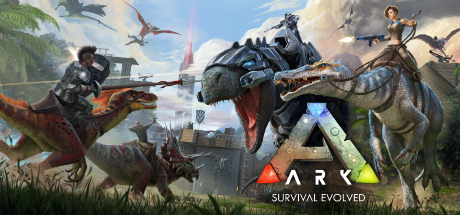
Having ascertained that the Ludic Aesthetic meets established requirements for the definition of a new aesthetic category, the reason this links to video games should also be pinpointed. While the simple answer is ‘for fun’, chapter four suggests there are three main reasons why video games are the core of an emerging aesthetic; firstly, the pleasure of play; secondly, the draw of collaboration and community whether ephemeral or direct; and thirdly, the expansion of free will and testing of action and consequence. Supporting background theories examining the development of these three main concepts were outlined in chapter two, and so this chapter will focus on the categorisation of the Ludic Aesthetic against Sianne Ngai's principles. Video games meet the three capitalist aspects directly, simply through the pleasure of play; with the WHO classifying gaming addiction as a mental illness on 18 June 2018 (Rajan, 2018), the draw of the play itself should certainly not be underestimated. Once indirect gaming through small screen remediation in the style of the Labeouf, Ronnko & Turner art collective became a style of its own through Twitch and YouTube games broadcasting as described in chapter three, the games community became accessible even to those who did not actually play; interest has been fostered in some members of the younger generation simply through their interest in their favourite YouTube and Twitch broadcasters; these games therefore circulate to a new, previously unconnected audience. For those who are immersed in aspects of the games community, a tribal connection is provided with even a language all its own; this reflects the work of authors such as Richard Coyne and Jeremy Lent as shown in chapter two. The desire for interactive entertainment that allows participants to experience new worlds and test action and consequence within them is reflected in the prevalence of MMORPGs and the ever-increasing desire for open-world gaming that allows players to develop their inner narrative at their own pace. True open-world gaming is rapidly becoming the holy grail of RPG developers, with worlds design indirectly linking to such fantasy hard-hitters as Anne McCaffrey’s ‘Dragonriders of Pern’ series, Stephen King’s ‘Dark Tower’ and Terry Brook’s ‘Shannara Chronicles’. The aim is to create the most open experience possible for the gamer, while still providing a storyline. The desire for developers to create something that is as large as real life, through games that create an entire, almost limitless new world, in some cases overtakes the playability itself. One example is Ark: Survival Evolved, a beautiful game that is so open-world that it becomes rote, almost boring, after a certain period and level of play. This concept mimics the desire for continual playability in all aspects of life, whether by learning, travelling, banking, waiting, or accessing applications in queues; all capitalist requirements to increasing task and sale completions.
Next: Conclusion
Or return to: Index
Previous: Chapter Four: Examination of a New Aesthetic