Scalar's 'additional metadata' features have been disabled on this install. Learn more.
Early Indigenous LiteraturesMain MenuThe Child Who Would be Sovereign: Settler Colonial Frustrations and the Figure of the Child in Gertrude Simmons Bonnin's American Indian StoriesBy: Kai ChaseIllicit Relations: The Challenges and Possibilities of Black and Indigenous Relationssoumya rachel shailendraLegibility and Ambivalence in 19th Century Indigenous Women's WritingAn exhibit on E. Pauline Johnson and Sarah Winnemucca by Emma CohenLyric Histories: An Investigation of Early Black (and) Native America through Poetic Vignettesby Kira TuckerMarriage and Empire in 19th Century Native American Women's Literatureby Angad SinghNot-not blood quantum: the Dawes Act and ambivalent Indigeneityby Yasmin YoonReading Indigenous Authorial Presence in 18th- and 19th-century ParatextsTitle Page for Isabel Griffith-Gorgati's ExhibitResistance on and off the Page: A Collaborative Conversation between Black and Indigenous Literary ContributorsFeaturing James Printer, Katherine Garret, Phillis Wheatley, and John Marrant (17th-18th Century Early Print Culture Participants)- By Lauren JohnsonSpiritual Armies, Resurrected Bones, and “Boundless” Continents: How Indigenous Activists in Early New England Reconfigured Puritan Millennialist NarrativesFeaturing texts of Samson Occom, William Apess, and the Wampanoag Bible. By Surya MilnerSovereignty or Removal: The Conflicting Indigenous Policies of 1835 in the Continental United StatesJulia GilmanWhat Does Water Do For Indigenous Peoples of the Great Lakes Region?Featuring Heid E. Erdrich, Simon Pokagon, Black Hawk, and Simon Kofe by Sarah Nisenson(Re)introducing Black Hawk and The Life (1833)BHR 1-IntroYasmin Yoonf7f231e474bf43796f973cd0ee560919050f7427Lydia Abedeen321b94302eca10e499769fd0179e64cd33bc4cd5Kira Tuckeracf97d948460e98cd439646cc2db7ae17c5ebd9dsarah nisenson7cb5d2c1682fbd145e76716f3924f03bf25c616aKai Chased7cab5968a3a916efd1a14a48cc4832d5d5514aeSoumya Shailendra86c246fcc4aea83787381bffd2b839885bef5096Bennett Herson-Roeserc8289125445a56c819045a0091daf0402b3e0875Surya Milner077f837f3d662fd5ef9055f8258e5c47bb11f714Julia Gilmanb860a8277eea484f91a1a9e0423cab4b52bae522Lauren Johnson98dac03e7c9c1ad41e1c0a8583704e55802f98baAngad Singhd2b8d1d68ec374981c9e99b7cb400803bc678231Emma Cohen146e757b9fc3b3b416edecbf79592e8d743d4ba1Charlotte Goddu2d4c020870148128c7824ece179e04cffe180d95Isabel Griffith-Gorgati985a05928a67a856791fffac3dbba8acc85f6f37
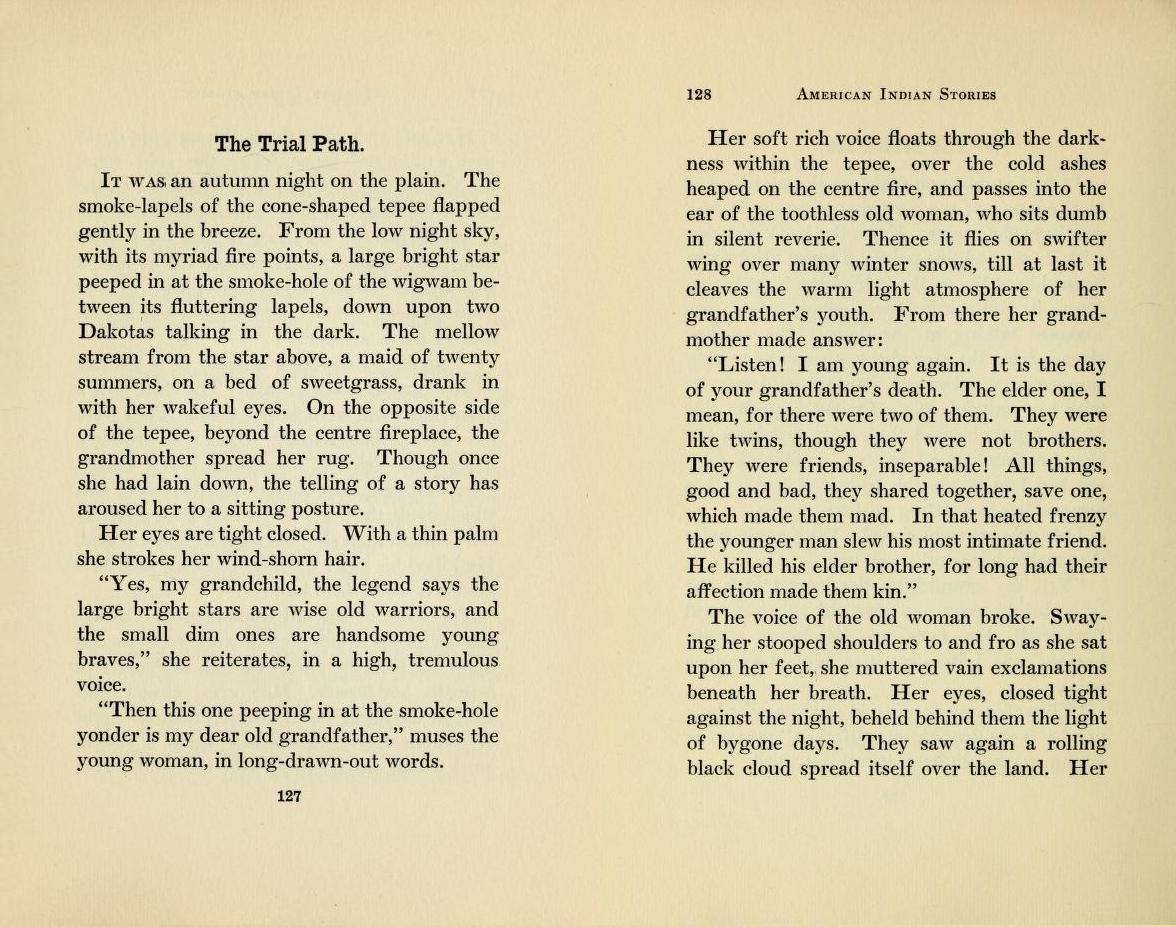
12022-12-12T09:45:39-08:00Kai Chased7cab5968a3a916efd1a14a48cc4832d5d5514aeOminous cloud shrouds the storyKai Chase3plain2022-12-12T11:58:08-08:00Kai Chased7cab5968a3a916efd1a14a48cc4832d5d5514ae
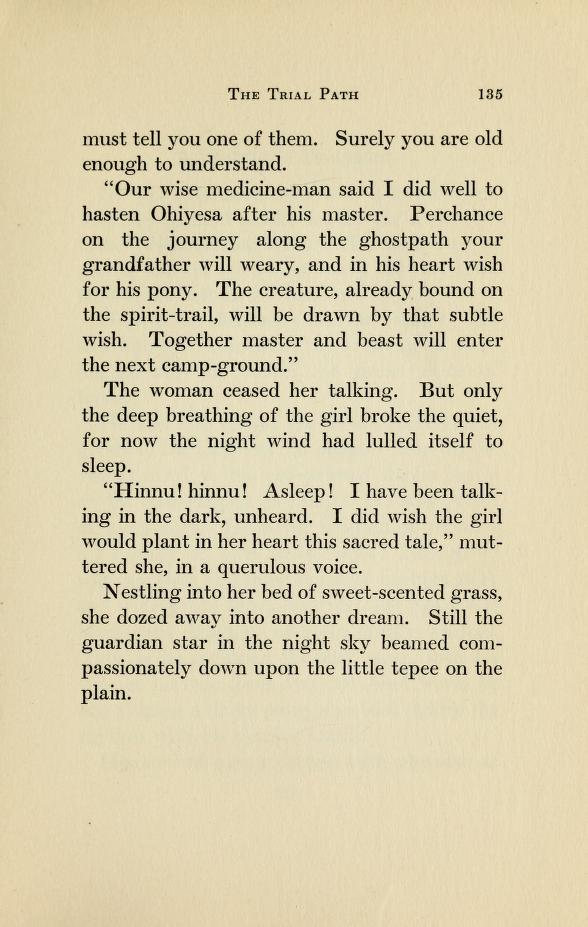
12022-12-12T09:42:04-08:00Kai Chased7cab5968a3a916efd1a14a48cc4832d5d5514aeConnections between generationsKai Chase3plain2022-12-12T11:58:08-08:00Kai Chased7cab5968a3a916efd1a14a48cc4832d5d5514ae
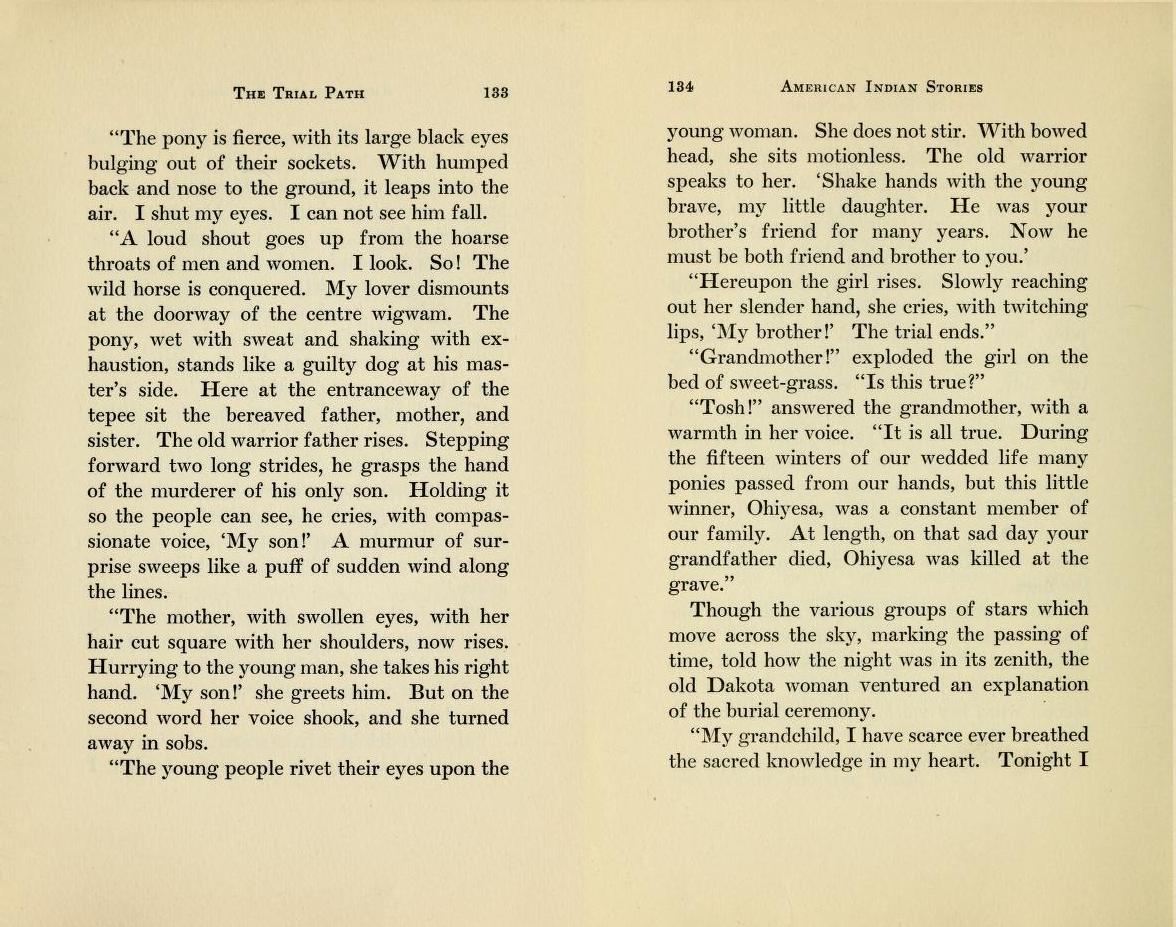
12022-12-12T09:43:29-08:00Kai Chased7cab5968a3a916efd1a14a48cc4832d5d5514aeThe story is told togetherKai Chase3plain2022-12-12T11:58:09-08:00Kai Chased7cab5968a3a916efd1a14a48cc4832d5d5514ae
1media/Zitkala-Sa art image.png2022-12-11T20:59:29-08:00"The Trial Path": Relational Reproductions of Kinship10Looking at Bonnin's story "The Trial Path" about a young man who murders his best friend presents a way to (re)imagine what kinship means despite, within, and against colonial conscriptions of lineage, inheritance, and belongingstructured_gallery2022-12-12T10:48:19-08:00To further complicate (non)biological kinship, I turn to Bonnin’s “The Trial Path.” The story is between an elder and her grandchild, who sits firmly atop a bed of sweetgrass as her grandmother tells of her family history. Following a young man who has killed his best friend/brother, “The Trial Path” shows the man going through a test which will determine whether he will be put to death for the murder.[1] Upon successfully completing the test, he is welcomed by the dead man’s family: “The old warrior father rises. Stepping forward two long strides, he grasps the hand of the murderer of his only son. Holding it so the people can see, he cries, with compassionate voice, ‘My son!’” (Bonnin 76). Through the trial, the man is linked back into his kinship ties, which he had severed through his act of violence. His connection to the family is further demonstrated as integral to the well-being of the community, as emphasized by the father “[h]olding it [his hand] so the people can see” (Bonnin 76). While the tale does not negate the longstanding effects of the violence (the family is bereft, there is emphasis on this being the father’s “only son”), it does emphasize that alternative kinship methods must come from a space of justice and continuance for the community to be well again (Bonnin 76). By valuing both biological and nonbiological kinship, “The Trial Path” presents Indigenous expansions of kinship as integral routes of healing and justice all while being framed through the connection of a grandmother and her granddaughter.
*Scroll over images to engage with their annotations* *all images come from the public domain from the following: Zitkala-Ša, American Indian Stories. [Internet Archive] Brigham Young University, Washington: Hayworth Publishing House, 1921.*
[1]Though the man is not biologically related, he is routinely referred to as the “brother” of the man he murdered due to their love and affection for one another.