Scalar's 'additional metadata' features have been disabled on this install. Learn more.
Creative Practice as Research: Discourse on MethodologyMain MenuContentsIntroductionThe Practitioner Model of Creative Cognition: A Potential Model for Creative Practice-Based ResearchModel research methods relevant for creative practice-based research projectsApplication of the Practitioner Model of Creative CognitionCommunity Discourse: Your Practice Research ModelsResources for Conducting and Teaching Practice-Based ResearchAbout the AuthorLyle Skains8ec9a01530aed114a2d78c359a32a6560b8c2714The Disrupted Journal of Media Practice
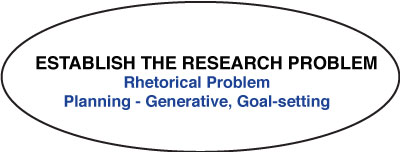
12016-01-14T12:06:02-08:00Establish a Research Problem/Question7plain2016-06-27T06:22:23-07:00 Establishing the research problem, which could be termed the overall rhetorical problem of the entire project, engages the processes of planning (idea generation and goal-setting). While this initial step appears quite straightforward — identify the area of interest, identify key gaps in knowledge, and formulate a research question designed to fill those gaps — in practice-based research this stage can be nebulous. It can be difficult to identify gaps when the researcher is engaged in an entirely new area or creative endeavor, as a basic level of knowledge and experience is required to, in essence, know what it is we do not yet know. Practice-based research is often a process of exploration and discovery, with many key insights arriving via serendipity, rather than as part of experiment design. Thus, the initial research question is often vague and typically open-ended, to permit flexibility in the practice and space for such serendipitous discoveries to occur.
In my project, the research question was: How does shifting from an established prose writing practice to a new digital composition practice affect the writer’s process and the resulting narratives? This question established a rhetorical situation and implied specific goals: the need for creative texts that permitted exploration and analysis that would answer the question. Thus, the creative text was designed to be coherent as a print novella, yet modular in the digital version, which enabled each digital chapter to experiment with a different digital platform. In order to facilitate an informed approach to the creative practice, however, a fundamental grounding in the domain was required: background research.