Better Wages
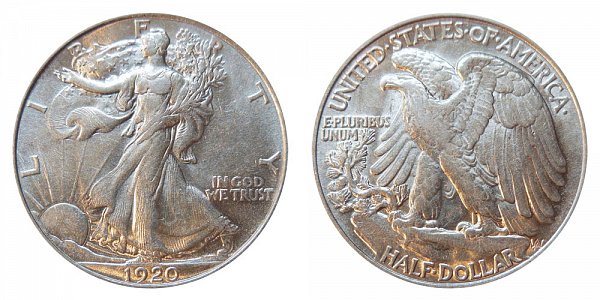
1920 Walking Liberty Half Dollars
The Mexican revolution and its attendant physical destruction, social upheaval, agricultural collapse, and inflation produced widespread suffering and drove people from the land in search of opportunities and a job with better wages. The expanding supply of Mexican workers was the economic development of the American west and southwest. The American people were not willing to do the job that needed to be done at the wage that was offered, which caused them to go elsewhere for work. As a result, railroads, mining, and agricultural businesses grew dependent on Mexican laborers to fix the labor shortage problem.
Many U.S. farm owners would recruit Mexicans and Mexican Americans because they had the belief that those desperate enough to work, especially with the decline in work in Mexico, that they would tolerate the living conditions and poor wages that other races would not.
The Mexican laborers often earned more working in the United States than they could have in Mexico’s civil war economy. California farmers paid their Mexican employees significantly less than white American workers, yet the Mexican and Mexican American laborers made up about three quarters of California’s farm workers by the 1920s.
As a rapid shift of Mexican population working in the U.S. increased and labor agreement was reached. The first labor agreement between the United States and Mexico was formed. Mexico required the U.S. farm owners to provide a legal contract for all Mexican workers. In this contract, farm owners had to guarantee conditions such as wages, work schedules, and better living conditions (in they applied). In turn, the U.S. government enforced the border between Mexico and the U.S. All Mexican immigrants coming in the United States has to have the correct paperwork and contracts so they would not be exploited.

1920 Mexico 20 Pesos Gold Coin
This page has paths:
- Chapter 2 Karida Santos