Marianna Mapes, Disease and the Body Politic: The National Leprosarium at Carville, Louisiana
Introduction: Negotiating the "Limitations" of Illness
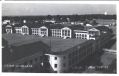
Image: Dorms at the Carville center (United States Marine Hospital); courtesy of the Smithsonian Institute
In 1894, a facility to quarantine Americans with leprosy (now known as Hansen's Disease) was founded on the site of the former Indian Camp Plantation in Carville, Louisiana, halfway between Baton Rouge and New Orleans (Mizell-Nelson 306). Though leper colonies had been operational in the American South for more than one hundred years, the leprosarium at Carville was the first of its kind in the nation (Mizell-Nelson 306). It was borne out of persistent, nationwide – indeed, global –stigma around individuals with leprosy, fueled by deep misunderstandings of its causes (Sermrittirong and Van Brakel 37) and the mythification of the disease through, e.g., wisdom literature (Gussow and Tracy 698). Given the common belief that leprosy was highly contagious, quarantine of all individuals with the disease was mandated once the leprosarium came under federal control in 1921 (Mizell-Nelson 308). Through the 1930’s, it was standard practice for patients to be assigned pseudonyms upon their arrival at Carville “in order to protect their families’ reputations” (Mizell-Nelson 309).
We now know that leprosy is a highly treatable, chronic infectious disease caused by Mycobacterium leprae (World Health Organization). Leprosy is a disease of both low pathogenicity and low virulence – it is spread only through droplets from the nose and mouth, and can remain latent for up to 20 years; though it can cause significant damage to the skin and nerves, it can be cured with multidrug therapy (WHO). But even at Carville – that is, in spaces designed for the deployment of clinical expertise in the treatment of leprosy – deep misconceptions about the causes and progression of the disease flourished. During its years of operation, the way in which the leprosarium carved up physical space reinforced rigid norms of regarding which bodies were deemed unworthy of civic engagement (and therefore, of being seen in the public square), and what ought to be done with such bodies. Lest we presume that the hospital’s architectural, hence cultural, history is no more than an uninterrupted dirge, it is important to note that Carville also served as a stage for recognizing the plasticity of identity (dis/abled or not) and challenging its marginalization. As the site of considerable transformation, the hospital offered opportunities for new ways of engaging with the notions of bodily autonomy of which patients had long been deprived (for example, it was not until the early 1950’s that Carville patients successfully regained their right to vote, or were permitted to go on leave to visit family; “Crusade in Carville”). Stripped of their birth names, patients responded not by reclaiming those names, but by constructing even richer, more imaginative identities for themselves. Carville was thus the backdrop for the unfolding of psychosocial pageantry.
To date, discussion of the architecture at Carville has been quite sparse; it is this lacuna in scholarship that I aim to address here, delving into a rich variety of sources covering aesthetic trends in the American South, the history of architecture as a form of social control, and even the ethical norms governing medical practice during Carville’s years of operation. For the most part, my project focuses on the overall plan of the leprosarium, and thus relies primarily on images that offer a sense of buildings’ relationship to the greater whole, though I will offer some discussion of finer architectural details. In addition, given the limited availability of archival images of the leprosarium, attention to the broader hospital campus design is the most richly supported by the archival material.
"The patients' individual and collective efforts...ultimately transformed the Carville leprosarium from a de facto penal colony to a modern treatment and research facility" (Mizell-Nelson 301-02).
The spatial arrangement of the leprosarium and the structure of the buildings themselves present an interesting reference point for evolving understanding of the nature of the disease and shifts thinking more generally about patient autonomy and the role of medicine. We find that the built environment is outgrown by deepening scientific understanding so that the structures reflect traditional medical lore’s conception of leprosy. To put the point another way, the ways in which certain structural features are rendered obsolete by a firmer grasp of the disease and proper treatment stand as artifacts of a different conceptual framework for thinking about wellness and medicine.
Though the lens of disability theory is not the sole perspective I use for this project, it is especially valuable in understanding Carville – with all its vestiges and artifacts of oppressive thinking about wellness and disease – as a site of negotiation, transformation, and reclamation of citizenship. The hospital’s annual Mardi Gras celebration not only afforded opportunities for negotiations of identity but direct challenges to the conceptions that individuals with leprosy were fated to live out their days in clinical confinement, hence civic disengagement. The Mardi Gras pageantry at Carville quite literally transformed the facility into a stage for these seemingly innocent, but nonetheless radical, experiments; one patient, Johnny Harmon, recalls dressing up as Mae West for the celebration one year, thereby playing with accepted notions of gender, sexuality, and bodily autonomy (Gaudet 27). The counterpoint posed by architecture became all the more striking as Carville very slowly opened itself up to the world, e.g., allowing patients to a brief leave each year “when their disease is quiescent,” or transferring them to home care from the clinical setting (“Crusade in Carville”). Inherently normative, diagnostic, and probing, the clinical space appears wholly oppressive at first blush. Deeper consideration of Carville’s architectural narrative, however, reveals the hospital’s repurposing as a backdrop for patients’ negotiation and renegotiation of their identities as embodied persons.
Bibliography
"Crusade in Carville." Time 58.13 (September 24, 1951), 94.
Downs, Joseph. "The Greek Revival in the United States." The Metropolitan Museum of Art Bulletin 2.5 (January 1944), 173-76.
Gaudet, Marcia. "The World Downside Up: Mardi Gras at Carville." The Journal of American Folklore 111.439 (Winter 1998), 23-38.
Gussow, Zachary, and George S. Tracy. "The Use of Archival Materials in the Analysis and Interpretation of Field Data: A Case Study in the Institutionalization of the Myth of Leprosy as 'Leper.'" American Anthropologist 73.3 (June 1971), 695-709.
Kafer, Alison. Feminist, Queer, Crip. Bloomington: Indiana University Press, 2013.
Martin, Daryl, Sarah Nettleton, Christina Buse, Lindsay Prior, and Julia Twigg. "Architecture and health care: a place for sociology." Sociology of Health and Illness 37.7 (2015), 1007-1022.
Miller, Franklin G. "Clinical Research before Informed Consent." Kennedy Institute of Ethics Journal 24.2 (June 2014), 141-57.
Mizell-Nelson, Michael. "Treated as Lepers: The Patient-Led Reform Movement at the National Leprosarium, 1931-1946." Louisiana History: The Journal of the Louisiana Historical Association 44.3 (Summer 2003), 301-24.
Sermrittirong, Silatham, and Wim H. Van Brakel. "Stigma in leprosy: concepts, causes and determinants." Leprosy Review 85 (2014), 36-47.
Sternberg, Mary Ann. Along the River Road: Past and Present on Louisiana's Historic Byway. Baton Rouge: Louisiana State University Press, 1996.
World Health Organization. "Leprosy." May 2015. http://www.who.int/mediacentre/factsheets/fs101/en.
Yanni, Carla. Architecture of Madness: Insane Asylums in the United States. Minneapolis: University of Minnesota Press, 2007.
Zelinsky, Wilbur. "The Greek Revival House in Georgia." Journal of the Society of Architectural Historians 13.2 (May 1954), 9-12.