Thanks for your patience during our recent outage at scalar.usc.edu. While Scalar content is loading normally now, saving is still slow, and Scalar's 'additional metadata' features have been disabled, which may interfere with features like timelines and maps that depend on metadata. This also means that saving a page or media item will remove its additional metadata. If this occurs, you can use the 'All versions' link at the bottom of the page to restore the earlier version. We are continuing to troubleshoot, and will provide further updates as needed. Note that this only affects Scalar projects at scalar.usc.edu, and not those hosted elsewhere.
Main MenuChristine Andersonc77a53254a311e84e59d25f85fa3d7df41e0d37f
Introduction
1media/shoes ps.jpg2016-07-26T08:52:17-07:00Christine Andersonc77a53254a311e84e59d25f85fa3d7df41e0d37f1027575Purpose of Sourcesvistag2017-07-12T11:48:09-07:00Christine Andersonc77a53254a311e84e59d25f85fa3d7df41e0d37fMigration and immigration are the reasons that as Americans we have such a lively, and admittedly sometimes troubled, engagement with diversity. Today, immigration is the focus of public debate, yet dialogues are difficult without shared understanding of context. The sources on this web site are designed to be the basis for discussions of im/migration.
This site offers primary documents that can be used as a basis for Americans of different backgrounds to reflect on how they and their ancestors arrived here, and to explore how their experiences intersect with others. We hope that shared examination of historical texts and artifacts of our im/migrant pasts will help us engage critically with what is universal as well as what is unique about our experiences and contemporary debates about immigration. Everyone is welcome to use these primary sources to spur classroom and community discussions.
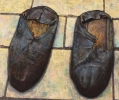
The symbol of this project is a painting of Ignatius of Loyola’s shoes by Cincinnati artist Holly Schapker suggesting the willingness of Ignatius of Loyola and the early Jesuits to travel to share and to learn. Blending the willingness of Ignatius of Loyola and the early Jesuits to travel to share and to learn and their commitment to the analytic rigor of the liberal arts, we will address our shared and differing pasts.
Supported by a fellowship from the Conway Institute for Jesuit Education at Xavier University.
This page has paths:
1media/shoes ps.jpg2016-07-26T08:21:43-07:00Christine Andersonc77a53254a311e84e59d25f85fa3d7df41e0d37fIgnatius Loyola Discussions of Im/MigrationChristine Anderson20Ruth J. and Robert A. Conway Institute for Jesuit Educationbook_splash2017-07-06T10:22:13-07:00Christine Andersonc77a53254a311e84e59d25f85fa3d7df41e0d37f
12017-07-06T11:30:47-07:00Christine Andersonc77a53254a311e84e59d25f85fa3d7df41e0d37fEarly Jesuits in North America6vistag2017-07-07T08:56:45-07:00Christine Andersonc77a53254a311e84e59d25f85fa3d7df41e0d37f
1media/shoes ps.jpg2016-09-13T04:57:10-07:00Christine Andersonc77a53254a311e84e59d25f85fa3d7df41e0d37fThe Big Picture3Background Information and Resourcesvistag2017-07-07T09:08:30-07:00Christine Andersonc77a53254a311e84e59d25f85fa3d7df41e0d37f