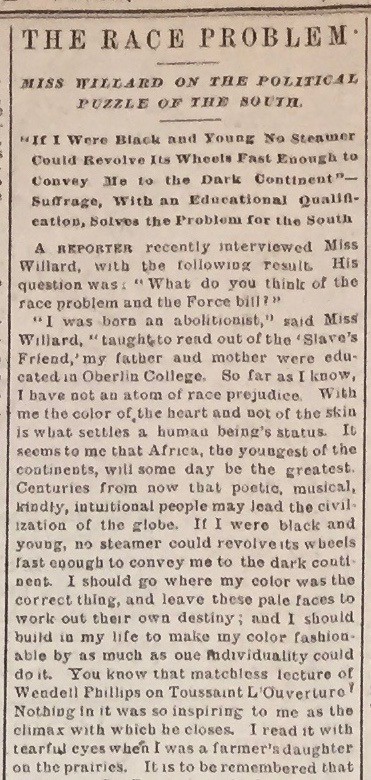
12019-01-29T16:18:47-08:00The Center for Women's History and Leadership396bd2bebf501b08ca215cf721fbba097eb2e1a2304255plain2019-01-29T16:32:20-08:00The Center for Women's History and Leadership396bd2bebf501b08ca215cf721fbba097eb2e1a2The "Force bill" refers to a law that was then under consideration in the U.S. Congress. It would have allowed the federal government to supervise elections in the Southern states. The goal was to protect black voting rights. Southern Democratic opponents of the bill argued that it interfered with states' rights to manage elections and that it was unacceptable overreach by the federal government.
Contents of this annotation:
12019-01-09T15:29:16-08:00The Center for Women's History and Leadership396bd2bebf501b08ca215cf721fbba097eb2e1a2Voice Interview 11plain2019-01-09T15:29:17-08:00The Center for Women's History and Leadership396bd2bebf501b08ca215cf721fbba097eb2e1a2