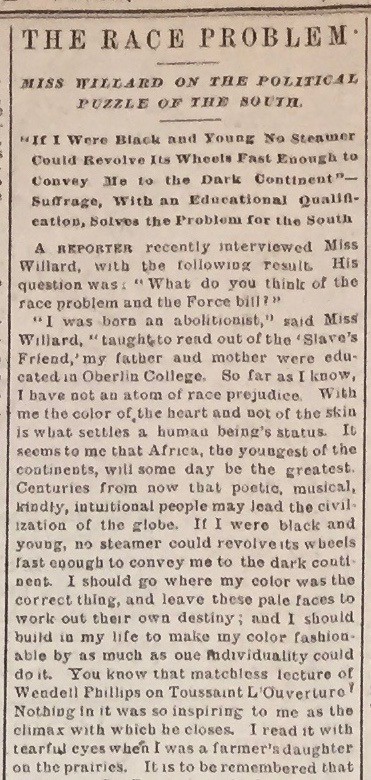
12019-01-29T16:23:57-08:00The Center for Women's History and Leadership396bd2bebf501b08ca215cf721fbba097eb2e1a2304255plain2019-01-29T16:32:21-08:00The Center for Women's History and Leadership396bd2bebf501b08ca215cf721fbba097eb2e1a2Here Willard expresses support for the controversial colonization (or "Back-to-Africa") movement, which encouraged black Americans to resettle in west Africa. Many black Southerners embraced the movement during the 1890s, as racial violence peaked and white governments rolled back civil rights. But some white Americans also advocated colonization. They believed that the only way to end racial conflict would be total separation of the races.
Contents of this annotation:
12019-01-09T15:29:16-08:00The Center for Women's History and Leadership396bd2bebf501b08ca215cf721fbba097eb2e1a2Voice Interview 11plain2019-01-09T15:29:17-08:00The Center for Women's History and Leadership396bd2bebf501b08ca215cf721fbba097eb2e1a2