Pressure Mounts
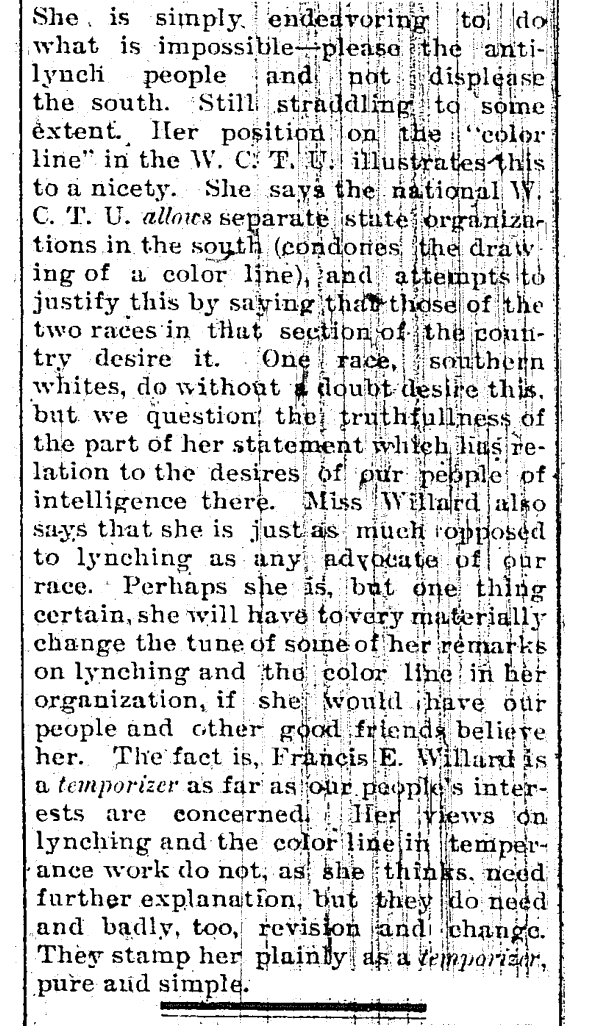
"Frances, A Temporizer"
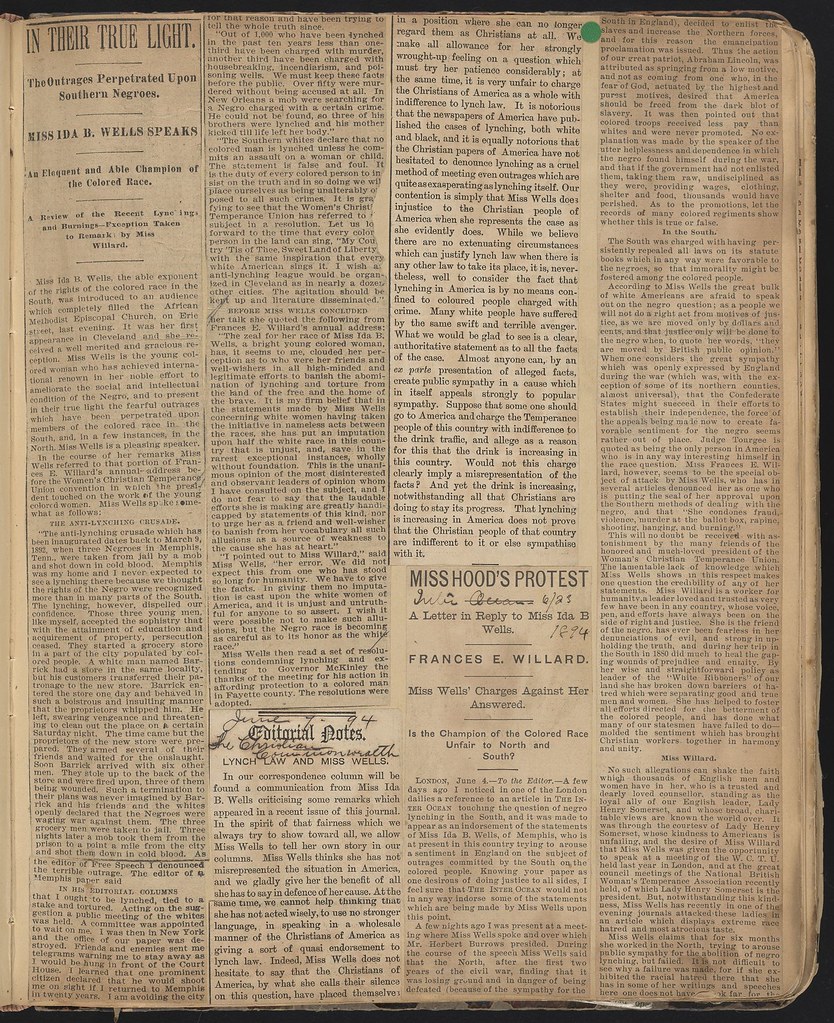
Frances Willard's comments at the WCTU's convention in 1894 drew scathing criticism from the editors of the Cleveland Gazette, the city's black newspaper. In the piece below, the editors accused Willard of trying to appease white Southerners in her statements about lynching. They also questioned Willard's account of the WCTU's policy toward its black members. Willard said that the WCTU allowed Southern chapters to be segregated. But what that really meant, the Gazette argued, was that it accepted the "drawing of a color line."Their argument was prescient: only two years later, the Supreme Court ruled in Plessy v. Ferguson (1896) that racial segregation was constitutional, as long as the separate facilities were of equal quality. That decision laid the legal and rhetorical foundation for decades of Jim Crow segregation--where in practice, of course, the separate facilities for black people were almost never equal.
This type of criticism from the black press made it more difficult for Willard to claim the credentials of an abolitionist and a "friend of the colored people," as she had cast herself throughout the conflict.

Frederick Douglass
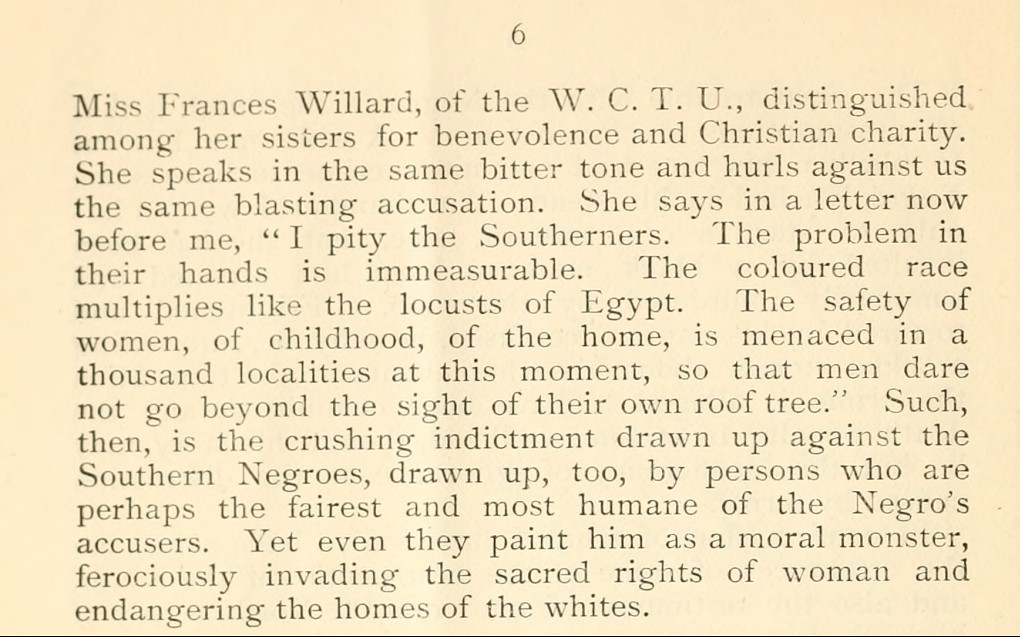
Another factor that made it more difficult for Willard to fall back on her abolitionist family history was the criticism of Frederick Douglass (1818-1895). A formerly enslaved abolitionist, orator, writer, women's rights advocate, and social reformer, Douglass was internationally famous and respected. His opinion carried great weight not only among black Americans, but in the white reform community in the US and Great Britain. Friendly with Willard, Douglass was also a strong ally of Ida B. Wells and her anti-lynching campaign. He wrote introductions to many of her articles and pamphlets, helped raise funds for some of her lecture tours, and publicly endorsed her and her work.While Douglass had praised Willard in the past, he criticized her in the thick of her conflict with Wells. The below excerpts are from the final pamphlet he wrote before his death in February of 1895, entitled Why is the Negro Lynched? In it, he quotes directly from Willard's 1890 interview in the New York Voice, which Wells had likely brought to his attention.
"Wrong Impressions"
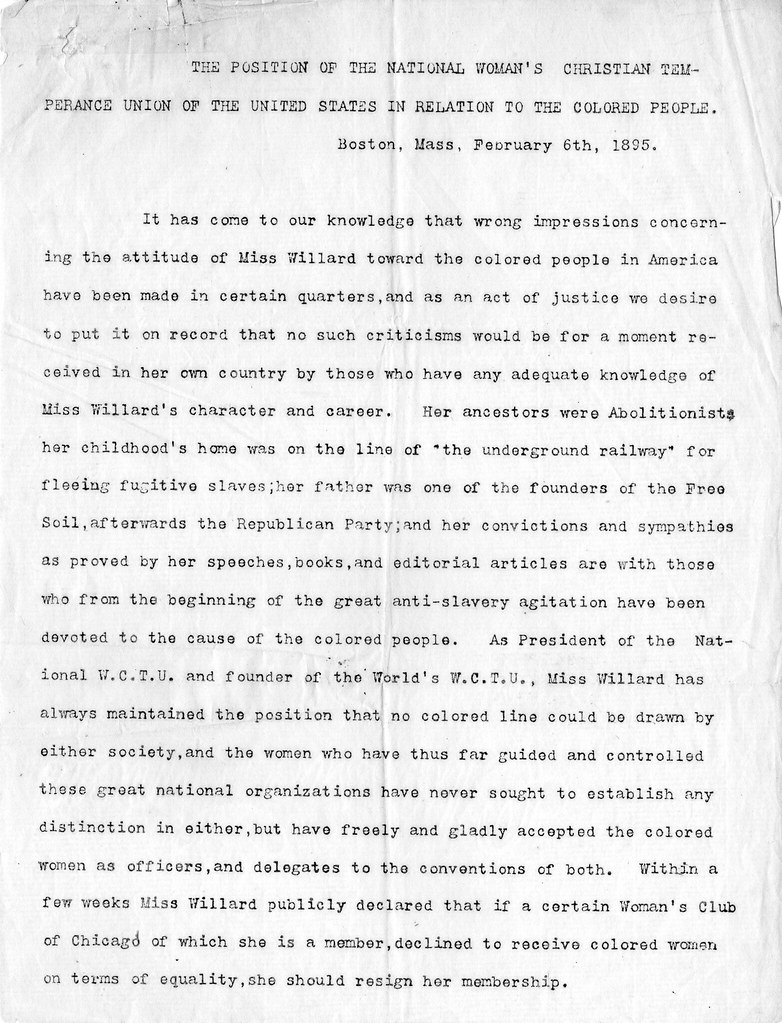
In response to this kind of criticism and the increasing pressure on Willard and the WCTU, Willard and Lady Henry Somerset sought to rally support for Willard from credible allies. They circulated this letter, apparently written by Somerset, defending Willard's reputation and character. It echoes Willard's earlier defense of herself as the child of abolitionists.The letter was signed by a number of allies with credibility to black audiences--including Frederick Douglass. Since he had been criticizing Willard, his choice to add his name is puzzling. Perhaps he felt that Willard's comments at the 1894 convention were sufficient apology, but we don't know for sure. He died only a few weeks after this letter was published.