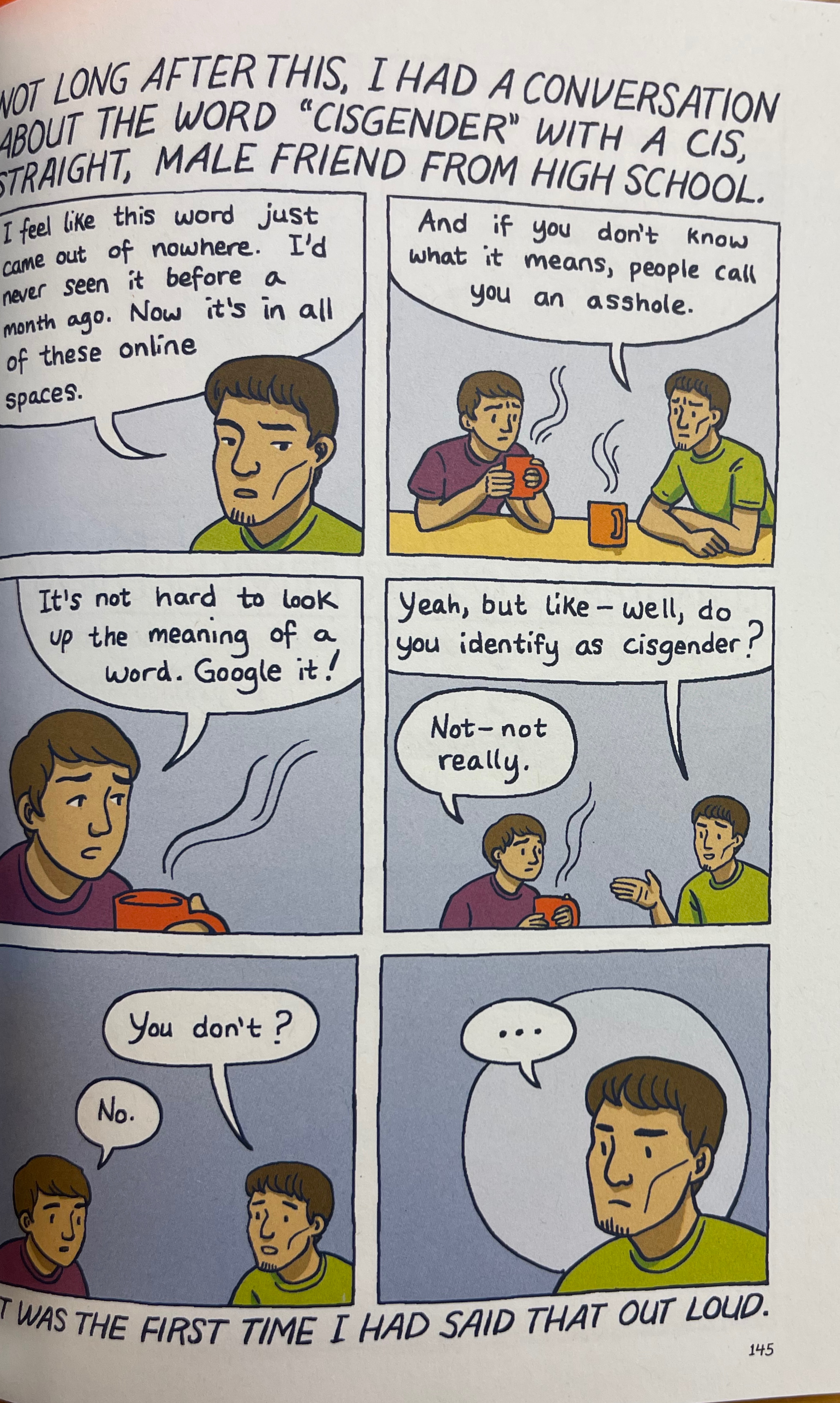
1media/IMG_3053_thumb.jpeg2022-08-15T11:42:44-07:00Margaret Dahlstromb09d7a6d81572eb5143ab94775de79a428d832d6408031From Gender Queer By Maia Kobabeplain2022-08-15T11:42:45-07:00Margaret Dahlstromb09d7a6d81572eb5143ab94775de79a428d832d6
This page is referenced by:
12022-08-15T11:38:41-07:00What is Cis6plain2023-03-03T13:39:49-08:00Cisgender people are people who's gender match their gender assigned at birth. Cis as a label was invented in the 1990's and popularized in the 2010's as a means to distinguish between people who are and aren't trans. Cis- was coined from the latin word meaning "on the same side as." Much like the modifier hetero-, cis- is not a slur but rather a descriptor for linguistic clarity. Much like how the modifier 'biological' before the word parent acts as a helpful clarification in medical contexts without diminishing adoptive parents paternal roles, cis can be helpful to describe medical or social distinctions between people who are and aren't trans much more clearly than words that assign value like 'biological' or 'normal.'