Scalar's 'additional metadata' features have been disabled on this install. Learn more.
The Book AsMain MenuA Repository of InformationA PerformanceA JourneyJessie CarterA Conceptual Playground for Choice(sagesolar, 2014, “The king of hearts”)A Medium for Universal LanguageA Phenomenal ReadingA Relationship Between Recto and VersoA Vision of the FutureA Repository of LanguageKate Aberman74d96e55dd29b74bef0e0a20c2d79e879fab26ccEmmie Banksd3c00922e17d33400599c8143d1d353f7d36ea7aJessie Cartera6f04f02805133baaf416ab9fcd9a4a2b857b080Deanna Fayed2f0ded76fb9215a15ea7a11b638a892a604843bfGabby Huberta3f266b029aa2bada1c10fd4a31317d37a1bec9dKatherine King6125a92332113f4973e618b8e428aac70a6ed790Carol Leea596a4440954bb8282b044cb431f3d2b8a9a8e75Sarah Richmanbeb66f0b62cd0c55d75ac46cfcf447f52ffe6aa8Matthew Winz5800f51dc1a62f1d2397973f41e4b16a521351b3whitney trettienf2bbb7126b60dc1bee07050dccbd9d30f12d7b2b
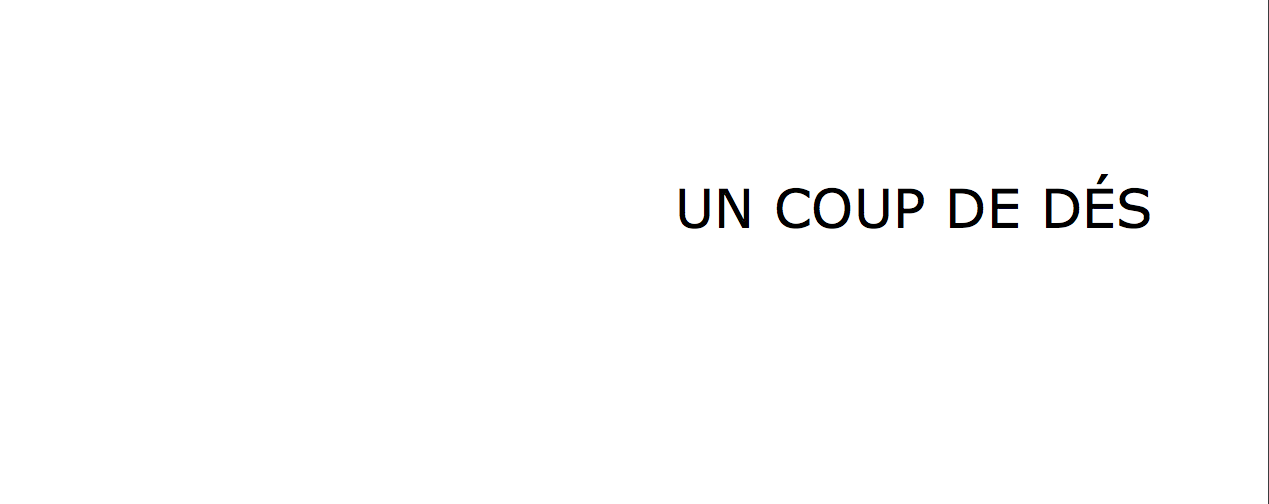
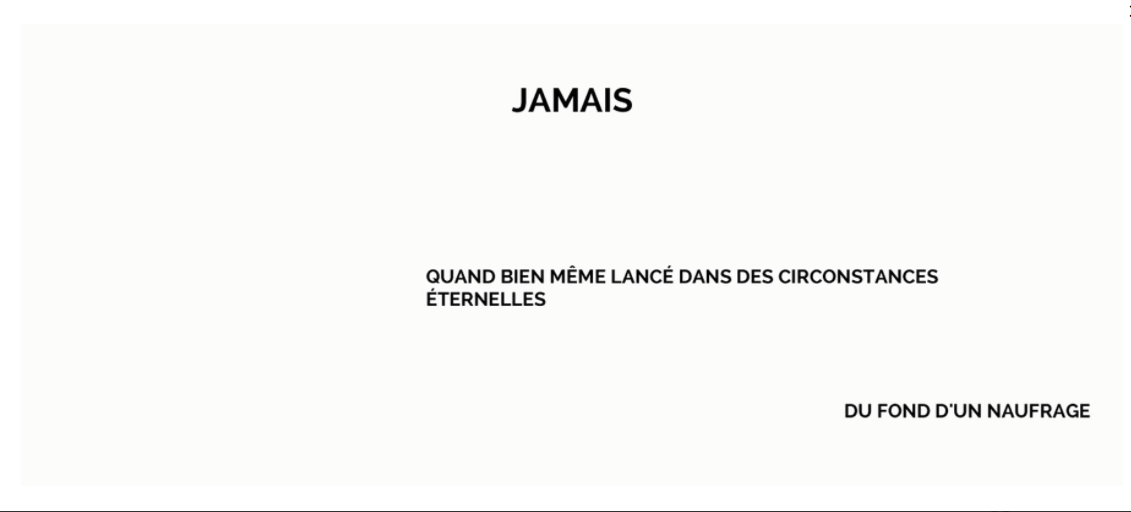
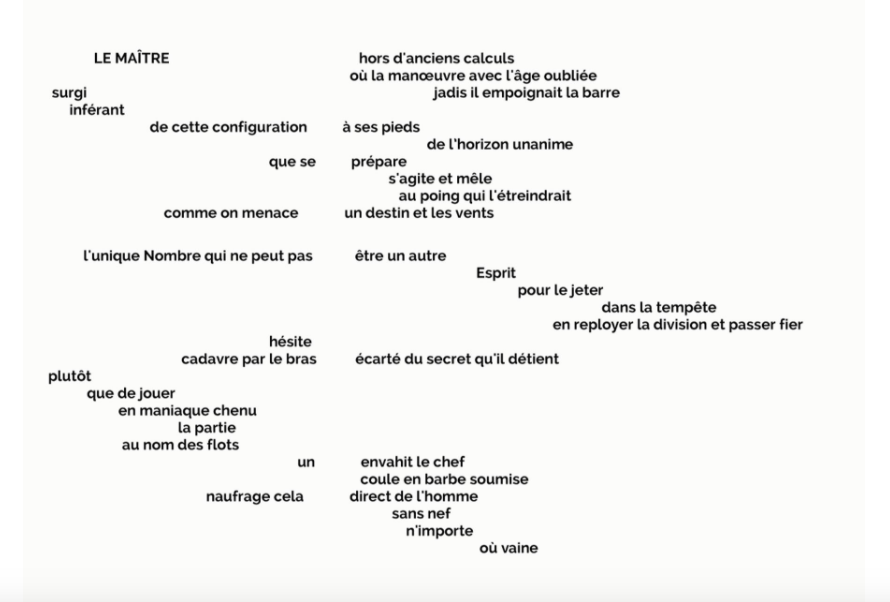
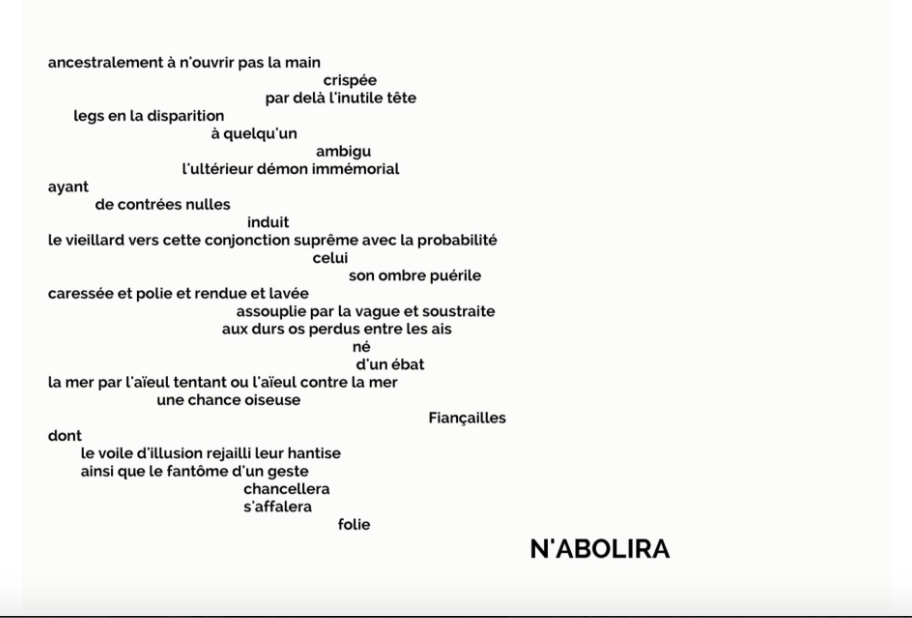
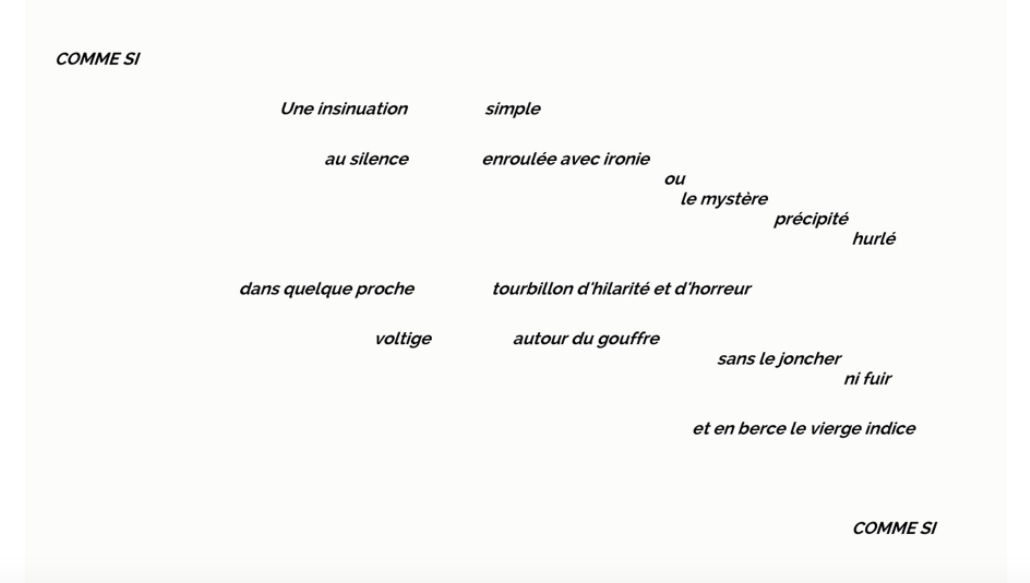
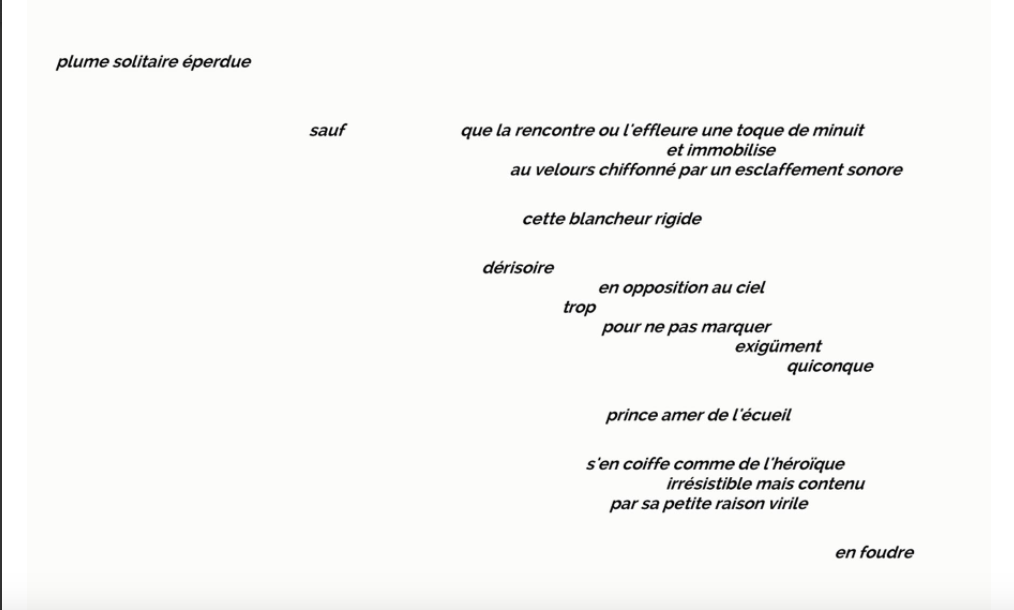
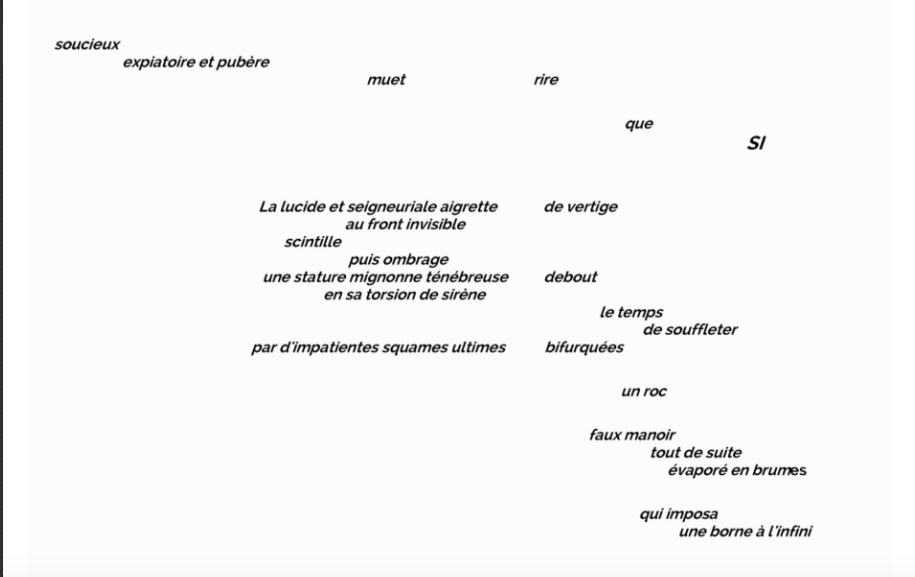
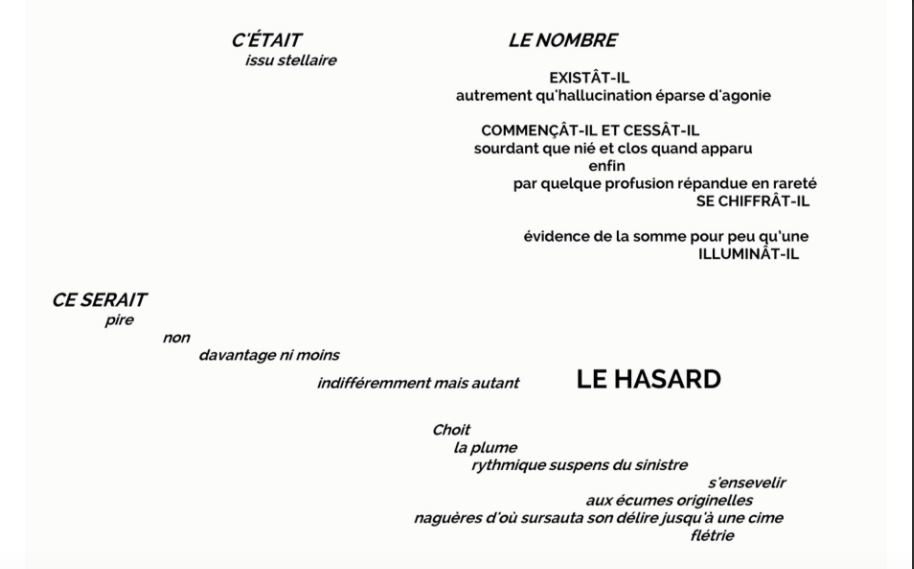
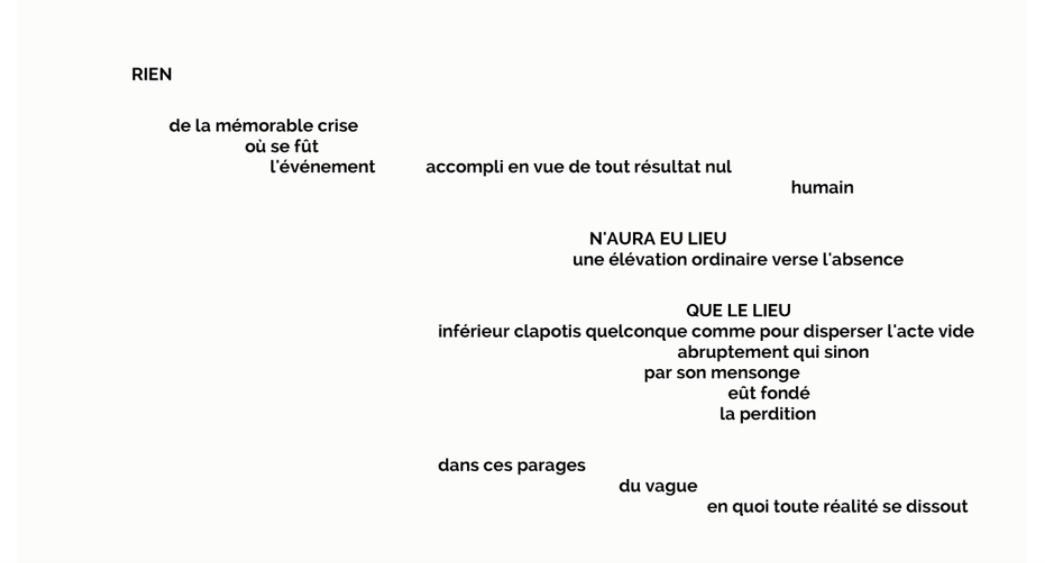
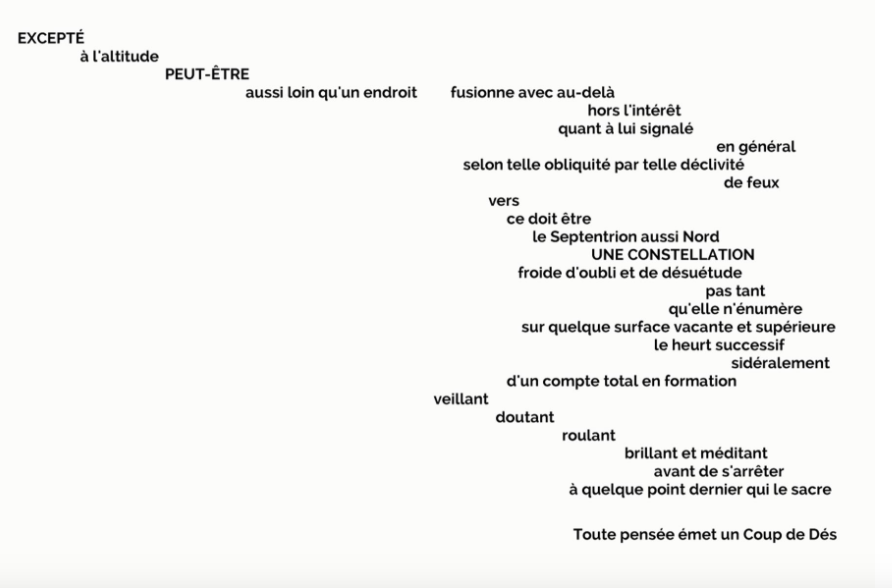
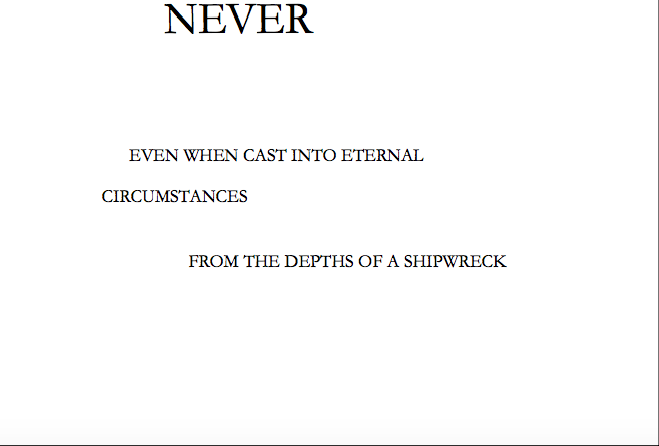
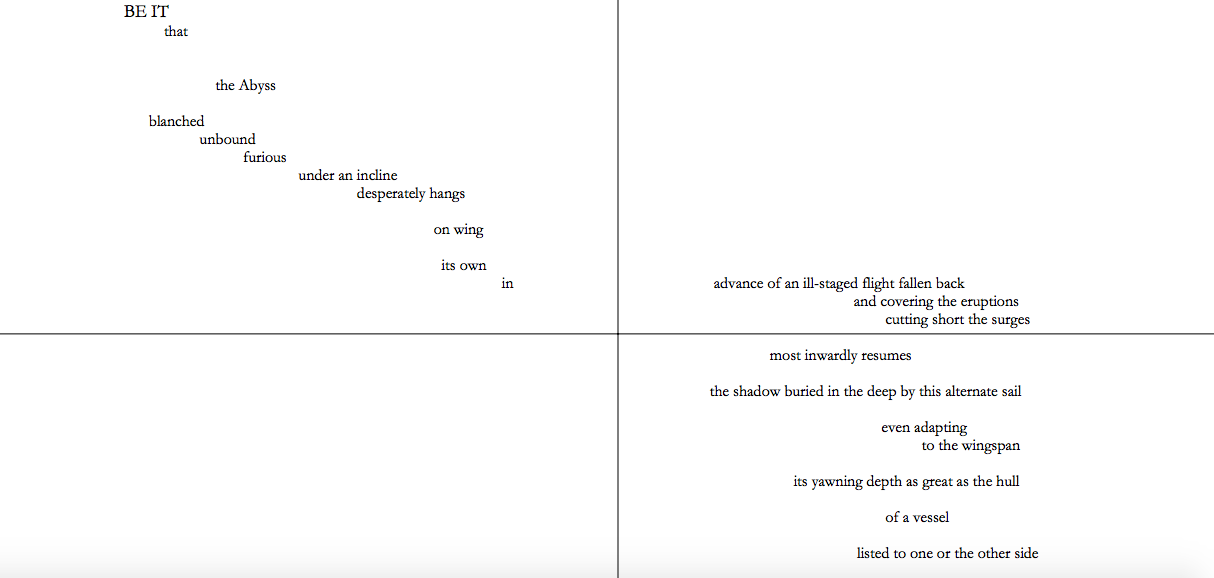
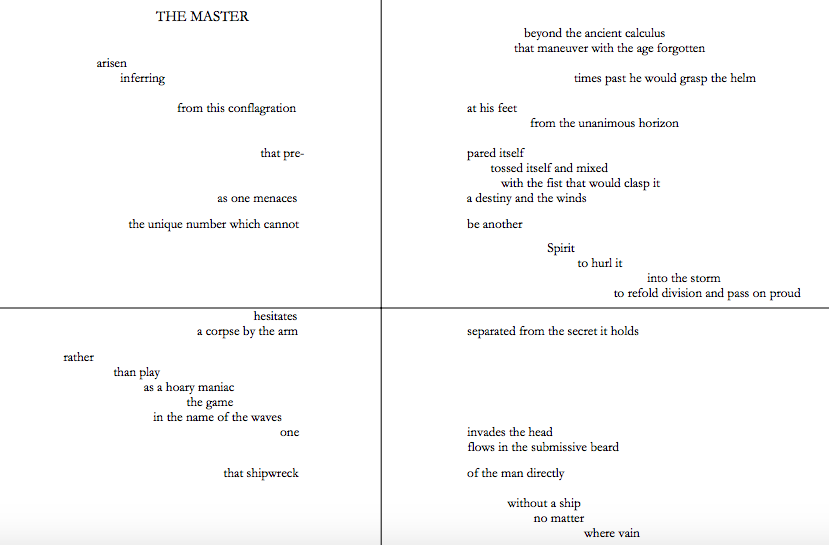
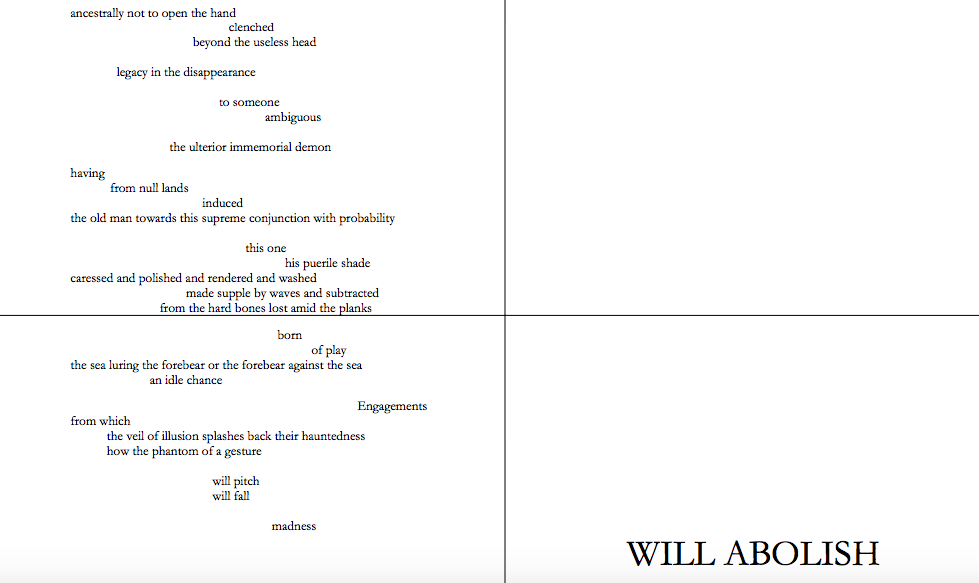
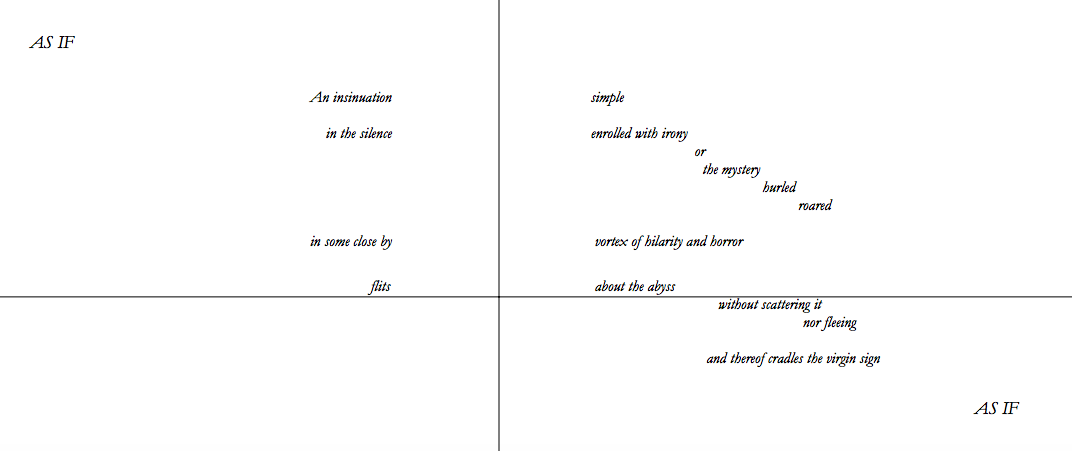
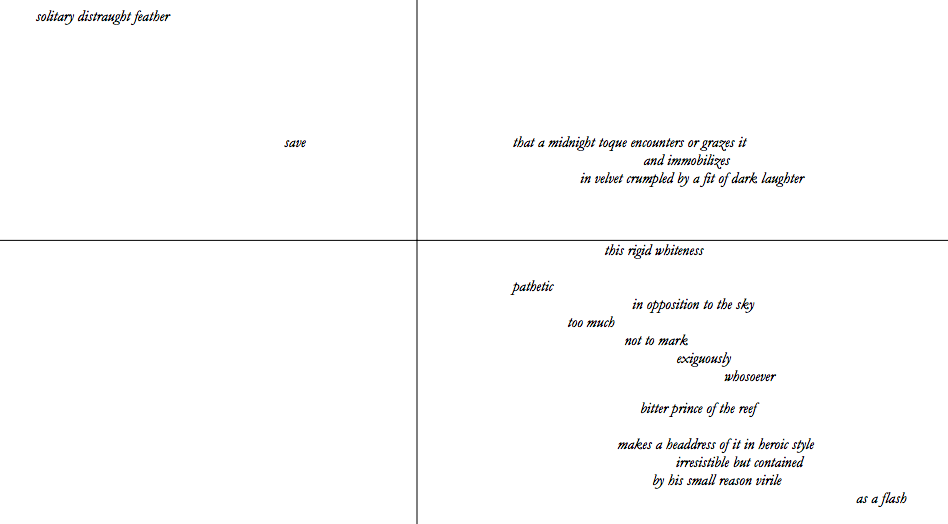
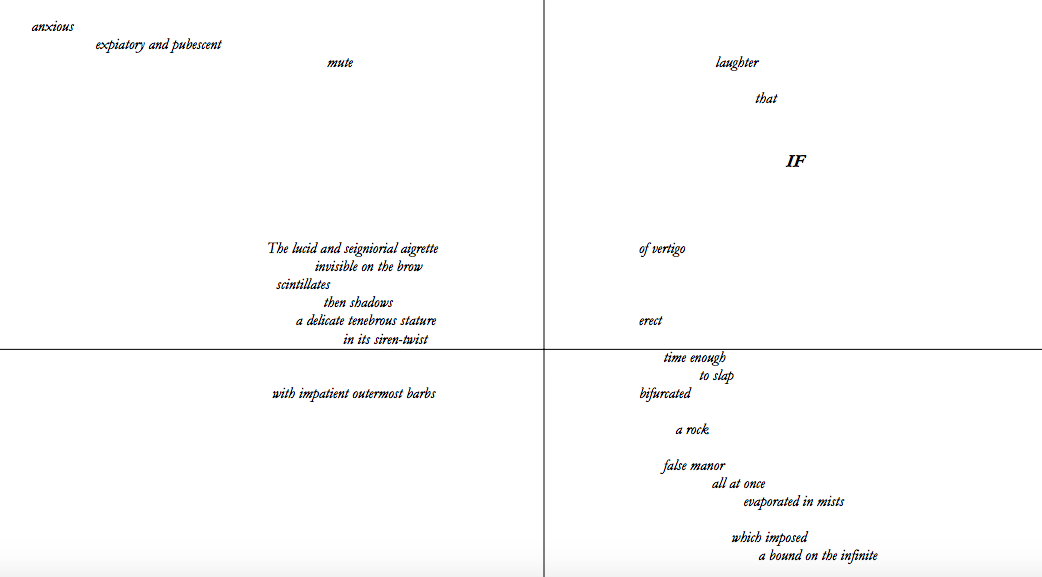
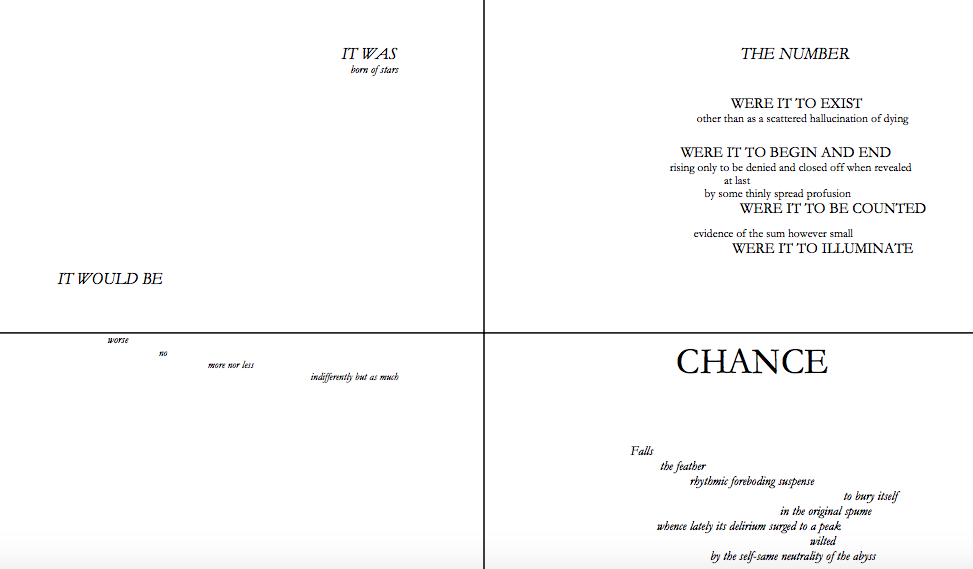
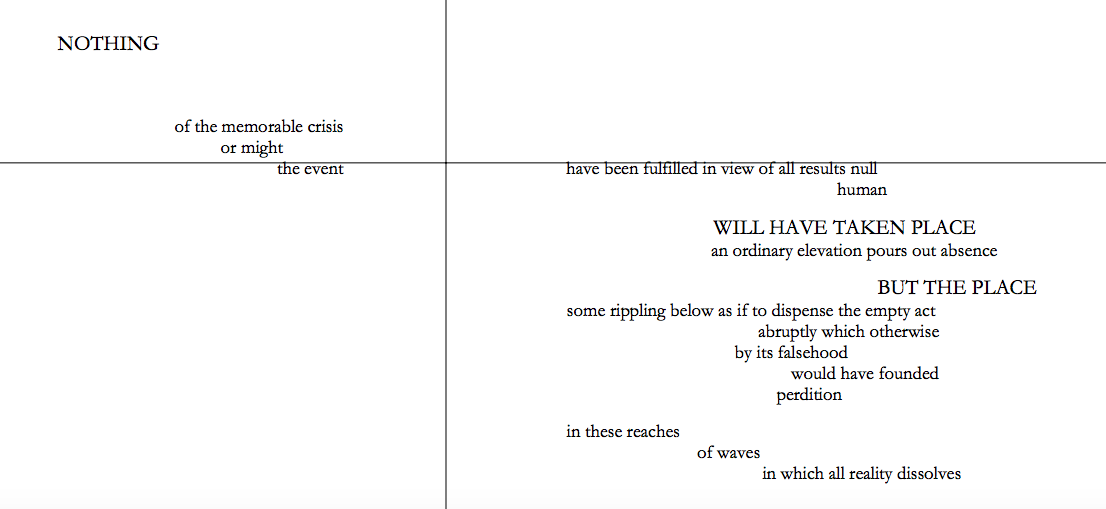
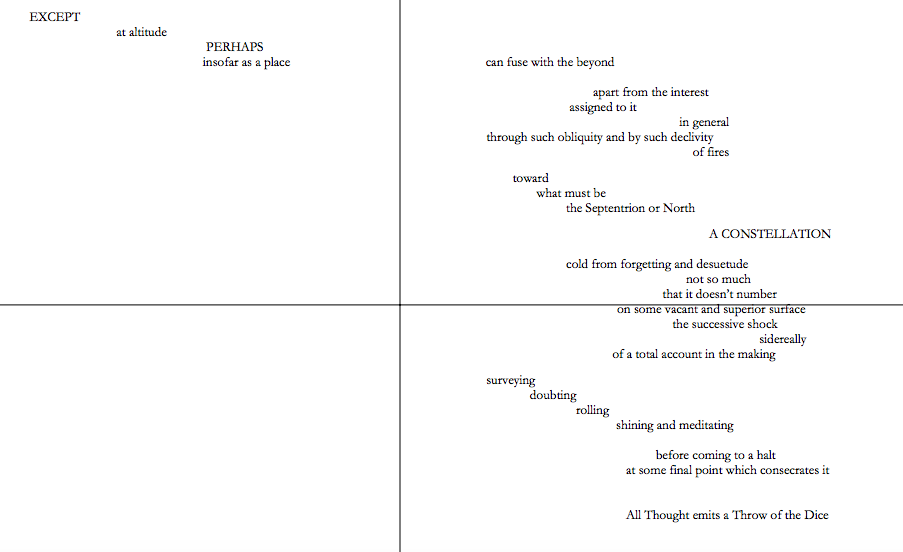
12016-12-03T10:29:40-08:00Un Coup De Des par Stephane Mallarme14gallery2016-12-09T08:28:48-08:00By Carol Tran UnCoupDeDes (AThrowof the Dice), by StephaneMallarme is a tumultuous, discombobulating poem (written in 1897) that takes you on a literal and figurative journey on a ship. I want you to take a couple of these questions into consideration as you throw the dice and read this. What do you think is happening? Are there certain words that you notice first, why is that? There may be specific words that you are drawn to, why do you think this is? What kind of imagery is going on in your mind?
Tweet using #takeyourpick2016 about what you thought this poemwasabout!
After you're done, read the explanation below, and tell me if it aligned with your thoughts in the comments.
Mallarme says that A Throw of the Dice Will Never Abolish Chance. Did you catch that? Those were all of the capitalized bolded words that were strewn throughout the poem. Mallarme's poem relates to the motif of choice in this exhibit due to his typography. He deliberately bolds some words, italicizes others, and minimizes or maximizes font sizes. Throughout this poem, you, the reader, is actively engaging in the text by picking and choosing which words you are drawn to first and which words you want to read first. There sometimes appears to be no right or wrong way to being the poem and no consistent order either. However, due to his use of typography, Mallarme's visuals remain the same. A lot of the imagery involves the sea, shipwreck, constellations, and shadows conveying themes of a journey of individual understanding. For example, page 9 of the poem confuses you upon looking at it. Should you read horizontally or vertically? Do all the words of the same type correlate? How do you decide if you should shift right in the middle of page? Should you keep reading down, or do you start reading horizontally because that particular sentence makes more sense? "Anxious expiatory and pubescent mute laughter..." makes more sense than "Anxious expiatory and pubescent mute laughter The lucid and seigniorial aigrette" but the "seigniorial aigrette" portion makes more sense reading vertically than horizontally. The message of "A Throw of the Dice Will Never Abolish Chance" is noticed because of its typography. Mallarme has manipulated these messages to get a meaning across and thereby allows the reader to more closely interact with the text and make their own choices just as he says with "A Throw of the Dice will Never Abolish Chance". In arranging the text the way he does, he does not abolish chance - the reader is able to choose the path that they take to glean the story. However, Mallarme cleverly situates imagery throughout the poem and manipulates certain words so that the reader is more inclined to choose a certain path so he exerts some degree of control over the reader's choices.
Mallarme's "Coup de Des" is the first step in this chronological quest of the evolution of the book. The codex form uses a traditional left to right reading pattern in standard type. Mallarme was one of the first thinkers of his time to think about altering the left to right pattern that individuals are so used to. He invites readers to interact physically with the text, expanding their interpretation of the work rather than just having them read the poem in a stereotypical straight pattern.
BONUS! To hear a reading of the French original of Mallarme, click here. How does it feel to hear the words? Tweet your thoughts using the hashtag!
Media citation: French version from (Stephane Mallarme, 1897, "Un Coup de Des") English translation from (UbuWeb, 2005, "A Throw of the Dice")