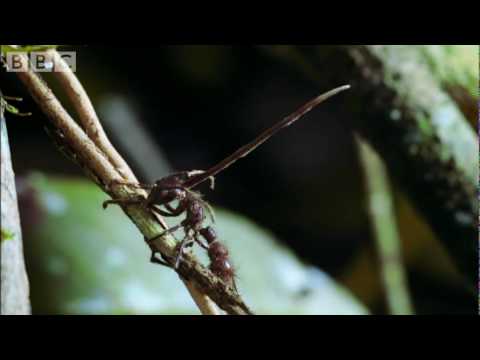
1media/zombant.jpg2019-04-07T23:42:52-07:00Sam Henrickson5cd0ff97c337b26d01e84db58bdb9506b40fff7a335196Relationshipsplain2019-04-16T00:53:46-07:00Sam Henrickson5cd0ff97c337b26d01e84db58bdb9506b40fff7aThe fungi genus Ophiocordyceps is infamously known as the zombie-ant fungi. Once the fungus recognizes it has come into contact with a preferred host (one of two species of carpenter ants, Camponotus castaneus and Camponotus americanus), the ant is quickly affected by its spores, and it spreads throughout the ant's body, taking full control and forcing the ant to climb as high up as possible. Then, the ant is made to attach itself firmly to whatever vegetation it has hiked up and is subsequently killed. The fungus grows out of the insect's body and its spores eventually burst into the air to infect the rest of the colony. The fungus evolved with those secies of ants, and for each is able to recognize the species, and then makes up a chemical concoction that will work properly to take control of the ant. When it was tested on other types of ants, the fungus had not coevolved with them, and therefore was unsuccessful. This manipulation of the ant behaviours by the fungus are vital not only to the manifestation of its Ultimate Perfection, but also simply to its individual life cycle.