Although neopentylbromide is a primary alkyl halide, it presents a lot of steric hindrance close to the leaving group, which slows the SN2 process significantly. There is no such hindrance in methylbromide.
This page is referenced by:
-
1
media/lec 17 key image 4.png
2020-04-03T13:09:06-07:00
Lecture 17: Ionic Substitution (SN1/SN2) I
18
image_header
2020-04-15T16:30:21-07:00
Objectives and Skills
KEY INFORMATION SUMMARY
PROBLEMS
Problem 17.1: Mechanisms - Add the curved arrows to complete each transformation below (extra intermediates may need to be drawn). SOLUTION
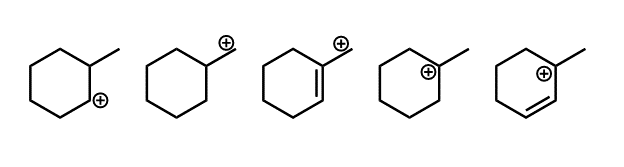
- List the following carbocations in decreasing order of their stability. SOLUTION
If you made some mistakes or want to practice more, review the concepts that gave you trouble and work on this extra problem. If you are good, move to the problem below ;)
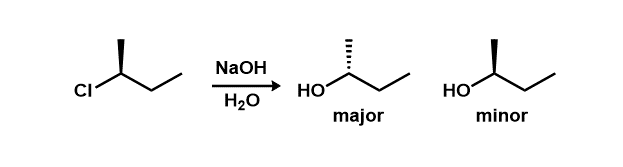
Problem 17.2: Reaction Coordiate Diagrams - Draw a mechanism and reaction coordinate diagram to describe the reaction below. SOLUTION
- Explain why the major product is favoured. SOLUTION
If you made some mistakes or want to practice more, review the concepts that gave you trouble and work on this extra problem. If you are good, move to the problem below ;)
Problem 17.3: Reactivity- Fill in the missing pieces to complete the transformations below. SOLUTION
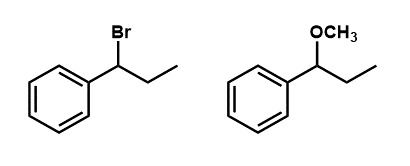
- Convert 1-phenylpropane to each of the structures below. SOLUTION
- Rationalize the following: methyl bromide reacts 105 times faster via SN2 reaction than neopentylbromide. SOLUTION
If you made some mistakes or want to practice more, review the concepts that gave you trouble and work on this extra problem. If you are good, move to the next lecture ;)