Race, Class, Equal Rights, and AIDS
ACT UP/LA and the Mary Lucey and Nancy MacNeil CollectionThe 1980s
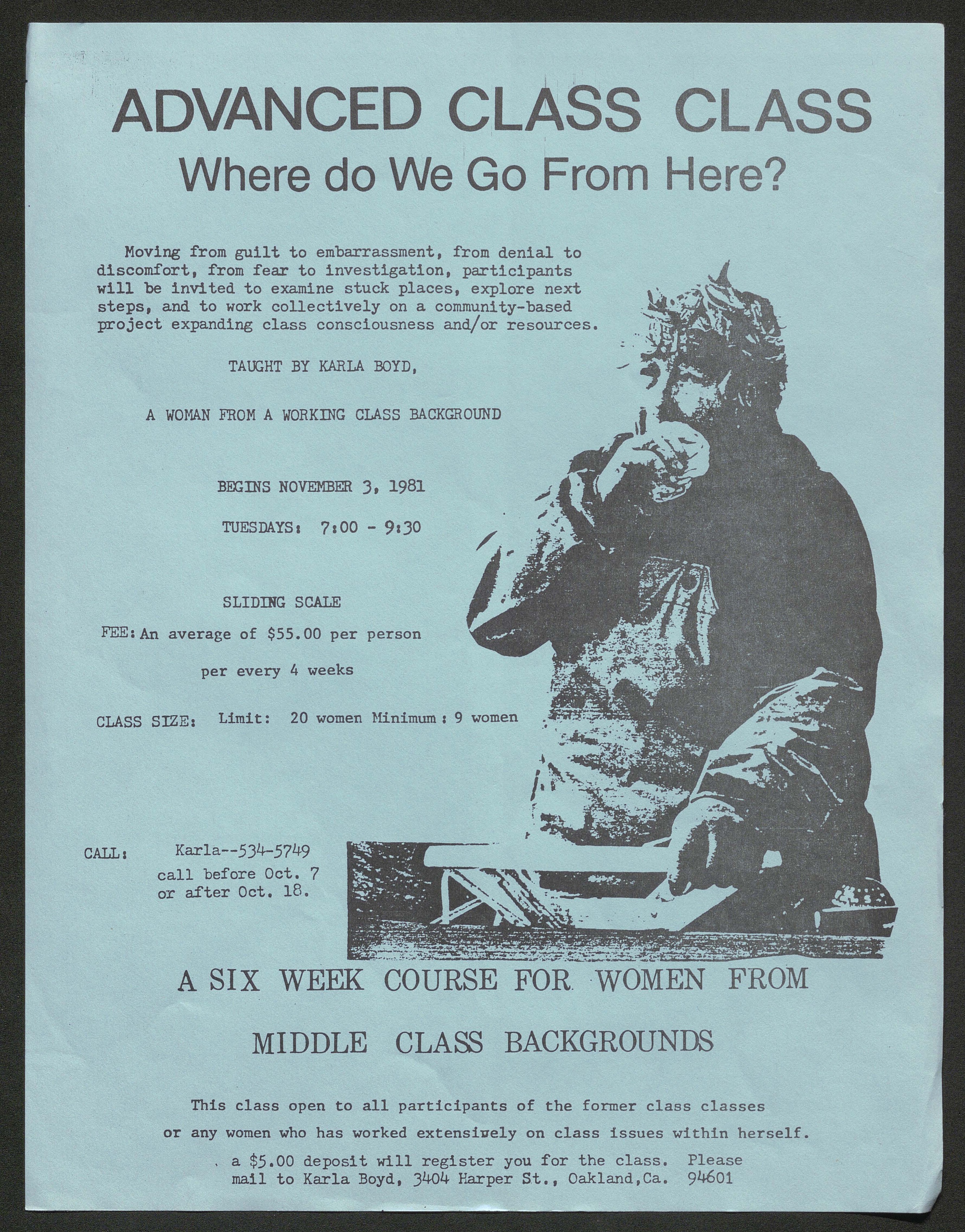
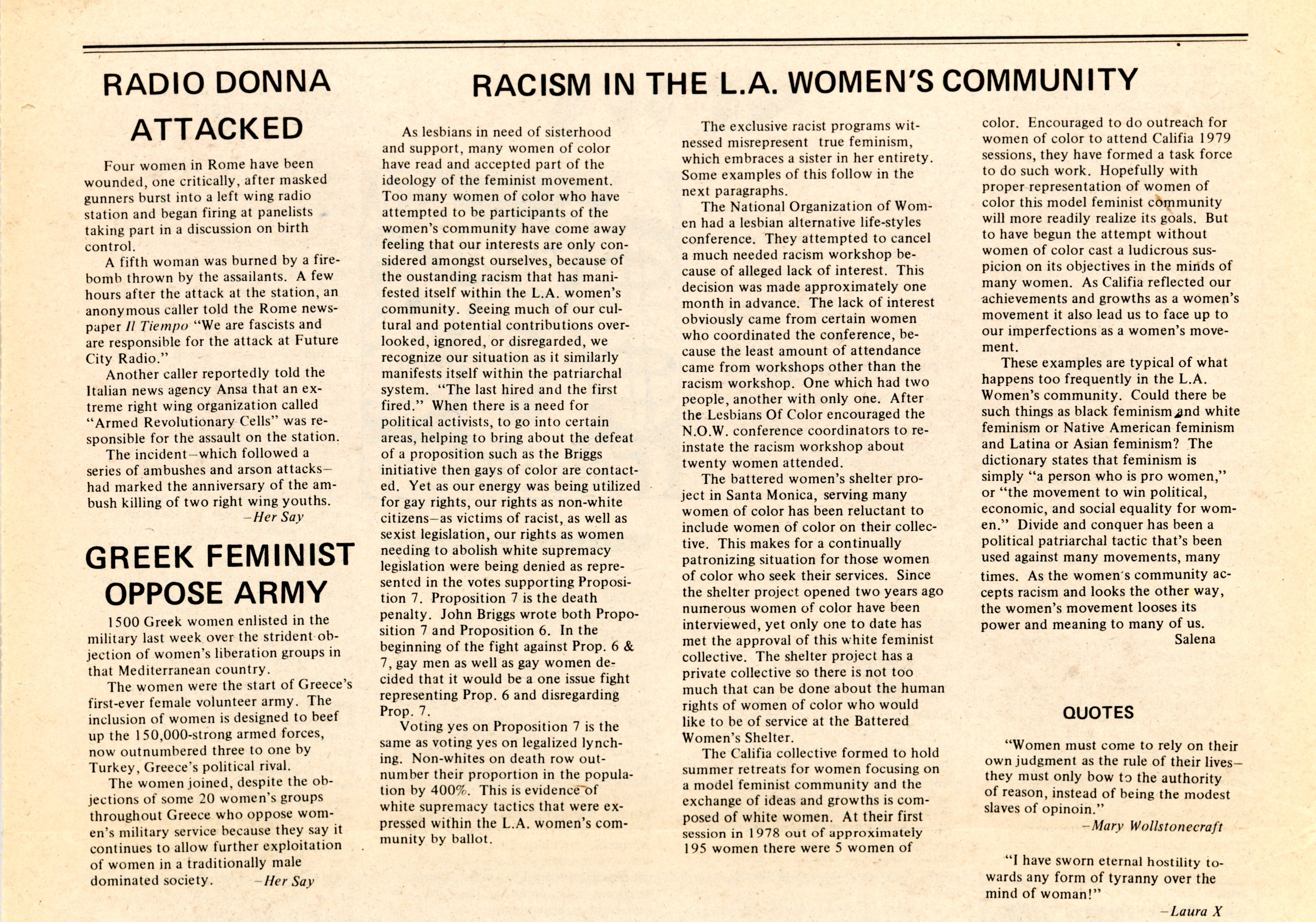
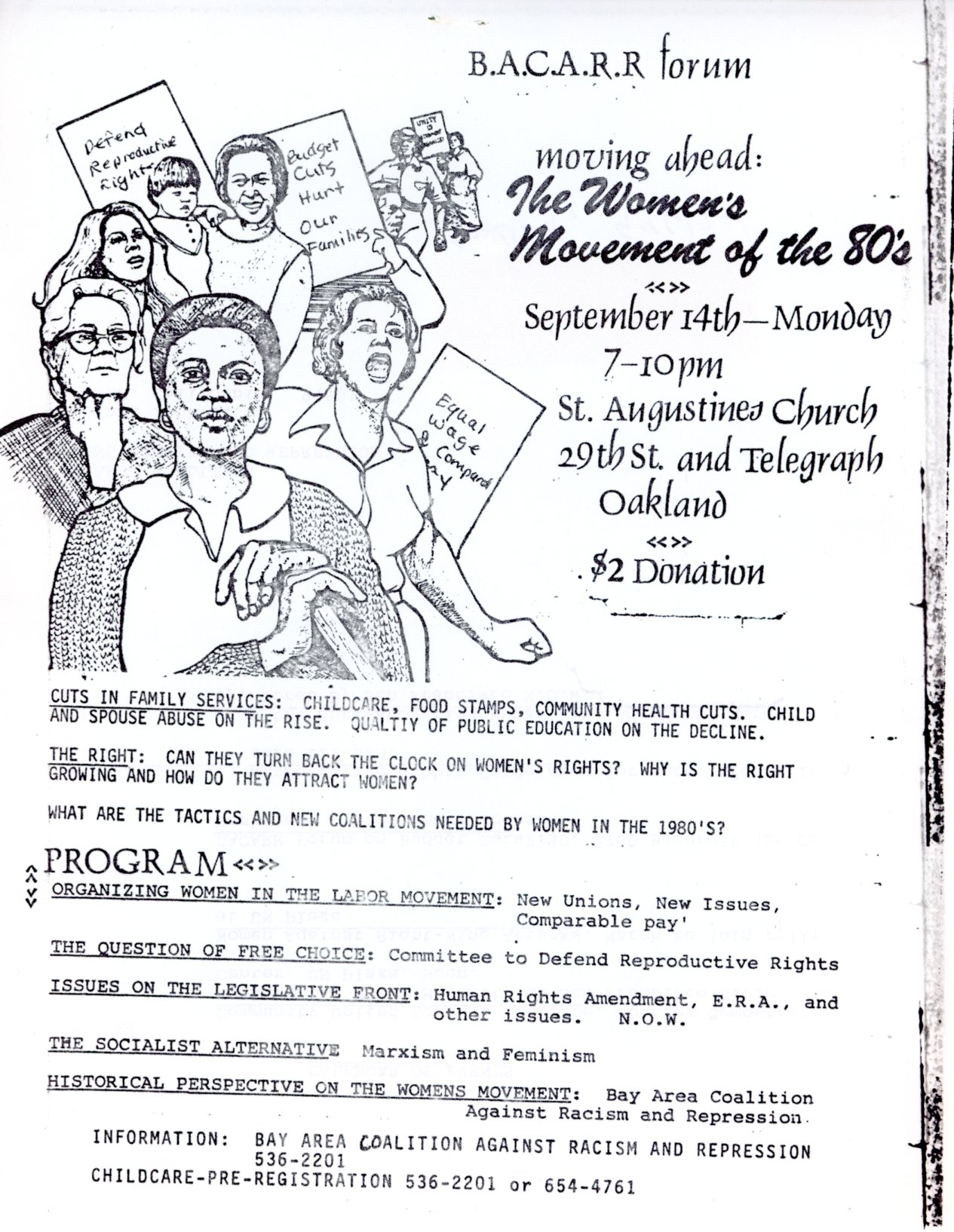
From the late 1970s and into the 80s the monolithic view of lesbians was challenged more openly with discussions on the intersectionality of class and race. The Women’s Liberation Movement and feminist movements were dominated and documented by white middle-class identities that often erased and excluded the experiences, feminist ideas, and foundational work by women of color in these movements. In the 1980s more discussion on the different voices within the lesbian feminist movement were brought into the mainstream.
Books, essays, and papers published by women of color led the conversations of a more intersectional feminism. In 1981 the feminist anthology Bridge Called my Back: Writings by Radical Women of Color edited by Cherríe Moraga and Gloria E. Anzaldúa was published, as was Ain’t I a Woman by Bell Hooks, and Kitchen Table Women of Color Press, run by Barbara Smith, Cherríe Moraga, and Audre Lorde, was in full operation publishing feminist and lesbian writers of color.
Zoe Nicholson and the Equal Rights Amendment
In addition to an awareness of labor, class, and race, the 1980s brought a resurgence of effort to pass the Equal Rights Act (ERA). This had always been part of NOW’s mission. Zoe Nicholson is a lesbian activist, and has fought for the ERA beginning in the 1970s.
The Equal Rights Act (ERA) was an amendment to the US Constitution introduced in the 1920s after Women’s Suffrage. It would remove legal distinction between men and women, asserting that sex would not determine legal rights, especially surrounding laws that determine child support and job opportunities.
Between 1923 and 1970 the ERA was buried, amended, and nullified, before finally being passed by a vote from the full House of Representatives for the first time in 47 years. But it took until 1971 before the ERA as it was intended was approved by the House and passed by the Senate. The National Organization of Women (NOW) was integral to pushing the ERA through in the late 1960s and 1970, and effectively reversing opposition in state governments. For an amendment to be added, 38 states need to ratify. In 1972 a deadline was set that demanded that in 7 years the ERA needed to be ratified by the full 38, but by 1973, only 30 states had done so.[1] Eventually the deadline would come and go without enough state support, getting extended for 3 more years ending in 1982. Even then, only 35 states ever ratified. While the deadline has been expired for decades, ERA continued to be pushed, and in 2020 Virginia became the 38th state to ratify. In 2021, there are ongoing debates over whether the ratifications occurring after the expiration of the deadline are valid, and these keep the ERA from being fully passed by the House and Senate.[2]
Zoe Nicholson is a member of NOW, as well as president of the Pacific Shore NOW chapter, the founder of ERA Once and for ALL, and a member of the ERA Roundtable. In 1982 she acted to persuade Illinois legislators to ratify the ERA by publicly fasting for 37 days with six other women. She published her experience in a memoir titled The Hungry Heart: a Woman’s Fast for Justice.[3]
Zoe Nicholson donated materials to the June L. Mazer Lesbian Archives on February 29, 2022, which includes her book manuscripts, book-related material, activism ephemera, photographs, articles, activism presentations and audiovisual material relating to the ERA and Nicholson’s political contributions.
Sharon Raphael and Old Lesbians Organizing for Change
Sharon Raphael and her wife Jenny Wren donated their materials and the materials of Sharon’s late wife, Mina Myers, to the Mazer Archives in 2020. Because of these women’s deep involvement with OLOC, many of the materials document the organization’s activities.
Sharon Raphael a sociology professor, a co-founder of the National Association of Lesbian and Gay Gerontologists, and an active member of Old Lesbians for Change. She was part of the Civil Rights Movement and the March on Washington in 1963. In 1970 she moved to Los Angeles to join the Gay Liberation Movement. She attended consciousness-raising groups at the Gay Women’s Service Center, another pioneering social service organization of the 70s located in Echo Park. She attended rallies, and spoke at public events and universities as an out-lesbian.
Sharon connected with Mina Myer in California in 1971. Mina was involved in LGBT rights activism and worked at the Gay Women’s Service Center from 1971-1972 before serving on their board, and starting the first women's clinic that provided pap smears and artificial insemination for lesbians in Los Angeles. Mina also worked at the famous and now closed Sisterhood Bookstore for 16 years in the 1980s,1990s and early 2000s.[4]
Sharon and Mina went on to found the Long Beach Chapter of OLOC. Mina passed away in 2016.
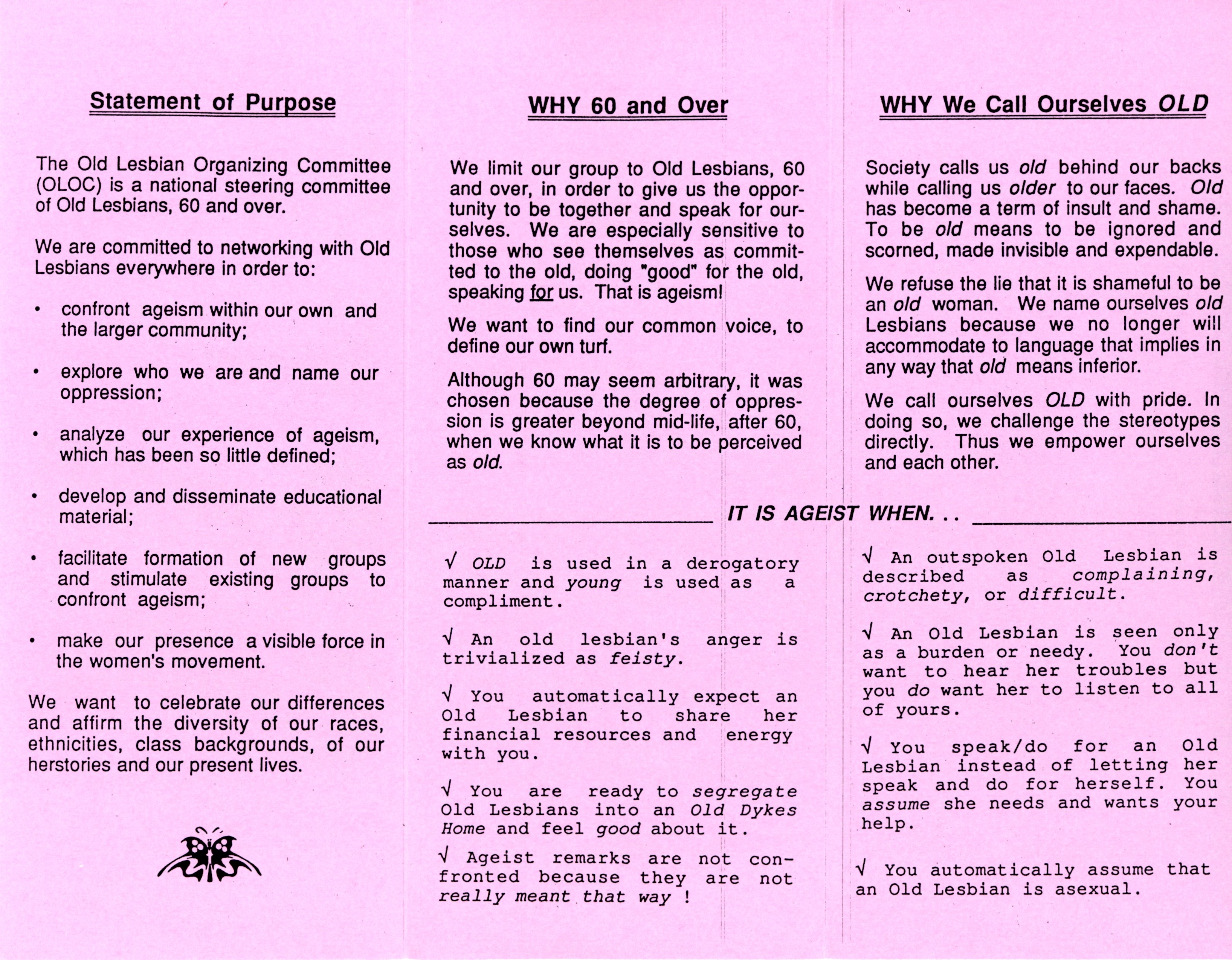
Old Lesbians Organizing for Change (OLOC) was first thought of in April 1987 when a group of lesbians formed the First West Coast Conference and Celebration for Old Lesbians in Southern California. They were inspired by the book, Look Me in the Eye: Old Women, Aging and Ageism by Barbara MacDonald and Cynthia Rich. From that first meeting, 16 women went on to meet again in 1989 and officially decided on a name, a statement of purpose, assigned tasks, and coordinated for future meetings.[5]
Today, OLOC’s mission statement is, “OLOC represents Lesbian Elders in a spirit of inclusiveness to promote Lesbian visibility. We come together to preserve our herstory, to confront social injustice, and to give and receive support for our later years.” [6] OLOC has a history of confronting issues around ageism as a social disease. They ask individuals to confront what they believe about older people, and therefore highlight how these beliefs seep into a larger structure of discrimination.
AIDS and the Los Angeles Gay and Lesbian Center
By 1988 Acquired Immunodeficiency Syndrome (AIDS) was a national epidemic, and with no medication to treat it, the diagnosis of AIDS from HIV was a death sentence. Sarah Schulman describes the suffering as
"a grotesque display of loss. Every faculty disintegrates: the brain, the lungs, the nerves in one's legs, the ability to control shit, the tongue covered in thrush, the broken skin. The body is no longer a mystery of synchronicity; it is a trap of literal pain and confusion. The diarrhea machine; the literal scarlet letter of cancerous Kaposi sarcoma eating away at one's face, torso, legs and arms; the rambling dementia; the shooting flames or neuropathy making walking impossible or a horrific ordeal...don't usually allow someone to make new friends...Inevitably came a horrible death, possibly while you were lying on a gurney in a hallway of an overwhelmed hospital or on a sofa in a friend's cramped apartment, emaciated and swimming in endless diarrhea."[7]
These painful physical symptoms were further weighted with abandonment and isolation from family and friends, the loss of jobs, careers, a home, medical professional's refusing to care for or treat you, shunning from acquaintances or people on the street. Many people joined ACT UP to help ease their own suffering, or the suffering of others. These people who suffered from AIDS and rallied to join ACT UP in protest or help care for PWA were radically diverse in identity and beliefs, despite the media's focus on white gay men as the center of the movement, women as caretakers, and the erasure of people of color. [8]
From 1988 to 1996 Chris Brownlie Hospice in Los Angeles helped those suffering in the final stages of AIDS. The Los Angeles AIDS Hospice Committee, co-founded in 1987 by activists Chris Brownlie and Michael Weinstein as well as Sharon Raphael and Mina Meyer, organized and funded the opening of the Hospice. This location helped over a 1,000 people in the span of those 8 years. After 1996 and the arrival of antiretroviral drugs, the organization changed its name to the AIDS Healthcare Foundation, and continues to operate today supporting PWA all over the world.[9]
The Los Angeles LGBT Center, founded in 1969 and then known as the Los Angeles Gay and Lesbian Center, also provided support and healthcare services to people affected by AIDS. In 1988 Torie Osborn was appointed as the first woman executive director of the center. In the mid-1990s she served as the executive director of the National Gay and Lesbian Task Force in Washington DC. She remains a political organizer and policy advisor committed to advocating for LGBTQ rights, environmental justice, and tax and budget policy reform.
The video below are some of Torie's accounts of working at the Center and taking part is direct actions alongside ACT UP.
Citations
[1] "Timeline of the ERA until 1978," n.d., drawer 02-03, folder 6, subfolder 1, Subject Files, June L. Mazer Lesbian Archives, Los Angeles, CA.
[2] Veronica Stracqualursi, “House Passes Joint Resolution to Remove ERA Deadline | CNN Politics,” CNN, March 17, 2021. https://www.cnn.com/2021/03/17/politics/congress-era-deadline-joint-resolutions/index.html.
[3] Casey Winkelman, "Biographical Note," Zoe Nicholson Collection, June L. Mazer Lesbian Archives.
[4] Vera Tykulsker, "Biographical Note," OLOC Collection, June L. Mazer Lesbian Archives.
[5] Stacy Wood and Sabrina Ponce, “Finding Aid for the Old Lesbians Organizing for Change records 1986-1992 LSC.2203,” UCLA Library Special Collections, Charles E. Young Research Library, September 5, 2017, https://oac.cdlib.org/findaid/ark:/13030/c8z89fjx/
[6] “OLOC - Home,” accessed November 1, 2023. https://oloc.org/
[7] Sarah Schulman, Let the Record Show (Farrar, Straus and Giroux: New York, 2021), 7.
[8] Sarah Schulman, Let the Record Show (Farrar, Straus and Giroux: New York, 2021), 23.
[9] "AHF remembers Chris Brownlie Hospice," Aids Health Foundation, accessed October 23, 2023. https://www.aidshealth.org/2013/01/ahf-remembers-chris-brownlie-hospice/
This page has paths:
- Women's Liberation and Lesbian Feminism Bonnie Morris/Julia Tanenbaum/Angela Brinskele