Consciousness Raising
The 1960s
In the 1960s the Women’s Liberation Movement was well under way. The National Organization of Women (NOW) was founded in 1966, and was one of the most vocal organizations mobilizing women to push back against gender discrimination. Yet within NOW and Women’s Liberation as a whole, homophobia actively excluded the rights of lesbians, bisexual women, and trans women. The argument in Women’s Liberation was that lesbianism promoted the emulation of men and masculine power, which was coupled with the pervasive general homophobia and transphobia against gay, lesbian, and trans lifestyles in general society. Lesbians within the Women’s Liberation Movement were still isolated, or connecting with each other covertly.[1]
Consciousness Raising
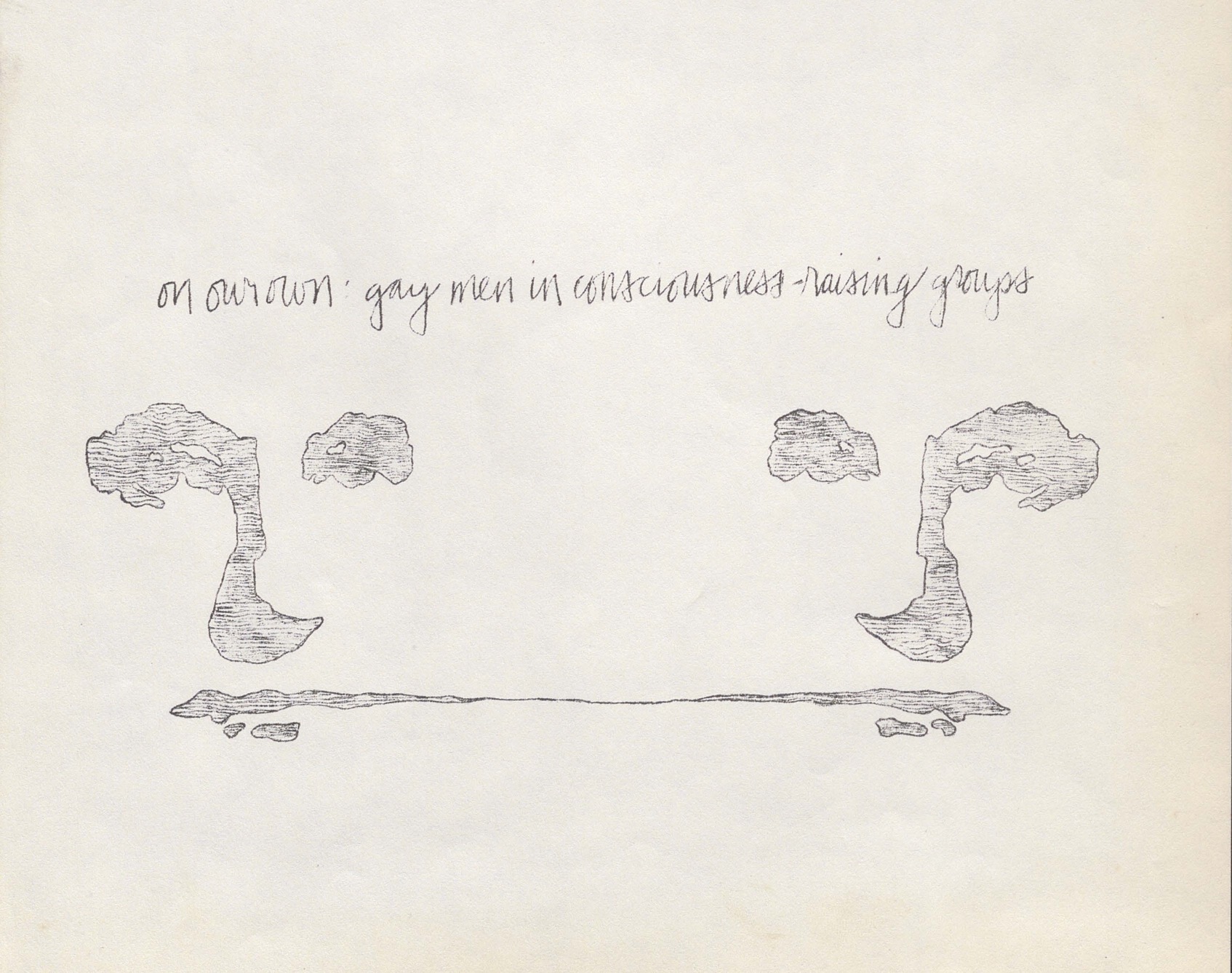
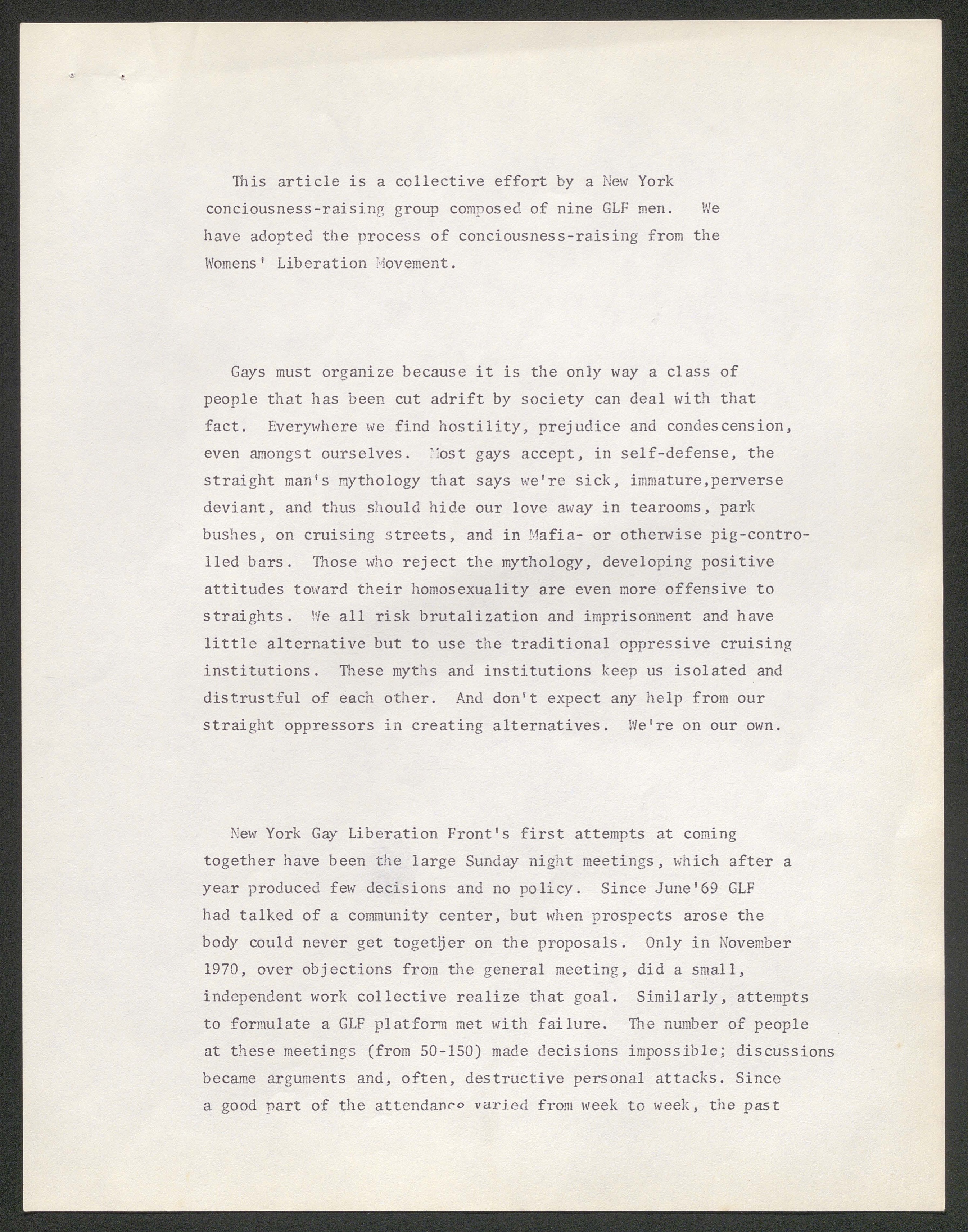
One of the main tools of Women’s Lib were consciousness raising groups. Groups of women would meet to share, without judgment, their grievances and struggles within the patriarchy. This tool for connecting everyday struggles to larger political demands, and therefore organizing and inciting people to mobilize was used throughout LGBTQ activism of the 80s and 90s, was adopted by the Gay Liberation Front, and is even used today.
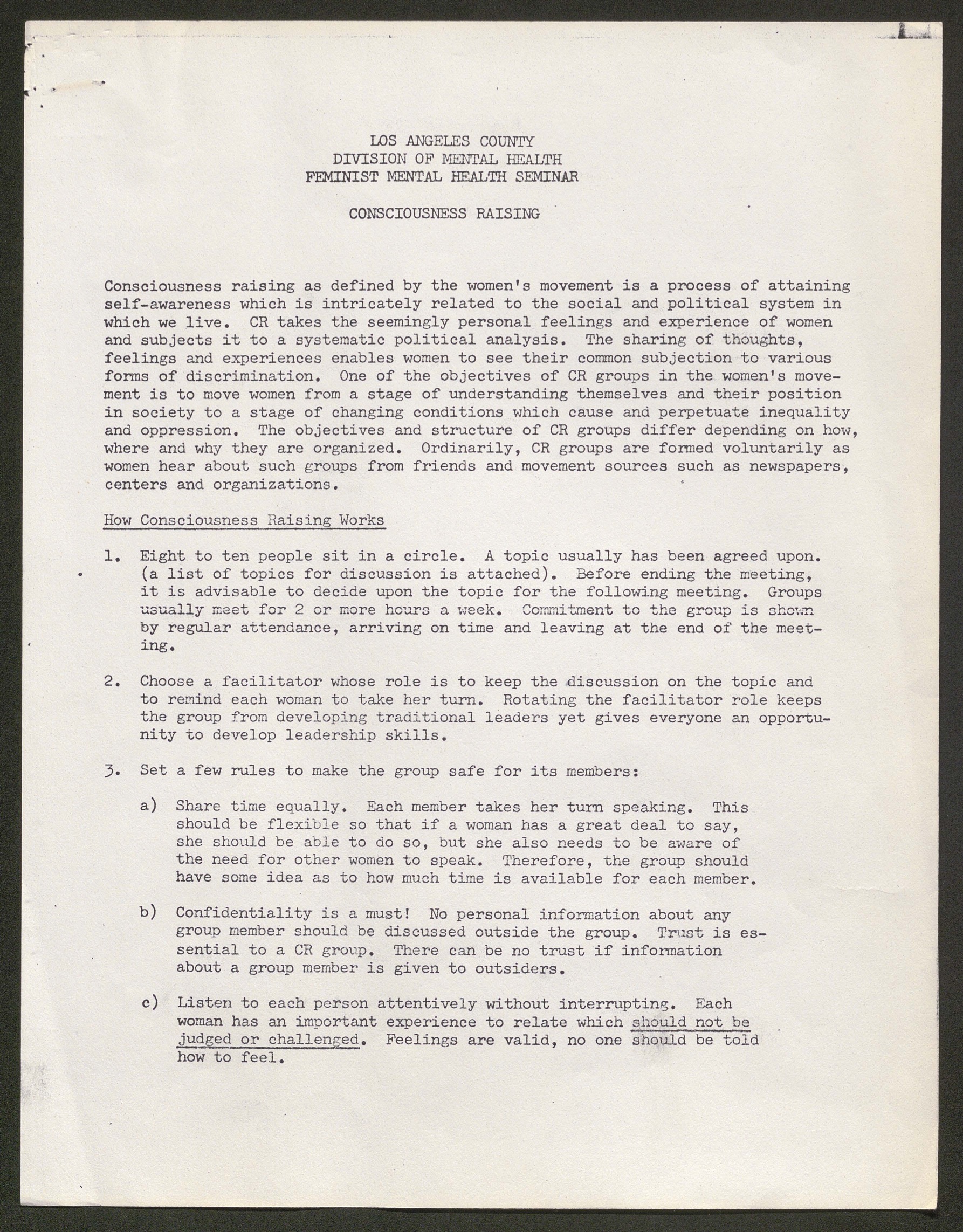
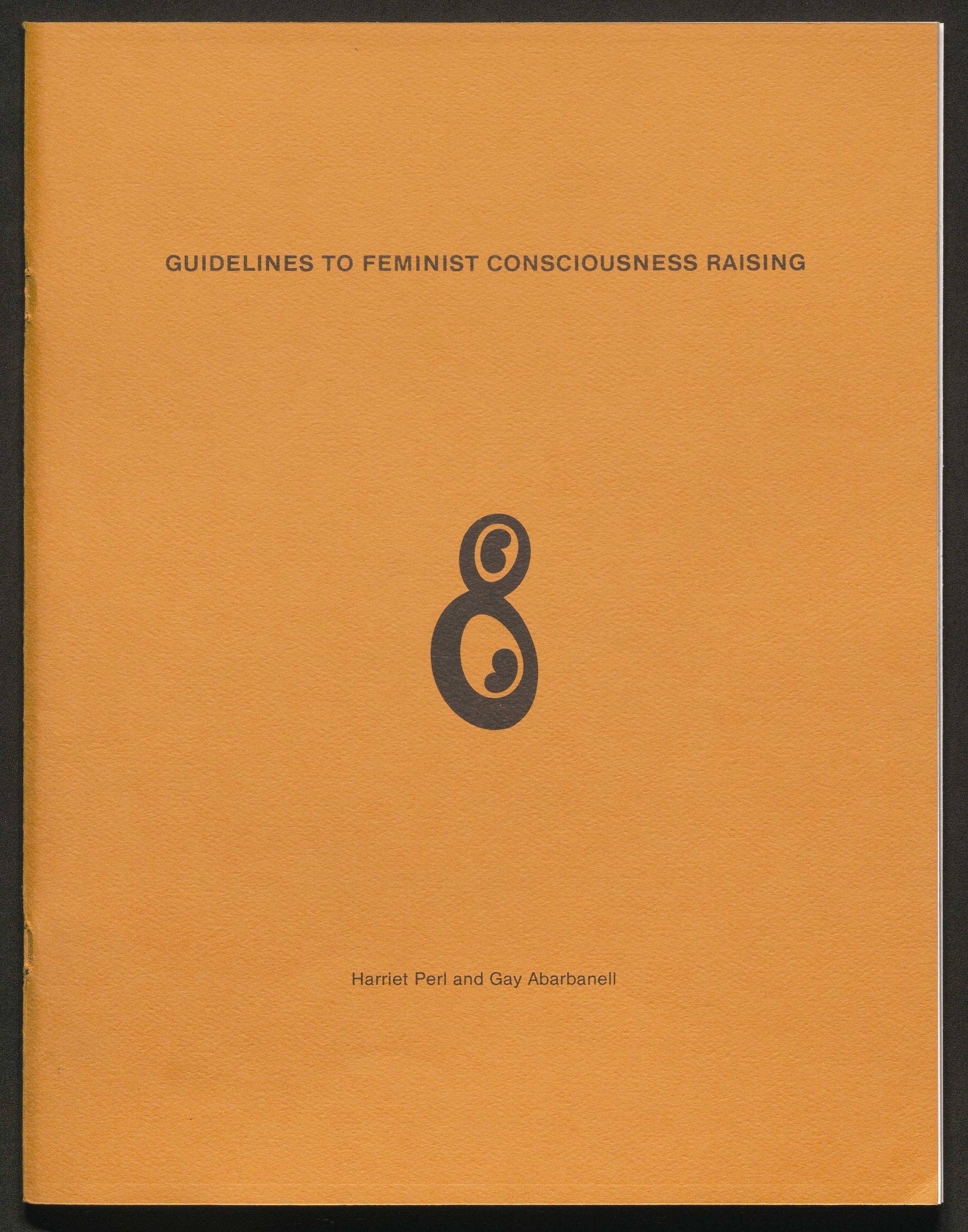
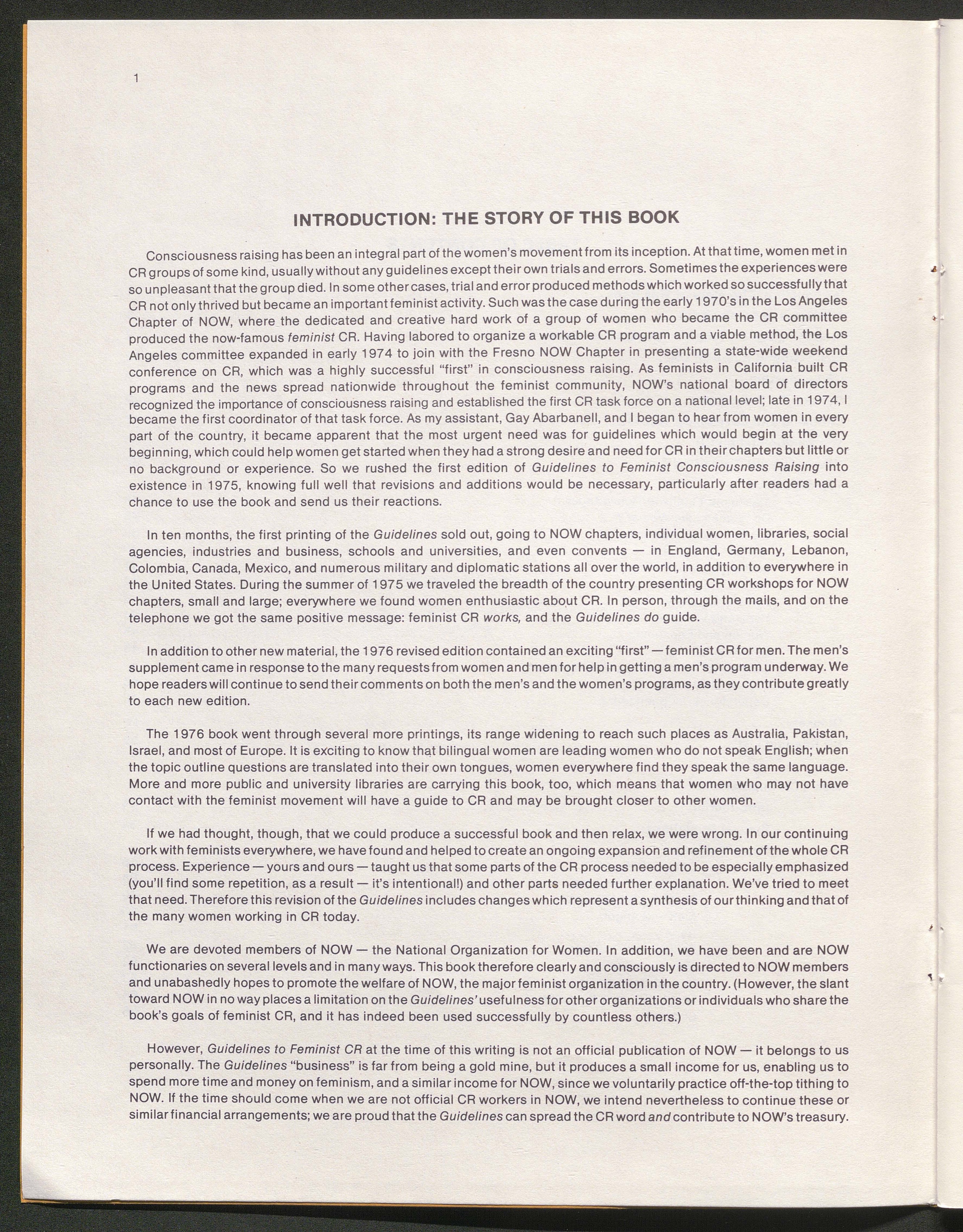
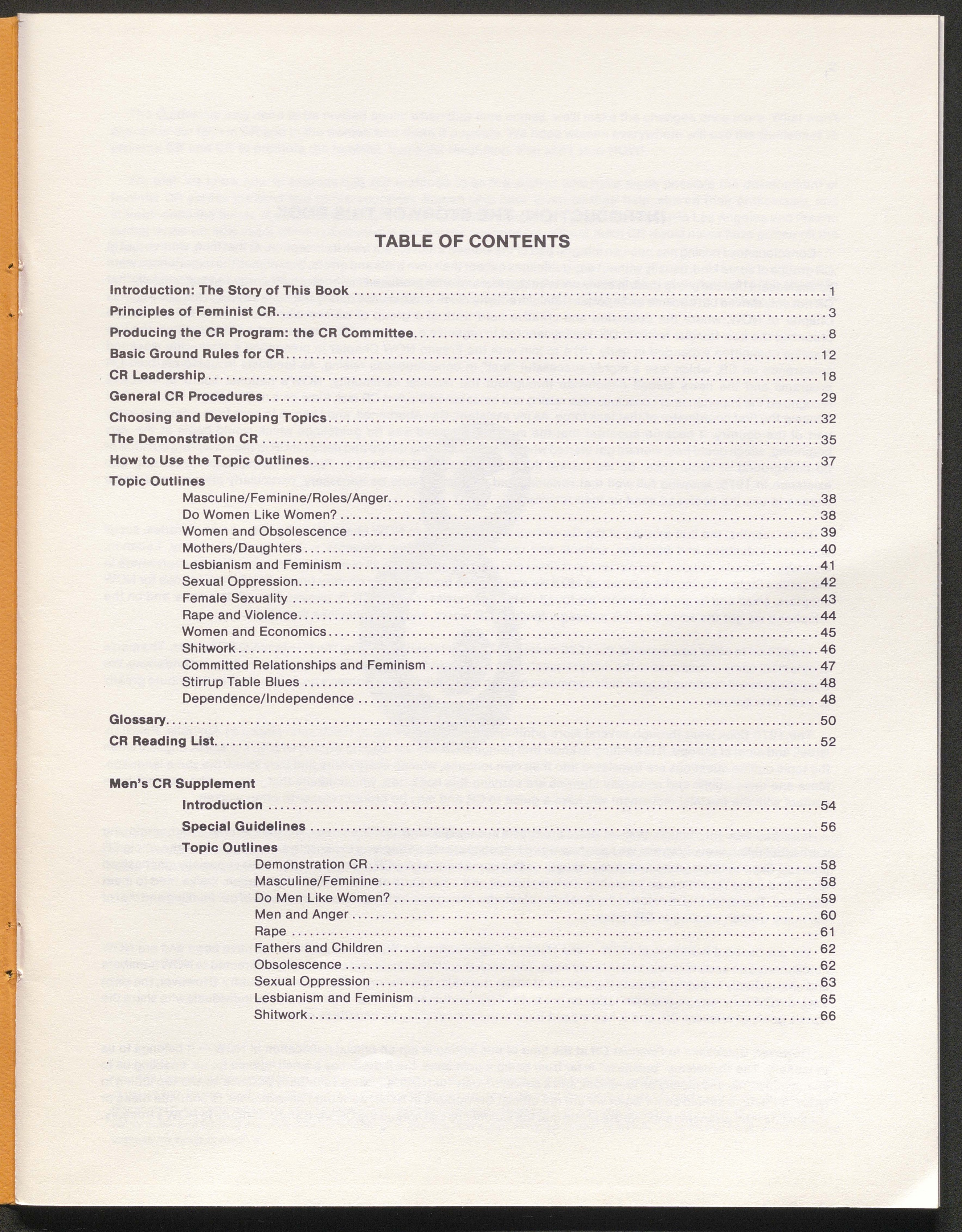
Consciousness raising became such an important tool, that it was standardized and presented in a handbook by the Los Angeles chapter of NOW starting in 1975, with new revised editions being printed into the 1980s. The orange copy shown is from 1979. In this version a section added with “feminist CR guidelines for men,” with the same topics possibly to compare answers between groups. In the same year, the Los Angeles County Division of Mental Health used consciousness raising in feminist mental health seminars.
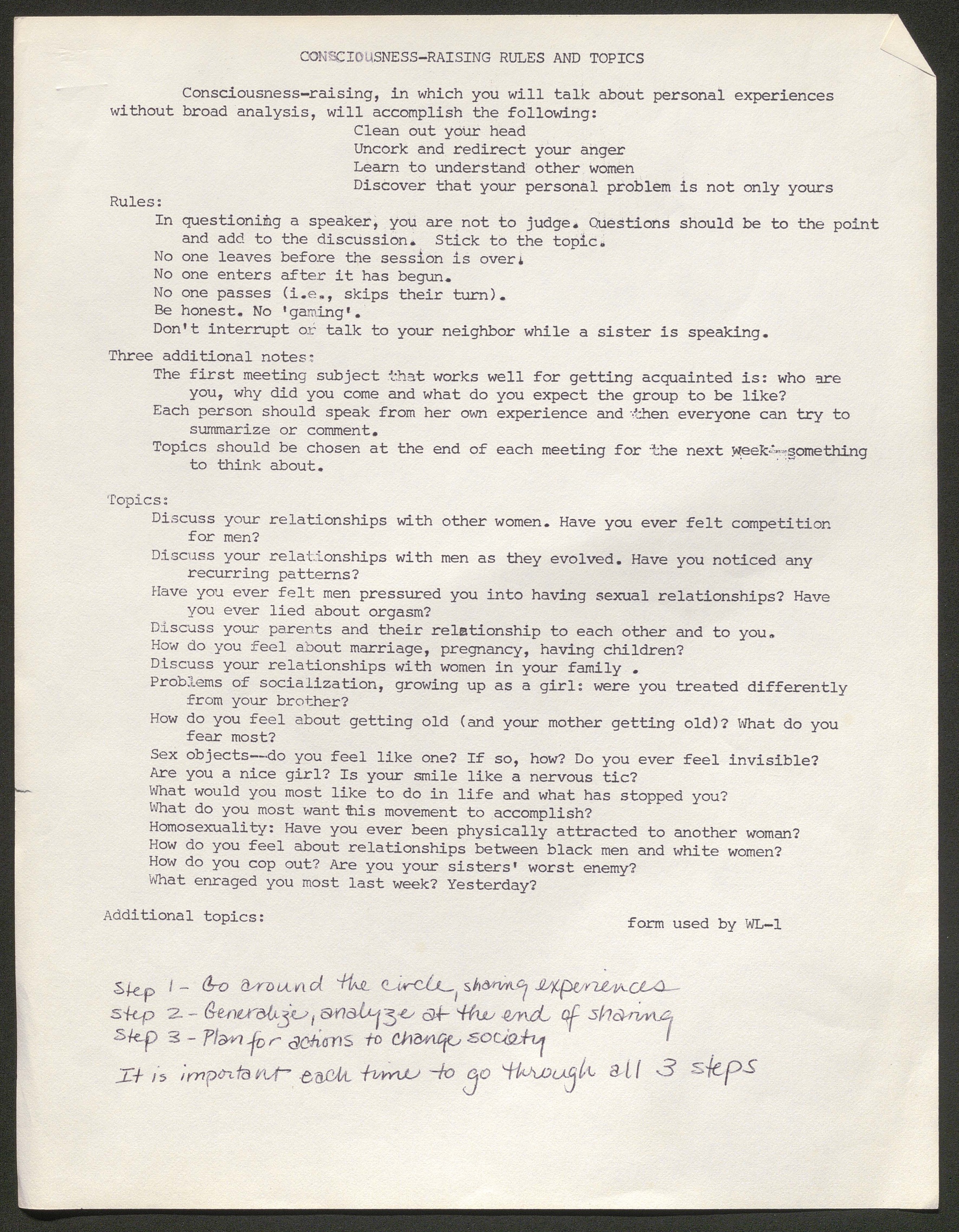
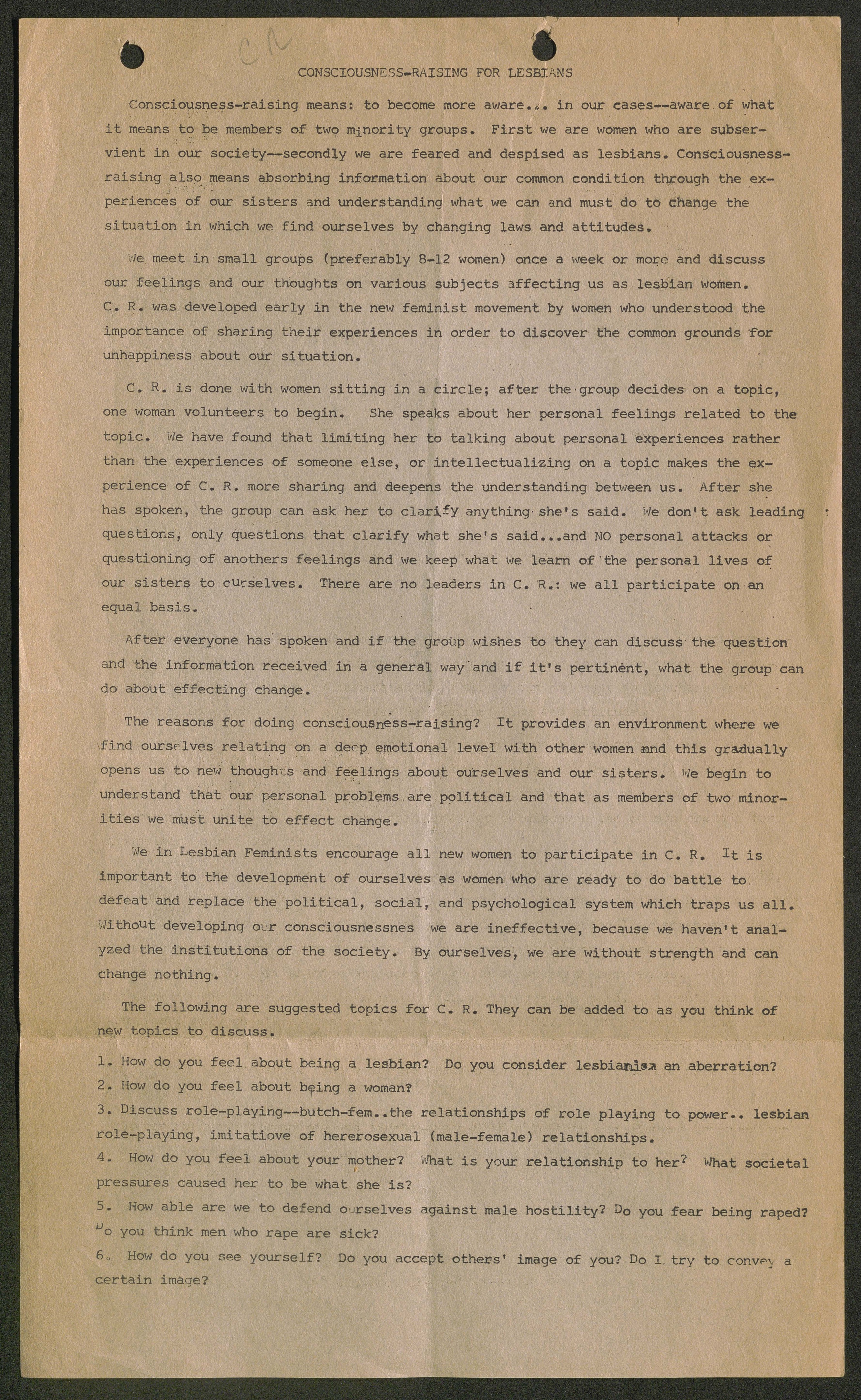
The Mazer’s subject files document early consciousness raising rules and topics from the 1960s. Examples of typical questions and rules presented during consciousness raising meetings:
The Mazer’s subject files also contain flyers from other activism of this era that was focused on protesting the Vietnam War and the draft, as well as Civil Rights for black Americans, and other people of color. gay and lesbian activists took part in organizations like Women United Against the War, the Gay Women’s Contingent, the Black Panther Party, and Womanpower (a group based out of Oakland, CA), to name a few.
Citations
[1] Margaret Cruikshank, The Lesbian and Gay Liberation Movement (New York: Routledge, 1993), 70.
This page has paths:
- Women's Liberation and Lesbian Feminism Bonnie Morris/Julia Tanenbaum/Angela Brinskele
This page references:
- Feminist Mental Health Seminar on Consciousness Raising
- On Our Own: Gay men in consciousness-raising groups - cover
- On Our Own: Gay men in consciousness-raising groups - page 1
- Consciousness-Raising Rules and Topics
- Consciousness-Raising for Lesbians - page 1
- Guidelines to Feminist Consciousness Raising - cover
- Guidelines to Feminist Consciousness Raising - introduction
- Guidelines to Feminist Consciousness Raising - table of contents