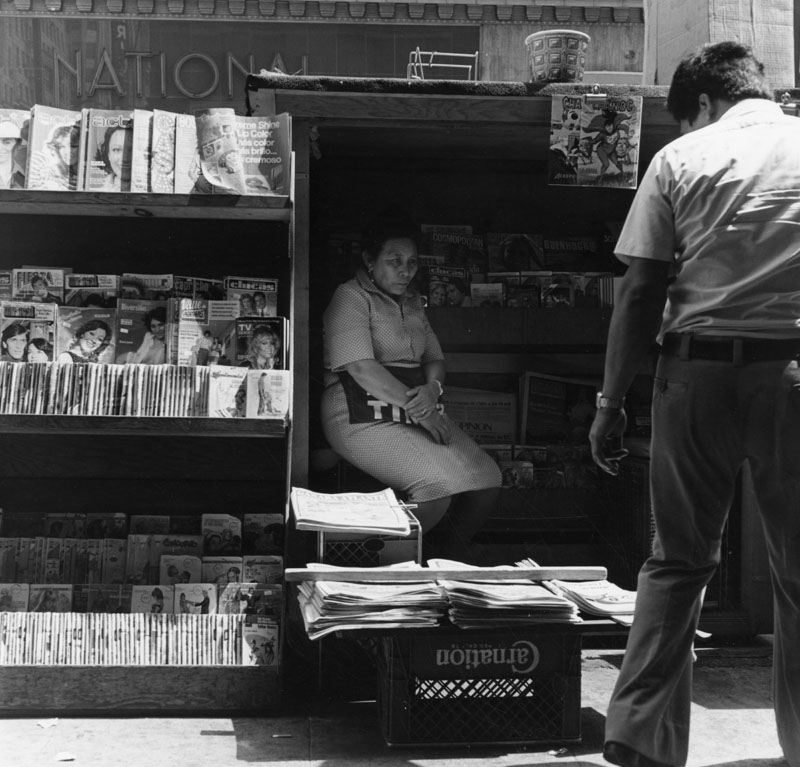
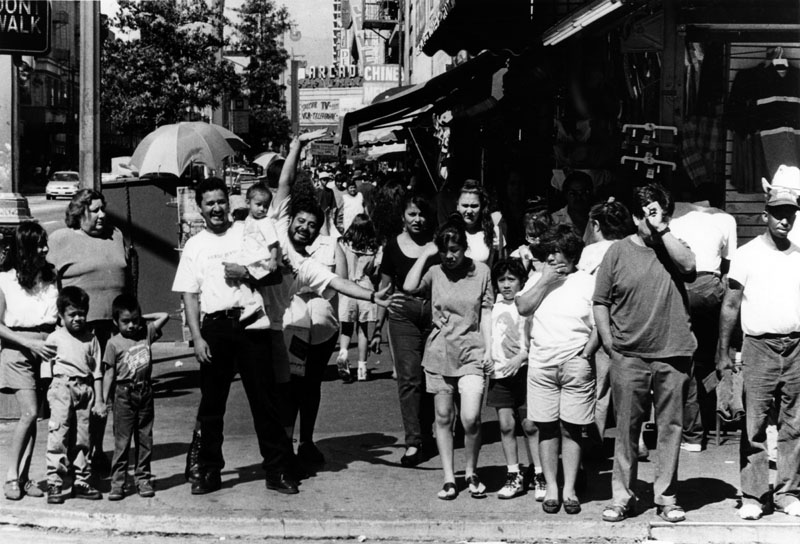
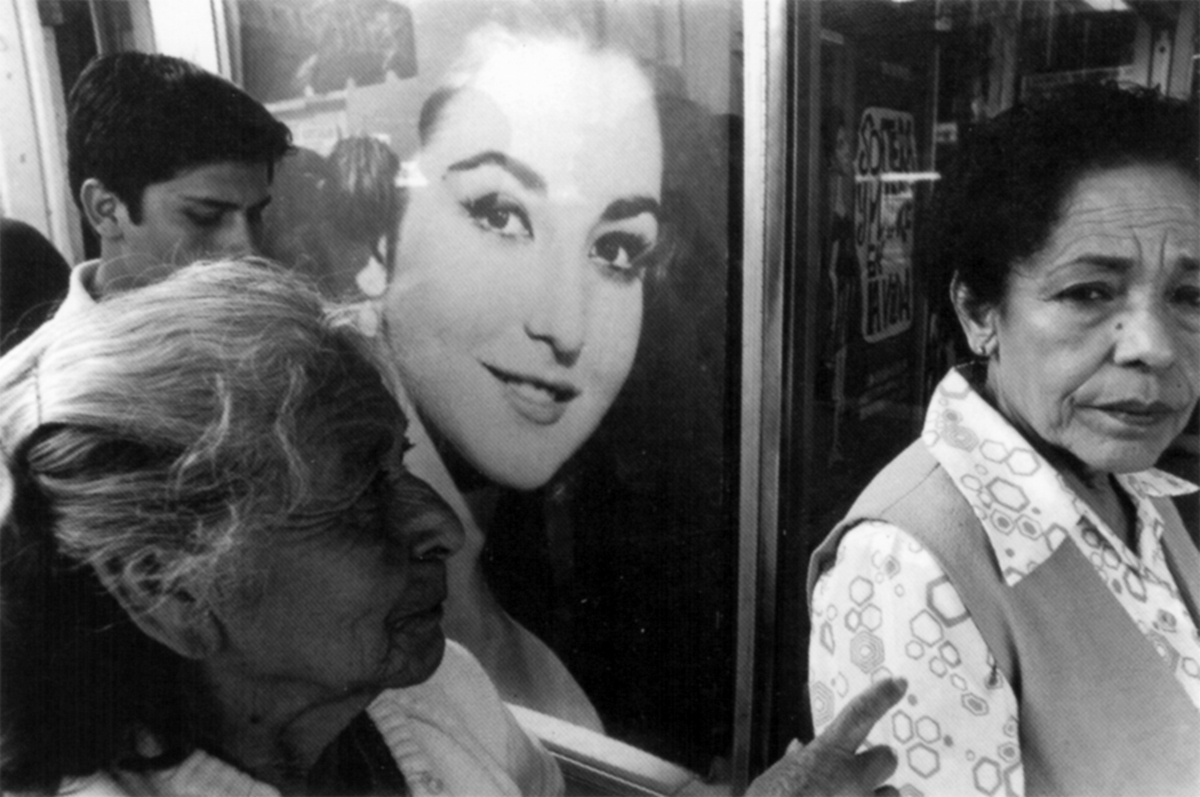
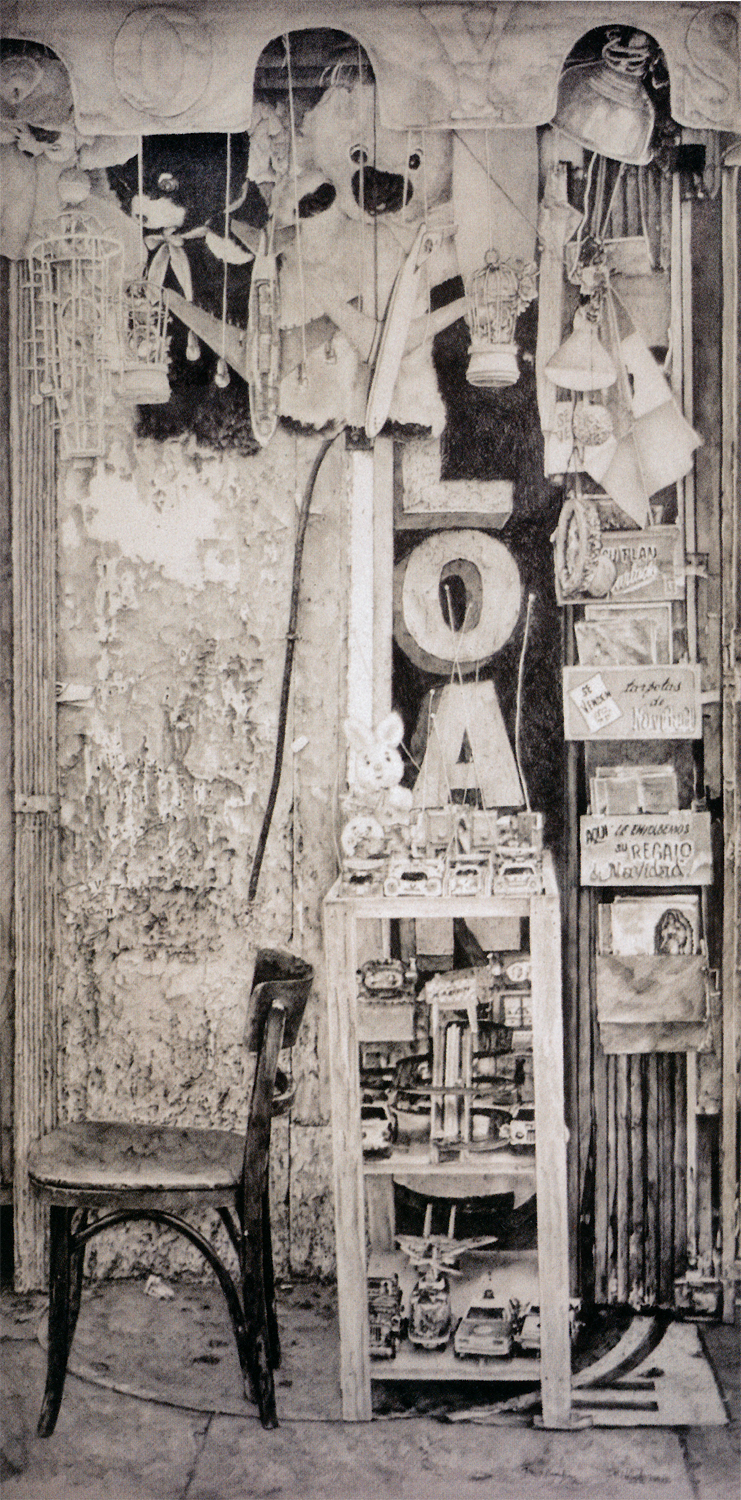
Shoppers on Broadway (Ricardo Valverde, 1977)
1 2015-06-01T17:28:42-07:00 Veronica Paredes f39d262eb7e9d13906fe972f3e5494dbae1896bc 3429 11 Shoppers on Broadway photo (Ricardo Valverde, 1977); notice poster for Soltera y madre en la vida (1969) plain 2015-06-02T12:43:03-07:00 Veronica Paredes f39d262eb7e9d13906fe972f3e5494dbae1896bcThis page has tags:
- 1 media/bway-as-bg.jpg 2015-06-02T08:03:30-07:00 Veronica Paredes f39d262eb7e9d13906fe972f3e5494dbae1896bc Appendix: Chican@ Art Veronica Paredes 5 Tag for Chican@ Art (Broadway as Background) gallery 2015-06-17T07:46:28-07:00 Veronica Paredes f39d262eb7e9d13906fe972f3e5494dbae1896bc
This page is referenced by:
-
1
media/bway-as-bg.jpg
2015-06-04T02:07:58-07:00
Everyday
18
Tag for Everyday images / section introduction
structured_gallery
2015-06-29T02:37:18-07:00
This Mexicanism [in Los Angeles]…floats in the air...It floats, without offering any opposition; it hovers, blown here and there by the wind, sometimes breaking up like a cloud, sometimes standing erect like a rising skyrocket. It creeps, it wrinkles, it expands and contracts; it sleeps or dreams; it is ragged but beautiful. It floats, never quite existing, never quite vanishing.
“Once it was like seeing the night for the very first time, only someone dangled black ice cubes in front of my eyes. Each street, each story melted on a page...” (27)In American Encounters, José Limon provides a useful context for the quote above, excerpted from Paz’s exploration of how Mexicans and Mexican Americans adjust to North American culture. Limón outlines a broader context for Paz’s interpretative framework, connecting Paz’s reading of Mexican American culture to the development and migration of psychoanalysis into the United States and Mexico. With an emphasis on ego formation, this interpretation of psychoanalysis had consequences in the anthropological and ethnographic study of marginalized communities both in the United States and Mexico. According to Limón, Paz’s profiles of the pachuco and the Mexican character were influential in shaping Mexican public opinion, especially that of the country’s literate middle class. The work’s popularity confirmed assumptions about the supposed pathology and dysfunction of the country’s working class, especially its male members. In The Labyrinth of Solitude chapter titled “The Pachuco and Other Extremes,” Paz spatializes his negative attitude toward the Pachuco, applying it to the whole Mexican population of Los Angeles. Seeking to capture the elusiveness of Mexican identity, which he likens to a “furtive, restless air,” Paz conveys contemporaneous Mexican contributions to Los Angeles and Mexicans in the city as a floating residual feeling that hovers.
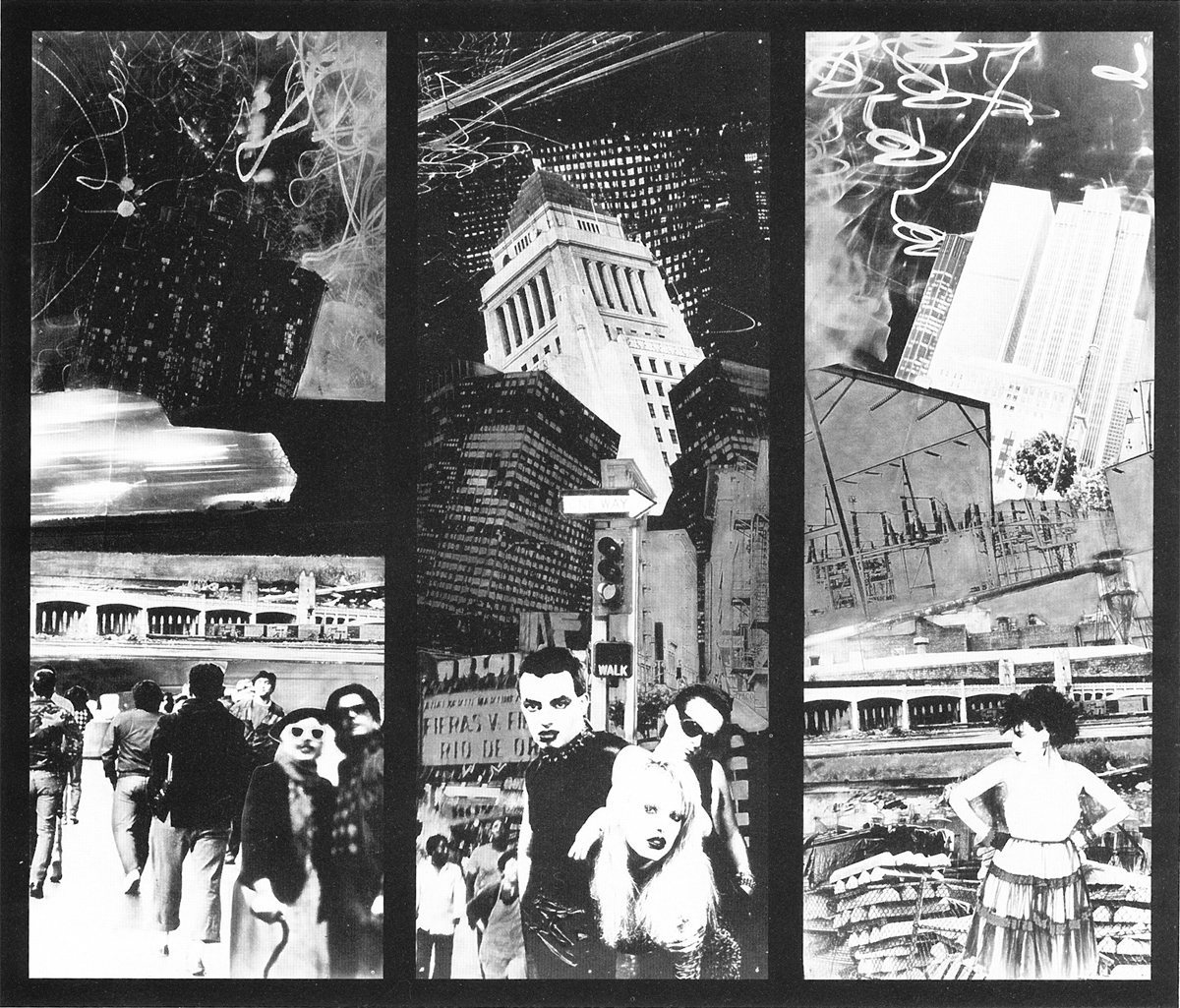
Given the purported shortcomings of Mexican Americans identified by Paz and other philosophers, sociologists, anthropologists and state officials, capturing the everyday practices and experiences of Mexicans and Mexican Americans living in Los Angeles constitutes a political act. To frame the everyday – be it in styles ranging from straightforward, poetic, surrealist, stylized – is to focus on the discursive power of the “ordinary man,” or woman, and an attendant street-level viewpoint. Characteristic of such a vantage point, featured in this section are photographic works that works capture Broadway through documentation (Shades of LA Collection), reflexive markings on their surface photographs (Ricardo Valverde, Pattsi Valdez), or the recasting of street images in new mural visions (John Valadez, above). A second group in this section include narrative, docudrama and essay film scenes that capture what watching a movie or walking down South Broadway looked like in real and imagined periods of Los Angeles history (The Exiles, Los Angeles Plays Itself, Omega Man). These visual representations, together with the Marquee Stories photo essay, wrestle with the contradictions of capital-labor relations, consumer culture and ethnic-racialized identity experienced by marginalized communities working and living in Downtown Los Angeles, documenting South Broadway’s multiple cultural transformations and possibilities.Video annotations:
A Night Downtown & Night Windowshopping on Broadway & Shopping at Grand Central Market in THE EXILES
Opening of MEXICO DE MI CORAZON
Pachuco Strut in DEL OTRO LADO DEL PUENTE
Mexico City in Los Angeles in EL NORTE
Cinema of Walking in LOS ANGELES PLAYS ITSELF