Thanks for your patience during our recent outage at scalar.usc.edu. While Scalar content is loading normally now, saving is still slow, and Scalar's 'additional metadata' features have been disabled, which may interfere with features like timelines and maps that depend on metadata. This also means that saving a page or media item will remove its additional metadata. If this occurs, you can use the 'All versions' link at the bottom of the page to restore the earlier version. We are continuing to troubleshoot, and will provide further updates as needed. Note that this only affects Scalar projects at scalar.usc.edu, and not those hosted elsewhere.
Josie Andrews 412 Midterm ProjectsMain MenuIntroductionThe Ideological Function of Stars: Contradictions and Promises of Individualism.Prompt AnalysisLittle Women (George Cukor 1933)Tomboyism: Negotiating and Celebrating a Strong, Sprited Woman in the Great DepressionSylvia Scarlett (George Cukor, 1936)"Woman of the Year" (George Stevens, 1942)ConclusionBibliographyCATCH ME IF YOU CANThe Contradictions and Promises of Individualism in the Films of Katharine Hepburn 1933-1942Josephine Andrews3a113b8327c230bc7c10dd21f21428c4f7bcd00c
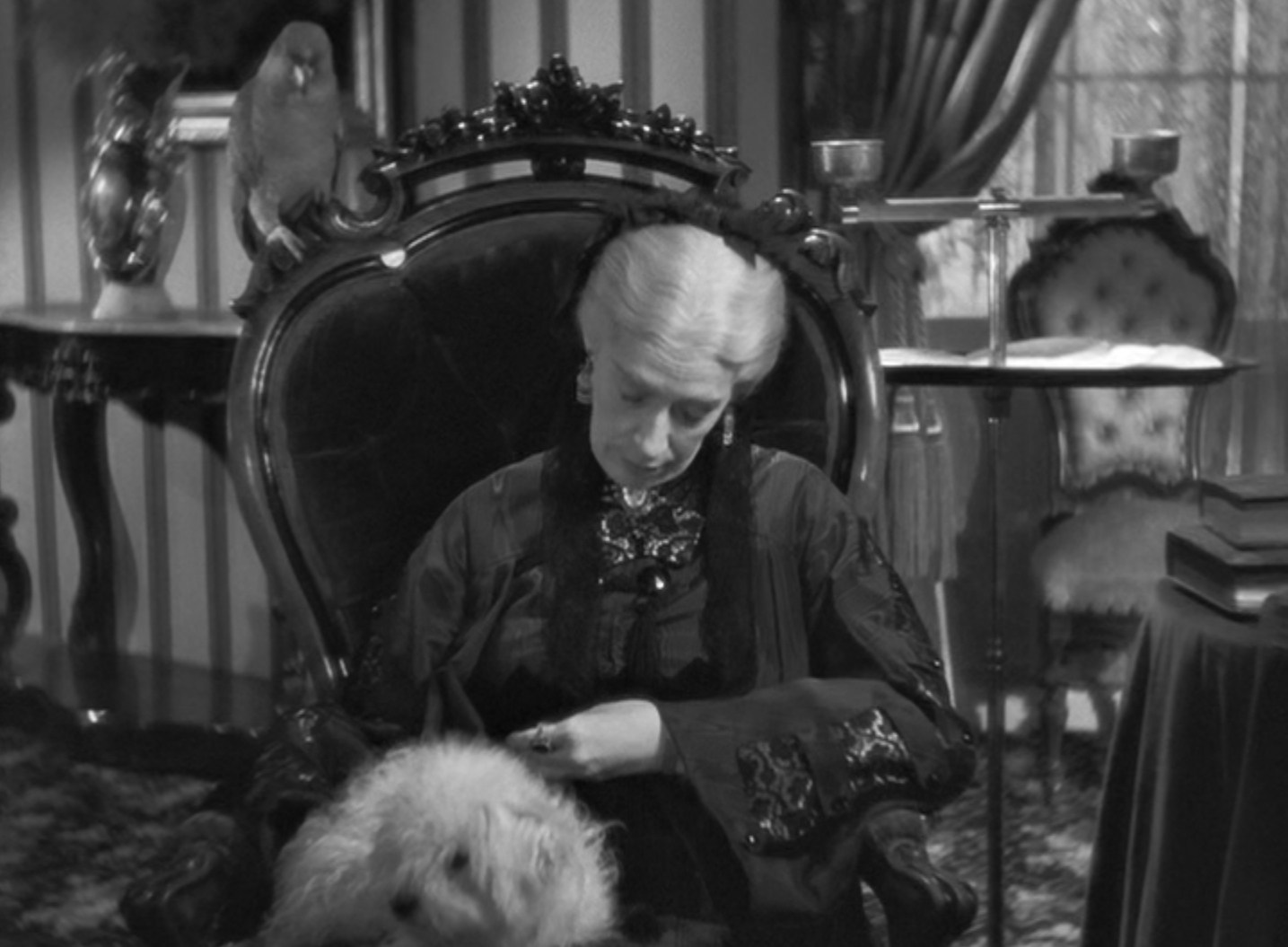
12018-03-09T11:05:12-08:00Aunt March: Class Conflicts4Aunt March: Class conflictsplain2018-03-10T02:05:47-08:00This clip shows class issues that were paramount during the Great Depression. Jo and Meg must work to help support the family during the Civil War, and Jo’s “job” is to read to Aunt March. In contrast to Laurie’s opulence that is open and generously shared with the March family, Aunt March’s wealth is stingy and cold, just as her temperament. The film’s moral message about wealth, class and human character is clear, making it easy for the audience to identify with Jo and difficult to identify with her Aunt.