Scalar's 'additional metadata' features have been disabled on this install. Learn more.
Jonas Salk and the Invention of the Polio VaccineMain MenuJonas Salk and the Invention of the Polio VaccineA Brief History of VariolationA Brief History of VaccinationPolio TimelineAlvaro Quezada7828c851ddc470a00b45eb00bde06e8e2aefd52c
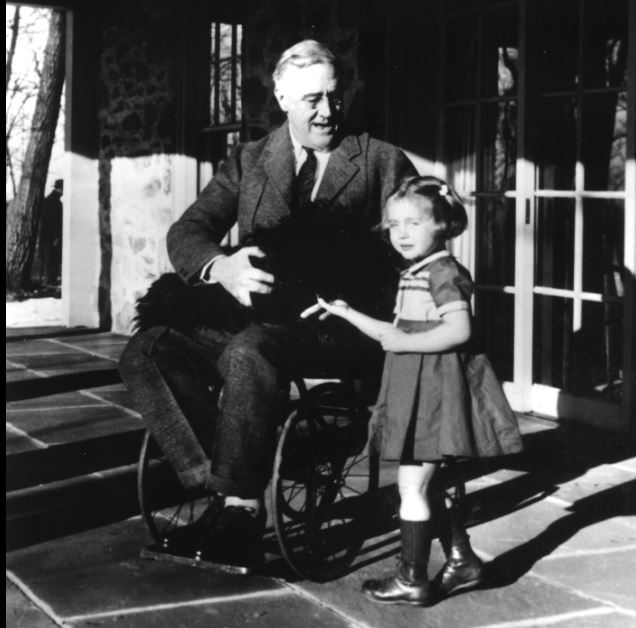
1media/FDR.JPG2020-09-09T12:00:34-07:00Franklin D. Roosevelt22In 1921, Franklin D. Roosevelt was diagnosed with "infantile paralysis" (i.e. polio) at the age of 39.plain2020-10-22T09:57:20-07:00 In 1921, Franklin D. Roosevelt was diagnosed with "infantile paralysis" (i.e. polio) at the age of 39. In the years following, he shifted his focus from politics to rehabilitation, working with doctors on massage therapy and hot baths to regain partial mobility. He made his first public, political appearance at the 1924 Democratic Convention, which had long-lasting impact on the public perception of individuals with disabilities. He won the 1928 election for New York's Governor, a position he held for two terms before being elected President in 1932.
References Berish, Amy. "FDR and Polio." Franklin D. Roosevelt Presidential Library and Museum, https://www.fdrlibrary.org/polio.
Wilson, Daniel J. (1998). A Crippling Fear: Experiencing Polio in the Era of FDR. Bulletin of the History of Medicine, 72(3), 464–495. https://doi.org/10.1353/bhm.1998.0163