“Sages of Odessa”
The person who emerged in this period as the most important Yiddish and Hebrew writer in the Jewish world was Sholem Yankev Abramovitsh, who wrote under the name Mendele Mokher-Sforim. While Abramovitsh began as a proponent of the views of the Jewish Enlightenment, he became estranged from the Haskalah as he criticized middle-class maskilim who aimed to preserve their own economic integrity at the expense of the poor. This shift in attitude was reflected in some of Abramovitsh's Yiddish stories from the 1860/70s such as “Fishke der krumer” (Fishke the Lame) and the satirical novel Di klyatshe (The Nag). Abramovitsh settled in Odessa in 1881 when he was invited to direct a new modern school founded by the Jewish community of the city and was quickly absorbed into the circle of Jewish nationalist intellectuals there.
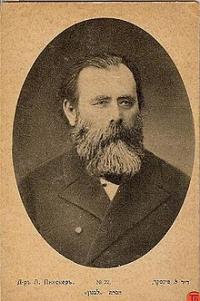
During this time, Odessa became the center of Jewish nationalism and proto-Zionism in the Russian Empire, particularly in response to the pogroms of 1871 and 1881. Leon Pinsker, the author of Auto-Emancipation, was active in the city as the head of the Odessa Committee of Hovevy Zion (Lovers of Zion) until 1891.
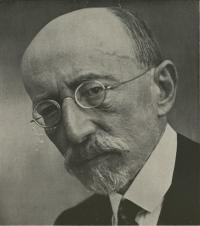
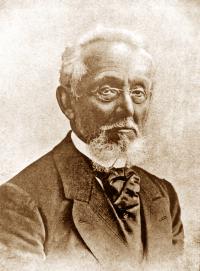
Pinsker was joined by the Zionist thinker and Hebrew writer Aḥad Ha‘am (Asher Ginsburg), the historian Simon Dubnow, the poet Ḥayim Naḥman Bialik, and the writers Moshe Leib Lilienblum, Elḥanan Leib Lewinsky, Yehoshu‘a Ḥe Ravnitsky, and others.
Some of these “Sages of Odessa” who tried to foster a highbrow sense of Jewish culture and nationalism did not know how to respond to the mixture of consumption, leisure, business, conversation, and intellectual activity that was exhibited in Odessa cafés.