Mae Jemison: The Cosmic Dance
1 2020-06-25T13:30:42-07:00 Cari Kaurloto 3781164953cd6d9b5d46e62a61a9c84cdeafe0c1 37510 2 Mae Jemison: The Cosmic Dance plain 2020-07-01T12:27:05-07:00 Cari Kaurloto 3781164953cd6d9b5d46e62a61a9c84cdeafe0c1This page is referenced by:
-
1
media/Scalar Front Page-Recovered.jpg
media/Mae Jemison.jpg
2020-06-03T18:25:36-07:00
Mae Jemison
25
plain
2020-07-01T14:56:30-07:00
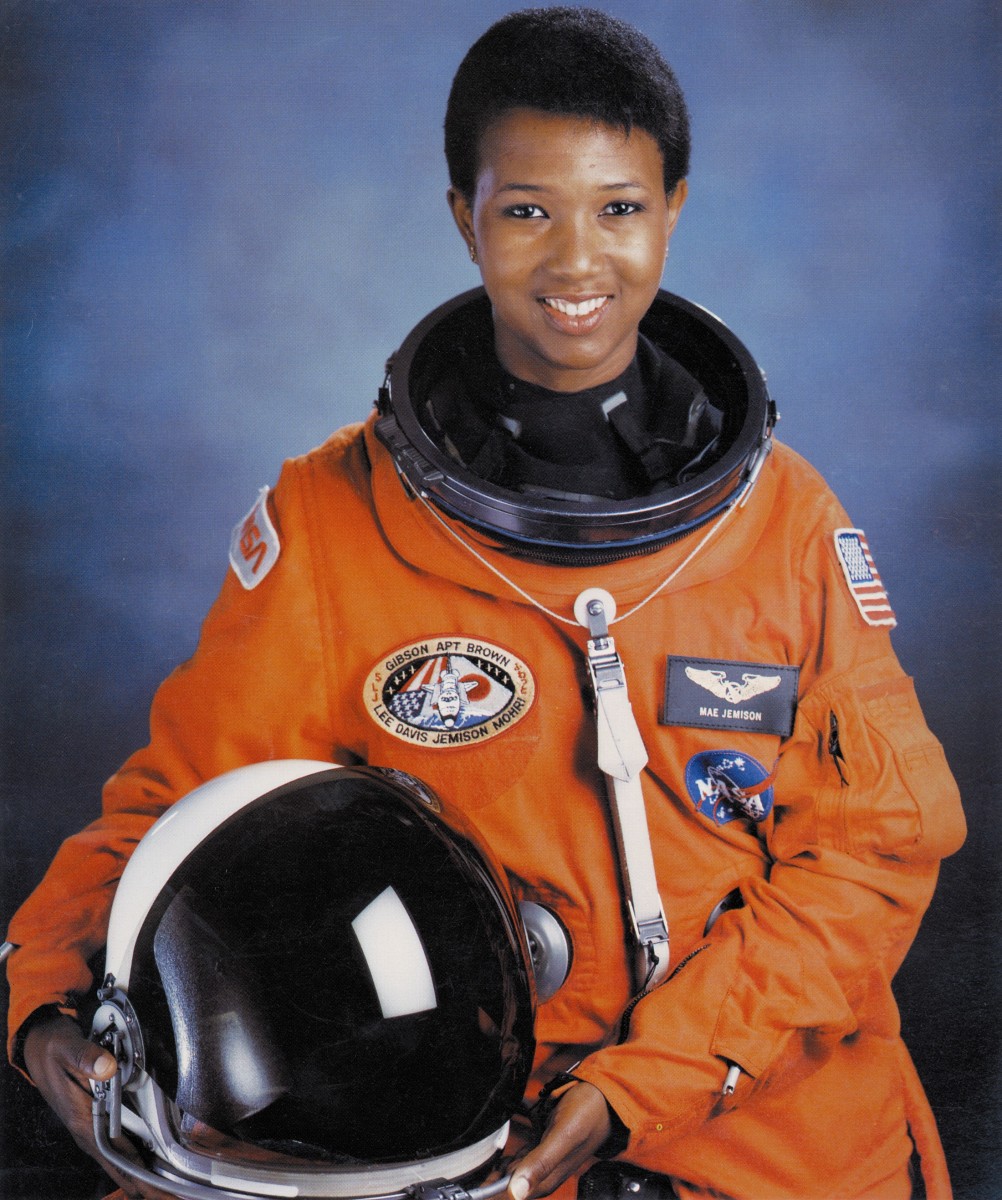
Mae Jemison was born October 17, 1956, making her a Libra; it should be no surprise then to learn that her first love was dance. In fact, in the following video, she expresses how the melding of art and science worked for her in becoming an astronaut:
She was born in Decatur Alabama, the youngest of three children. When she was three, her family moved to Chicago, IL. She has a BS in Chemical Engineering from Stanford University and a Medical degree from Cornell. While at Cornell, she studied abroad in Cuba and Kenya and worked at a Cambodian refugee camp in Thailand She served her internship at LA County USC hospital before going to serve as a doctor in the Peace Corps in Sierra Leone and Liberia.
In 1987, she was the first African American woman to be admitted into NASA's astronaut training program. In 1992, she created another milestone by being the first African American woman to go into space on the Space Shuttle Endeavour.
Since leaving NASA, Dr. Jemison has taught at Dartmouth. She has received numerous awards and honorary degrees for her contributions to science and engineering, including the 1988 Essence Science and Technology Award, the Ebony Black Achievement Award in 1992 and a Montgomery Fellowship from Dartmouth College in 1993.
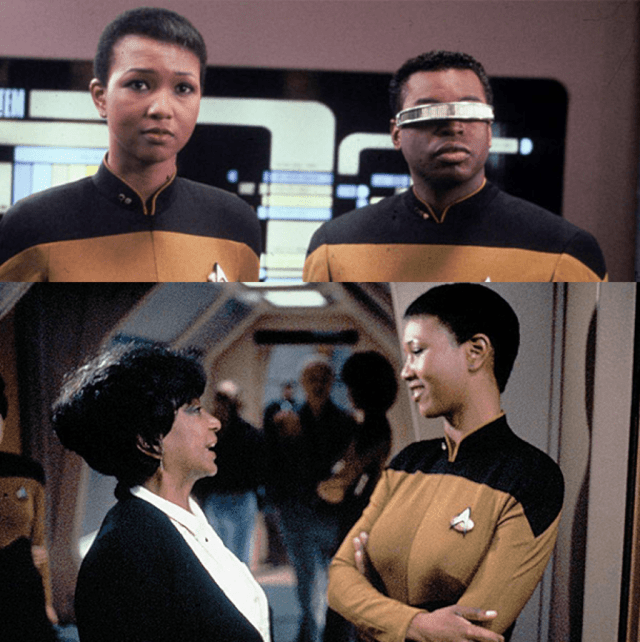
And to further combine Science/Engineering and Art, Dr. Jemison appeared on Star Trek: The Next Generation. Dr. Jemison continues to teach and serve through her foundation, the The Dorothy Jemison Foundation for Excellence (DJF). The Jemison Group is an organization that,
“develops and implements teaching methods, curricula, materials and programs that foster educational experiences resulting in individuals fully able to participate and contribute effectively and beneficially to society. DJF, a non-profit foundation places special emphasis on building critical thinking skills, experiential teaching methods, science literacy, integrated approaches to learning and individual responsibility in achieving excellence “ (from the website http://jemisonfoundation.org/).
Further Reading at USC
Cavallaro, U. (2017). Women Spacefarers: Sixty Different Paths to Space. Springer. https://doi.org/10.1007/978-3-319-34048-7
Thiel, K. (2017). Mae C. Jemison: First African American Woman in Space. Cavendish Square Publishing LLC.
References
“Mae Jemison.” Physics Today, October 17, 2016.
Eschner, Kat. “This Groundbreaking Astronaut and Star Trek Fan Is Now Working on Interstellar Travel.” Smithsonian.com, Smithsonian Institution, 17 Oct. 2017.
Hartlaub, Peter. “Pioneering Astronaut and Lt. Uhura from 'Star Trek' Talk Science at Silicon Valley Comic Con.” SFChronicle.com, San Francisco Chronicle, 8 Apr. 2018.