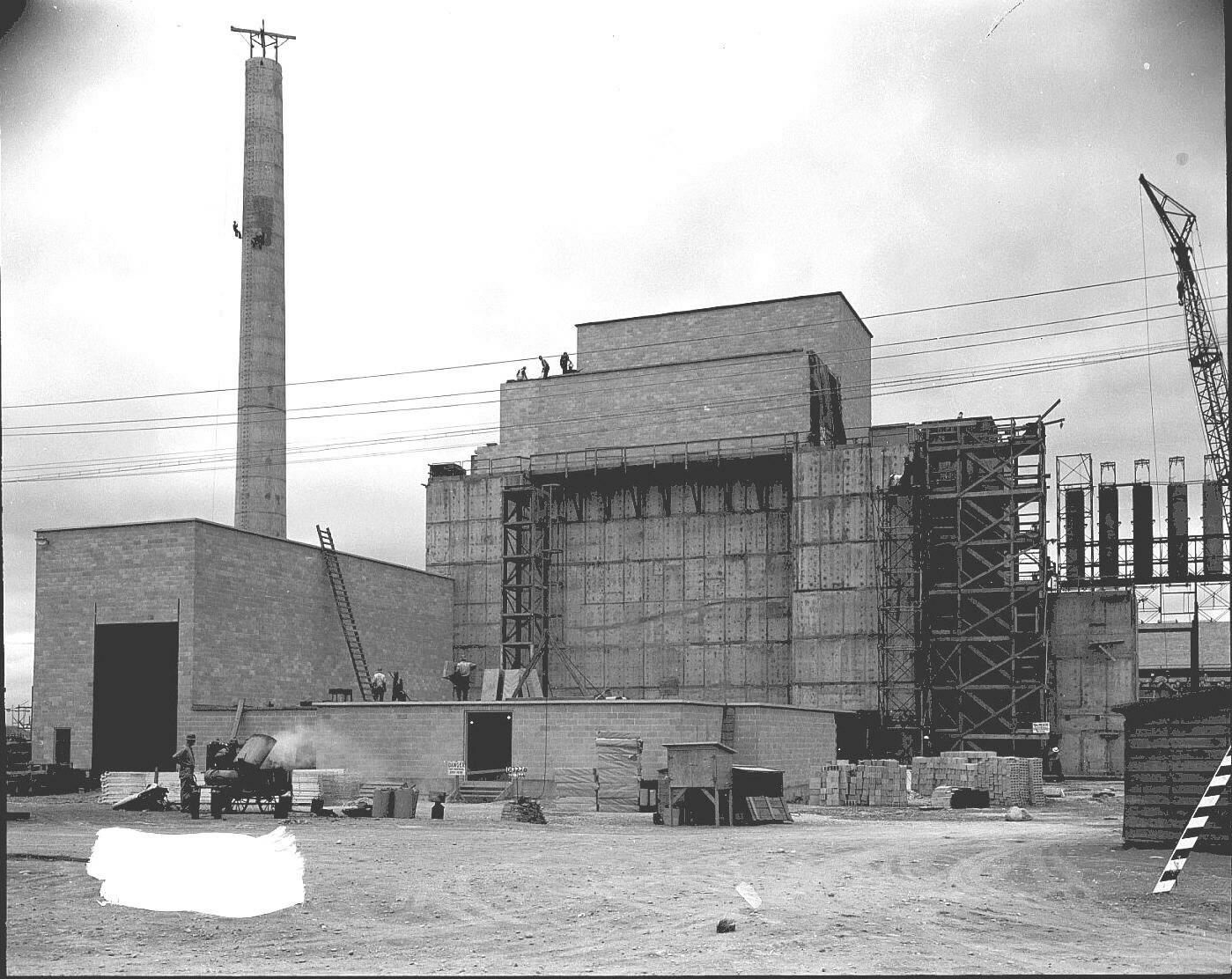
12017-09-11T06:42:49-07:00Julie Staggers58420c9f37f68a0a915996451a251470dfbd2024203681Construction of the B reactor building, June 1944plain2017-09-11T06:42:50-07:00Julie Staggers58420c9f37f68a0a915996451a251470dfbd2024
This page is referenced by:
12017-07-14T05:03:35-07:00The Builders11Hanford was built by older men and younger women who signed on to a secret project that would win the war.plain2017-09-28T16:17:15-07:00
The men who built Hanford, and the women who provided most of the administrative support during the construction era, came from all over the country to work on secret project that would "help win the war." Most got off the train in dirty, dusty Pasco after dark, and awoke to a bleak landscape that looked nothing like the evergreen Garden of Eden they had envisioned when they signed on to relocate to Washington state. The men were mostly too old to serve in combat, but had the construction skills needed for the breakneck pace of construction at Hanford. They worked under conditions of tight security and with few exceptions were fired and moved on at the end of the construction phase. Nonetheless, Hanford's military manager, the Army Corps of Engineers, and it's industrial general contractor, Du Pont, worked hard to keep workers safe. During the war, Hanford had the best safety rating of all of the comparable wartime construction projects.