Jack Smith column
1 2018-04-03T13:18:32-07:00 Andrew S. Jacobs 45edf76073fc8204ba5adec5870047f3453dfd28 12458 1 Smith Los Angeles Times column mentioning Keepers of the Secret, May 19, 1983 plain 2018-04-03T13:18:32-07:00 Andrew S. Jacobs 45edf76073fc8204ba5adec5870047f3453dfd28This page is referenced by:
-
1
media/1983 Keepers of the Secret.jpg
2018-03-26T18:18:35-07:00
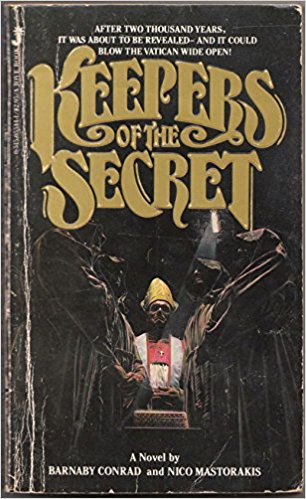
(1983) Barnaby Conrad and Nico Mastorakis, The Keepers of the Secret (Jove)
10
plain
2022-06-04T10:58:23-07:00
This novel is the unique collaboration of two outsized media figures. Barnaby Conrad was a kind of "Hemingwayesque" figure (the descriptor recurs in biographies of Conrad, including this New York Times obituary at his death on 2013): a bullfighter, club owner, painter, writer, and patron of the arts. Nico Mastorakis (Νίκος Μαστοράκης) is a multimedia impresario, whose colorful career has crossed photojournalism, television, music, and cinema.
The Keepers of the Secret is Conrad and Mastorakis's second collaboration; the first, in 1981, was the James Bond-esque Fire Below Zero. I haven't been able to find out how their collaboration began (or ended). In the 1980s Mastorakis was living outside of Greece, following the fall of the Junta, making films; Conrad was living in California and presiding over the Santa Barbara Writers Conference, which he had co-founded with his wife Mary (it is now run by Charles Schultz's son, Monte). Jack Smith, the Los Angeles Times columnist (and self-reported "friend" of Conrad) claims that Mastorakis's role as a "collaborator" consisted of assistance with "historical, geographic, and religious research" (see below).
The novel is well-plotted and, by now, rather familiar in its themes: international travel, Vatican conspiracy, a tinge more noir edge than in some other novels (the last scene is particularly stark). This novel is also the first to really grapple with the implications of the Nag Hammadi finds; explicitly influenced by the work of Elaine Pagels, the "secret gospel" at its heart raises fairly radical ideas about sex and gender in the divine.
Heroes: Jason van Cleve, dashing widower reporter whose wife had been killed by the Mafia; Taylor Phillips, ex-vice consul, his beautiful love interest and amateur archaeologist; a minor hero in the Vatican is Cardinal Bartolomeo (Barto), a U.S. cardinal deacon, war hero, and friend of Taylor's
Villains: The "Guardians," three cardinals, led by the cartoonishly venal Cardinal Tobin, members of a secret order dating to earliest Christianity who want to protect the Church along with their various hired goons across the Levant
Gospel: an authentic first-person account by John the evangelist revealing that the true messiah was a woman named Lael (Jesus was merely her adopted brother), who is also (possibly?) Mary Magdalene; Lael performed Jesus' miracles and through him taught Gnostic wisdom, before being killed by the first Guardians; the Gospel is ultimately destroyed in a fire on Mt. Athos and Van Cleve burns all traces of it
Reviews. Although Conrad and Mastorakis were fairly well known media figures, the novel seems not to have been widely reviewed.
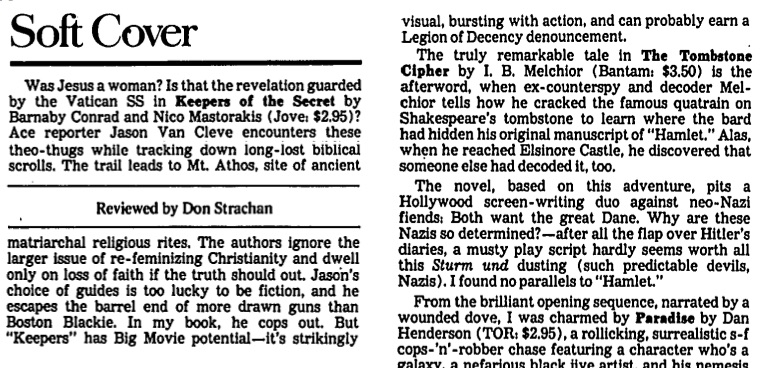
A capsule review in the Los Angeles Times praises its cinematic qualities and a column in the same paper by Jack Smith gives it some free press, as well. The lack of attention on Goodreads and Amazon attest that the novel has fallen more or less into oblivion.