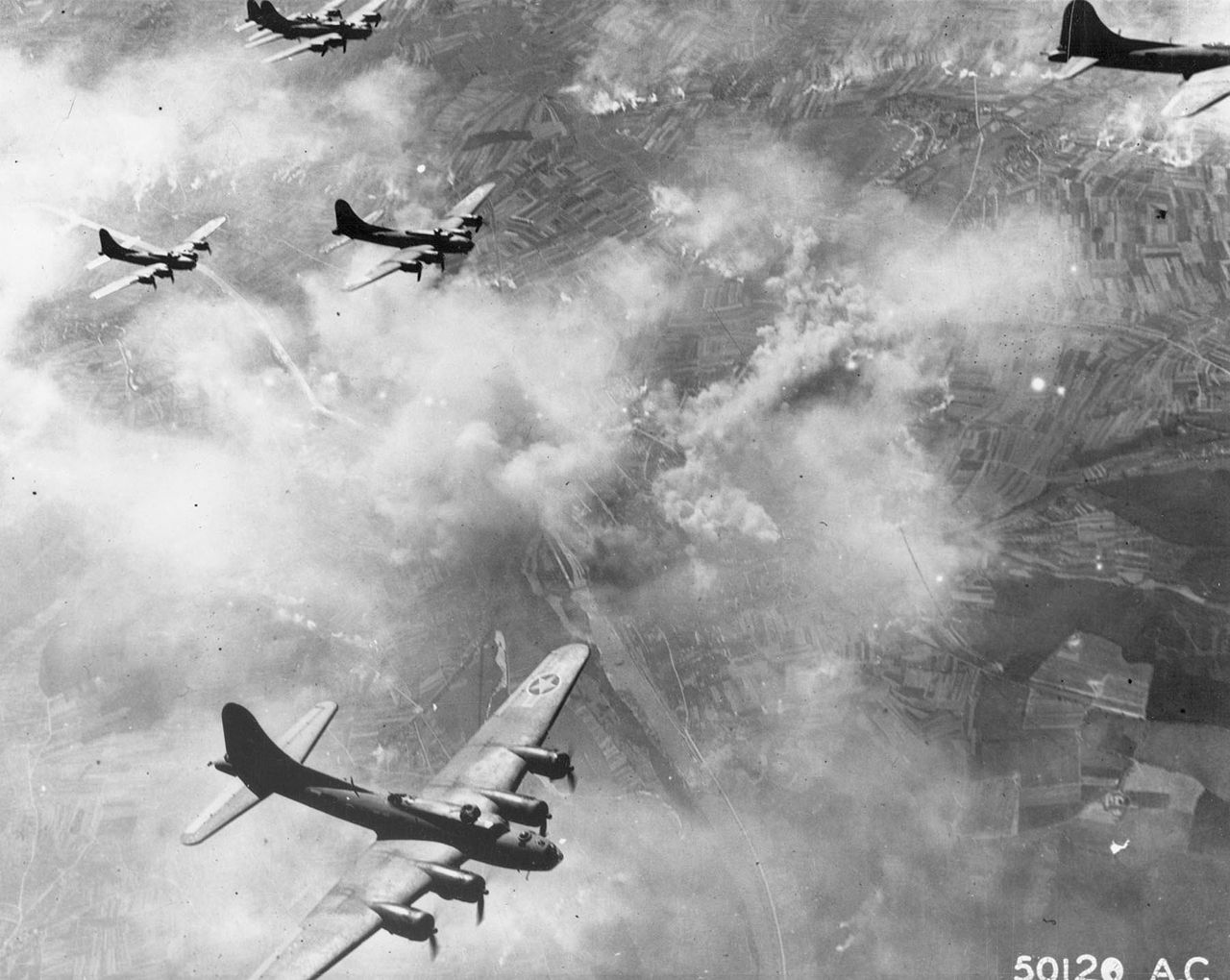
Target Tokyo: Los Angeles and Accountability for U.S. War Crimes in Europe and Japan, 1943-1945
This essay is integral to Ghost Metropolis, and also a contribution to to the documentation of a particular U.S. war crime. It argues that Los Angeles contributed to the atrocities committed against the cities of Japan in three direct ways: 1) The fury of Los Angeles's own race wars and spatial apartheid generated a major source of racial hatred. Home to the U.S. mainland's largest Issei and Nisei Japanese communities, Los Angeles's ruling regime practiced extreme race hatred within a California-wide Anti-Japanese movement that dated from at least 1906; 2) Los Angeles took the lead in the production of cinematic propaganda to support a veritable race war. Los Angeles's "pulp fascism," was a major source of American racist ideology that justified aerial genocide in Japan. Specifically and directly, U.S. Government censorship officials, with the collusion of Hollywood writers and producers, knew about, but suppressed the truth about civilian targeting and manufactured a cover-up story; and 3) Los Angeles led in the production of the very warplanes that carried out the attacks on civilians. But this, the most obviously "direct" contribution, was actually the least culpable. Workers have no control over the military uses of the equipment that they produce. The choice of target by commanders is culpable, and the choice to lie about the crime is culpable.
The aerial anti-civilian attacks on Japan were intentional war crimes, committed with malace aforethought and accomplished by many key, indispensable actions that took place in Los Angeles. Southern Californians contributed very significantly to this outcome. If not for the actions of Angelenos, the war crime may not have been committed. As with any crime, its moral after-effects have lingered ever since, haunting the living downstream with upstream injustices.
Part I: WHAT HAPPENED AND WHY
The War Crime, 1944-45
"The attack or bombardment, by whatever means, of towns, villages, dwellings, or buildings which are undefended is prohibited."
-- Article 25 of the Second Hague Convention, ratified by the United States Senate, 1907. Entered into force: 26 January 1910.
Since the 1940s, U.S. military commanders, scholars, and journalists both in the U.S. and worldwide, have acknowledged that the U.S. deliberately killed, with incendiary weapons of mass destruction, hundreds of thousands of defenseless civilian noncombatants, targeted under the labels "urban area" and "urban industrial area." These terms are synonymous with "indiscriminate" bombing--simply killing as many civilians as possible. The practice was also widely referred to as "terror bombing" by US and British commanders who carried it out.
The U.S. War Department's own 1947 United States Strategic Bombing Survey (USSBS) is frank about the facts:
"As a result of the American air offensive against Japan, 500 separate targets were bombed and an average of 43 percent of Japan's largest 66 largest cities were destroyed. More than two-thirds of the civilian population experienced air raids, and more than one-third personally experienced bombing. As estimated from the Morale Division sample survey, approximately 1,300,000 people were injured and approximately 900,000 killed as a result of the bombings. Bombing, or the threat of bombing, resulted in the mass disruption of the lives of countless millions of people, including the evacuation of more than 8,500,000 persons from cities." (USSBS, War Department, The Effects of Strategic Bombing on Japanese Morale. Washington, DC, June 1947), pp. 2-3.
These figures include the nuclear attacks on Hiroshima and Nagasaki, which are together usually numbered at 250,000 immediate civilian deaths. The SBS is frank about the indiscriminate nature of the bulk of the attacks:
More than 500 separate targets in Japan were subjected to bombing attack during the period June 1944 to 15 August 1945. The large majority of these received precision bombing on specific industries or installations but 66 cities were subjected to urban area saturation tactics, attacks directed against whole areas of the city rather than at specific targets [boldface added] . Of the 160,300 tons of bombs dropped on Japan, 128,000 tons were dropped on the 66 cities. Damage to these cities ranged from 99 percent of the built-up area of Toyama to 11 percent of Amagasaki, with an average of 43 percent per city, by American estimates." (USSBS, War Department, The Effects of Strategic Bombing on Japanese Morale. Washington, DC, June 1947), p. 34.
Repeatedly citing the March 9-10 1945 Firebombing of Tokyo, which killed more than 100,000 civilians, former U.S. Secretary of Defense Robert S. McNamara has openly confessed to committing "war crimes" while he was an aide to General Curtis LeMay in the the XX and XXI Bomber Commands. This confession, first aired in Errol Morris's 2003 documentary, The Fog of War is shocking enough, coming from the man who later masterminded the Vietnam War for Presidents Kennedy and Johnson.
By the sheer numbers established by the U.S. Strategic Bombing Survey, the systematic civilian killing by the United States Army Air Force, Twentieth Air Force, XX (HQ Kharagphur, India) and XI (HQ Saipan, Guam) Bomber Commands, all under Commanding General Henry Harley "Hap" Arnold, qualifies as an atrocity of unprecedented proportions. The United States killed more than a third of a million noncombatants in just three instants of extreme violence: The 9-10 March 1945 Tokyo firebombing attack, during which 325 B-29's, dropped 1,665 tons of M-69 napalm incendiaries, and the atomic attacks of 6 August 1945 Hiroshima and 9 August Nagasaki. If we add the U.S. Army Air Force's participation in Dresden and Berlin urban-area attack to the U.S. Strategic Bombing Survey estimate of 900,000 civilians killed in Japan, then the US has more than 1 million dead civilians on its conscience.
How did such an immense U.S. war crime take place? Who planned it, and how was it explained to the U.S. and foreign publics? To understand how U.S. military personnel developed such a savage plan, it is necessary to begin with the evolution of "air power doctrine" from the 1920s until the late 1930s, when a crisis emerged in response to Japanese, German, Italian, and Spanish Fascist use of air power against civilian populations.
Fascist and American Air War Doctrine, 1920-1930s
In his 1921 Command of the Air and later writings, the Italian Fascist Giulio Douhet articulated the chilling logic of genocidal warfare. Fascism scorns the humane values that grew through the Renaissance and Enlightenment of Western civilization, and calls for a return to brutal values of the Roman Empire. Unsurprisingly Douhet scoffed at the moral principles that inform the 1907 Hague Conference treaties. Reasoning that because modern urban societies are the nerve centers of nations, the jugular of an enemy, he enthusiastically advocated using bombs and poison gasses to eradicate humans and all living things in a spectacle of horror so great, that social breakdown at the nerve center would then radiate throughout the entire nation, and all remaining principal cities would immediately sue for peace. Such appalling slaughter would, he boldly asserted, prove humane by saving millions of lives such as those lost slowly in futile trench-warfare battles of the recent Great War. (Pape 1996, pp. 55-86).Douhet's fascist theories, an inhumane inversion of Western morality, were not so alien in the United States. Many leading Americans, including Mary Pickford, Joseph Kennedy, and Charles Lindburgh admired Italian Fascism in the 1920s. Extreme racist hatred and inequality--a necessary precondition for the planning of mass killing, was part of segregated American society. America's own fascist party, the Ku Klux Klan was at its height of American popularity in the early to mid-1920s, when American air war doctrine was being conceived.
America's air-power founder and founding theorist was the legendary airman of the First World War, William L. “Billy” Mitchell (1879-1936). Mitchell, who had served in the Spanish-American War, rose to command all U.S. aircraft in the battles of 1918. He pushed tirelessly--but ultimately too aggressively--for an independent Air Force, and is widely recognized as the "father" of the U.S. Air Force. He was ultimately courts-martialed in 1925 for disobedience to the top brass of both the Army and the Navy.
Billy Mitchell knew Douhet's writings very well. In his own writings, he wavered between an enthusiastic embrace of Douhet's ruthless approach, and one that respected established laws of war, embodied in the Hague Conventions. The key difference was the view of civilians as targets. Mitchell did at times agree with Douhet that terrorizing civilian populations would be a necessary part of disrupting the social fabric and economy of the enemy. This became the minority, last-resort strategy in early air war doctrine.
By the 1930s, the U.S. Army Air Forces developed the American "precision" strategy, sometimes called "Lenient Douhet," which holds that the goal of paralyzing the enemy can be accomplished through attacks on vital industrial and transportation facilities. Railroad switch and marshaling yards, military industrial factories, and oil production, can choke and wither a nation's capacity to fight at the front lines. This "precision bombing" strategy has the virtue of not being deliberately anti-civilian, but it inevitably involves civilian casualties as "collateral damage."
The Air Corps Tactical School (ACTS) was the branch of the War Department responsible for developing the guiding doctrines of air strategy and tactics. By the late 1930s, ACTS had drawn-up elaborate plans for the precision bombing of military and supply-chain objectives, beginning with the enemy’s air force, proceeding to its industrial capacity to produce warplanes, tanks, ships, and vital spare parts such as ball bearings. But the "Severe Douhet" strategy was always held in reserve, just as the U.S. continued to develop chemical weapons after they were banned by the Geneva Conventions of the 1920s. The Air Corp Tactical School held that modern, urban, industrial society depends on the orderly operation of complex urban-centered systems. Mass transit, water supplies, electricity, and most of all, the manufacture of weapons, should be disrupted, to undermine the enemy’s ability and will to fight. Targeting these objectives does presuppose a large number of civilian casualties, because the workers in transit systems and industrial plants are civilians. So are the families living in surrounding areas to rail stations and factories.
This is how "civilian casualties" slipped into a moral grey zone. In total disregard for the Hague Convention treaties of 1907, the transit worker or aircraft worker became a military target. That part is mostly accepted. Next in the moral descent is considering the massive overloading of civilian disaster relief systems. All major cities had fire-suppression systems, and enough transportation and supply-chain resources to keep people healthy and productive. Overwhelming those systems, it was surmised, in order to let the fires destroy the aircraft factories, would also then bring the national war machine to a halt. At this level of thinking, civilian casualties were not merely justified as "collateral damage” (meaning unintended). Civilian death and terror promised mass disruption and dysfunction. “De-housing” workers and diverting the nation's labor power and infrastructure to rescue and recovery were part of the plan. Already by the 1920s, the Royal Air Force inflicted "Air Control" on newly-formed Iraq after the Great War, "bombarding villages and tribes as needed to put down unrest and subversive activities" (Satia 2006: 16).
The Air-War Crisis of 1936-1939
If Douhet's terrifying strategy of deliberately terrorizing civilian populations for both demoralization and disruption was given serious consideration in the United Sates, it was because the untested theory appeared very plausible. Cities were fully understood as complex systems, thanks to the growing professional fields of urban planning and sociology. Mithcill thought it would work, but backed away from its immorality. So it was left to the fascist states, those with the least compunctions, to try it first. It was the series of air attacks by the Spanish Fascist, Imperial Japanese, and Italian Fascist forces, backed by Nazi Germany, that led to a very severe concern that if the same tactics were used on European and American capitals, the democracies could fall before a land war ever got started.No military power had attempted even a Lenient Douhet attack on a city prior to the joint Spanish Fascist - German air attack on Guernica, Spain in 1936 (subsequently commemorated in Picasso's famous canvas). Then suddenly, as if on a signal, in 1937 Mussolini's Italian forces bombed Ethiopian villages, and Japanese Imperial forces bombed the cities of Shanghai, Nanking, Canton, Hankow, Chengdu, Kunming, and Chongqing. All of these fascist/imperialist bombings provoked widespread public outrage by the Western democracies. (Orr, 2014). Reacting specifically to the Japanese aerial bombing of Chinese cities, the League of Nations unanimously approved a Declaration on the "Protection of Civilian Populations Against Bombing From the Air in Case of War, 30 September 1938." It was an urgent plea to all member and non-member States, to adopt a most explicit prohibition the aerial bombing of civilian non-combatants. The Declarations's principles were unambiguous:
"1) The intentional bombing of civilian populations is illegal;2) Objectives aimed at from the air must be legitimate military objectives and must be identifiable;3) Any attack on legitimate military objectives must be carried out in such a way that civilian populations in the neighbourhood are not bombed through negligence."
The Declaration noted "though this principle...does not require further reaffirmation, it urgently needs to be made the subject of regulations specially adapted to air warfare and taking account of the lessons of experience." This last phrase was added because the League members--which excluded the United States of course--saw these principles as already axiomatic in existing treaties, such as the 1907 Hague Conventions.
The fear of the Douhetian option only increased by 1939. This option remained seductive because it had never been tested. The Spanish-German, Italian, and Japanese attacks of 1936-8 did not involve sufficient numbers of bombers, however, to truly paralyze--let alone obliterate--a city. Air power strategists had already determined that a true firestorm would require at least 100 bombers and many tons of bombs. By 1938, however, the German Luftwaffe was the largest air force on Earth, uniquely capable of a full city-destroying attack. Knowing that fascists were ruthless enough to use Douhet's doctrine, a near panic by Roosevelt's Ambassador to France, William C. Bullitt, about the vulnerability of France, to an overwhelming, paralyzing air attack. He drafted the impassioned Appeal that President Roosevelt made on 1 September 1939, as Hitler's invasion of Poland began:
I am therefore addressing this urgent appeal to every government which may be engaged in hostilities publicly to affirm its determination that its armed forces shall in no event, and under no circumstances, undertake the bombardment from the air of civilian populations or of unfortified cities, upon the understanding that these same rules of warfare will be scrupulously observed by all of their opponents. I request an immediate reply.
--Franklin D. Roosevelt (U.S. Department of State, Foreign Relations of the United States, 1939: General (Washington, D.C.: Government Publishing Office, 1956), p. 542).
In 1940, Not long after Roosevelt's unambiguous appeal, Hitler's Luftwaffe began to target cities in attacks on Rotterdam and the London Blitz. After a very short and unsuccessful trial at attacking military and industrial targets, the United Kingdom's Royal Air Force (RAF), under the command of Sir Charles Portal and General Arthur “Bomber” Harris, emphasized the night-time terror bombing of civilians and cultural monuments. Harris fully embraced Severe Douhet. Under his command, the RAF’s military objectives were secondary targets. Harris unapologetically waged a "terror bombing" campaign against German cities from 1940-1945, repeatedly attacking Berlin, Munich, Cologne, Dresden, Hamburg, and many secondary and even village-sized cities, for the purpose of "de-housing" and "demoralizing" the population. (Hansen 2008; Grayling 2007; Dower 1986, 2010). Prime Minister Winston Churchill, knowing how little Britain could mobilize against the mighty German onslaught, gave Harris a long leash, hoping to slow the Nazis by any means to assure the survival of the United Kingdom.
The Doolittle Raid of 18 April 1942
Within weeks of the 7 December Japanese raid on Pearl Harbor, Roosevelt told his cabinet that the U.S. should strike Japan from the air as soon as possible in order to boost morale and force the Japanese to dedicate more resources to homeland defense. (Glines 1998, p. 10). The Joint Chiefs of Staff, under Chair of the Joint Chiefs, George C. Marshall, then planned what became known as the "Doolittle Raid," a one-way flight of 16 B-25 "Mitchell" medium bombers from the deck of the USS Hornet, a Yorktown-class aircraft carrier. to targets in Tokyo, Yokohama, Nagoya, and Osaka. It was a daring plan. Because the Hornet's deck was only long enough for the medium-range B-25s to take-off, but not long enough for them to land, the flight path continued over Japan to China, where each crew attempted to reach allied Kuomintang Chinese territory just beyond the Japanese lines. Because of an early departure due to Japanese sightings of the Hornet, the B-25s ran short of fuel, so not all could make it beyond Japanese-held Chinese territory. All 16 aircraft successfully launched from the Hornet on 18 April 1942, flying 750 miles unescorted to their targets, and all but one of the sixteen aircraft either crash-landed, ditched at sea. Several landed behind enemy lines and managed to escape to Kuomintang territory. The sixteenth made it to Soviet territory and was detained for the remainder of the war. Of the 80 crew, 69 returned to safety; 3 died in combat; 8 were taken POW, of whom three were executed and one died in captivity.When news of the Doolittle Raid broke in the United States that April of 1942, the airmen were widely hailed as heroes and the operation was a huge public relations success for the War Department. (The fate of the missing eight airmen was not known for another year). The Doolittle Raid served throughout the war as a prism through which passed the propaganda and disinformation campaign about area versus precision bombing. The War Department took steps to maximize the symbolic message of the attack not only as payback for Pearl Harbor and a down-payment on future attacks.
The Doolittle Raid also became the symbolic standard for the portrayal of the U.S. tactics and strategy to defeat Japan. But it was extremely unrepresentative of the ultimate "Air Plan for the Defeat of Japan," which began operations in June of 1944. and just as ironically, Doolittle was by that time a leading anti-Douhetian, in charge of the British-based U.S. 8th Air Force
The Doolitte Raid of 1942 was most immediately claimed as a just retribution for two reasons: a) as payback for Pearl Harbor; and 2) as payback for ingratitude and false friendship following U.S. support in the 1923 Great Kanto Earthquake, which leveled Tokyo. The U.S. had swiftly aided in the rescue and recovery efforts, for which American officers were given campaign medals by the Imperial Army. Now these medals, like the thousands of cherry trees planted around Washington D.C., were portrayed landmarks in a history of sinister, back-stabbing deception. In an on-deck ceremony just prior to the attack, staged for newsreel cameras, Admiral Halsey and Major Doolittle wired these very Japanese medals of gratitude to the fins of the 500-lb bombs, to be "returned" to the city the Americans had once helped to recover. By 1944-5, the wrath of the U.S. overwhelmed that of Poseidon, re-destroying Tokyo with far more devastation than the Kanto Earthquake had achieved.
Aerial Bombing with B-17s in Europe, 1942-1944
Despite the elaborate planning for the Doolittle Raid by the U.S. Army Air Force, it was still a minor scale operation by comparison to rapidly building a mighty bomber force, first of B-17s built mainly in Los Angeles, and waging logistical warfare by transferring an entire air force to the British Isles. U.S. Air power would be deployed primarily to Europe for the fist two years primarily (1942-3), before the eventual shift to the Pacific Theatre in 1944.This joint effort in the European Theater, by the UK's RAF and the US AAF, was known as the Combined Bomber Offensive, or CBO. It was part of the merged leaderships of the US and UK's top command: the Combined Chiefs of Staff, the US Joint Chiefs of Staff, alongside the UK's Chiefs of Staff Committee. The only level above this Combined Chiefs were President Roosevelt and Prime Minister Winston Churchill.
Building on decades of air war strategic planning, the CBO's targeting decisions were guided by an elite panel of experts called the Committee of Operations Analysts (COA), which "brought together military specialists and a group of civilians with considerable experience in analyzing large, complex problems. Its members and consultants included the banker Thomas W. Lamont of J.P. Morgan and Company, corporation attorneys Gujideo R. Perera and Elihu Root, Jr., W. Barton Leach, one time professor at Harvard Law School; Edward S. Mahon of the Office of Strategic Services...and Edward Mead Earle, of the Institute for Advanced Study, chairman of a Princeton faculty military studies group and an expert on the history of strategic thought." (Schaffer 110-111).
The U.S. counterpart to Harris was Ira Eaker, appointed by General Arnold to assume command of the "Mighty Eighth" 8th Bomber Command. General Eaker strongly represented the dominant opinion among the top commanders, opposing area bombing, as immoral and less harmful to the enemy than precision attacks on war materiel. Arriving in London on 21 February immediately clashed with Harris, who wanted the U/S. to double his raids on German civilians. It was Eaker's great achievement to keep the 8th, while under his command, dedicated to precision approach, and studies have since proven him right. The US AAF crippled the German war machine for more effectively than the RAF, by successfully degrading its aircraft factories and then depriving Germany of petroleum.
The Spirit of Douhet: U.S. Planning to Burn Civilians Alive with Napalm Weapons
The US AAF - RAF split on strategy was reproduced within the US AAF ranks. While General Arnold backed the majority view for a limitation to military-industrial precision targets, he never ruled-out area bombing. Indeed, the first important air raid against the Japanese Empire, the Doolittle Raid on Tokyo of 18 April 1942, included incendiaries targeted on "flimsy" residential sections of the city. Already in 1941? 2?[*check], Arnold asked the National Defense Research Council to develop an incendiary bomb that used cheap, plentiful materials. (Existing incendiaries depended on rare material like magnesium and phosphorous) This led to Standard Oil and Harvard Professor of Chemistry Louis Feiser's, Chemical Division of the National Defense Research Council, discovery of "Napalm," a jellied gasoline that sticks mercilessly to its targets. Testing his creations on the banks of the Charles River in 1942, the weapon that evolved, the M-69 Incendiary, which surely counts as among the most horrific ever developed and deployed on a mass scale. They were small: a plain steel pipe 20 inches long and weighing only 6 lbs (2.7 Kg), it was detonated with a time-delay 5 seconds so that it could fall into the inner structure of wooden houses. When detonated, the M-69 spewed globs of flaming jellied gasoline up to 50 feet.The M-69 is a weapon from the workshops of Hell. Petroleum itself is Manna From Hell, enriching nations with the corrupt remains of living things millions of years entombed deep in the underworld for millions of years. To be burned alive by any means is the ultimate vision of torture, but to be burned alive by a jellied substance that cannot be extinguished achieved a new low in human cruelty, for which U.S. citizens must ackenowledge responsibility.
The sinister nature of napalm weaponry can be more completely appreciated by noting that it was developed alongside the suicide bat-bomb, a fantastic program that attempted to use live, flying bats by the millions (yes, the War Department did have a reasonable supply in such numbers in the giant caves of Arizona: millions of hibernating bats that could be easily harvested) with incendiaries strapped to their bodies, which would roost in the eves of Japanese buildings and then detonate where the incendiary would have greatest effect, on the underside of rooflines (Couffer, 1992; Neer 2013). This program nearly became operations, but was aborted after large portion of an air base was destroyed during a test run. Ironically, Arthur Szyk's infamous 1942 Collier's Magazine depiction of the Japanese as a race of bomb-carrying bats more accurately portrayed the United States.
The War Department did not test the M-69s on industrial or other legitimate military targets. National Defense Research Council (NRDC)'s Incendiaries and Petroleum Warfare Division tested the M-69 on exact replicas of Japanese and German residential apartment buildings on the Dugway Proving Grounds in Utah in May of 1943. It was found successfully to overwhelm a standard firefighting crew based on known Japanese municipal fire departments.
The rationale all along had been that Japanese cities were mostly built of wood, highly flammable, and therefore most susceptible to Douhet's doctrine. The "Japanese Village" was designed and built by the NRDC's Incendiaries and Petroleum Warfare Division, which secured the services of Antonin Raymond, an architect referred to the NRDC by the American Institute of Architects. Raymond had worked in Japan for twenty years, and assured that the test structures were authentic down to the type of wood and the omnipresent tatami mats. Tatami mats being in short supply, the NRDC sent a detail all the way to Hawaii to acquire enough for burning and re-burning the structures. RKO Studios supplied thousands of still photos of Japanese home interiors (used for constructing movie sets) for the builders of the Japanese village to assure that all details were accurate. (Kerr 1991: 29-30). The Committee of Operations Analysts (COA) shifted its attention from Europe to Japan in 1943 and on 11 November 1943 presented General Arnold with a massive incendiary plan to cripple the Japanese war machine. "The COA recommended staging the fire raids between December and May, when wind conditions and humidity would most effectively promote the spread of fire." (Schaffer 112). It is important to note that the goal was to go far beyond the burning of particular factories or military bases: it was to initiate a genuine city-destroying firestorm. (See complete 11 November 1943 memorandum)
One study considered by the COA proposed using 1,690 tons of M-69s to ignite firestorms in twenty leading cities and it was projected, "devastate 180 square miles, render twelve million people--70 percent of the population of those cities--homeless, disrupt essential services, engulf administrative agencies with overwhelming relief and repair problem..." (Schaffer 122). In June of 1944 the COA established a Joint Incendiary Committee, also called the "Incendiary Subcommittee," which carried out the most detailed studies in preparation for for firebombing. One of many complex challenges they undertook to resolve was to suppress and render ineffective Japanese civil defense efforts, at one point concluding that "incendiaries must...be combined with anti-personnel devices to kill or injure people who tried to extinguish the flames before they became uncontrollable." (Schaffer 113).
This June 1944 report now brought to the operational stage the plans initially presented by the COA to General Arnold on 11 November 1943:
Apparently, the OWI was so unconcerned about the specifically civilian nature of the incendiary planning that it released almost complete information about the successful development of napalm M-69s to the press in July of 1944. "New Fire Bombs Created to Burn Jap Villages" the Los Angeles Times gleefully reported, citing "a recent disclosure that completely reproduced "villages"--one Japanese and one German -- were laid flat in a Utah desert in actual bombing tests," (Lorania K. Francis, "New Fire Bombs Created to Burn Jap Villages," Los Angeles Times, 9 July 1944, p. 9)."Urban Industrial areas in Japan are few, concentrated, and vulnerable to incendiary attack. A relatively small weight of incendiaries effectively placed is believed adequate to cause great damage through destruction of industrial housing, essential public services and a significant number of industrial installations. Japanese war production (aside from heavy industry) is peculiarly vulnerable to incendiary attack of urban areas because of the widespread practice of subcontracting to small handicraft and domestic establishments. Many small houses in Japan are not merely places of residence, but workshops contributing to the production of war materials. These urban areas should be attacked during the period from December through May. Maximum industrial disruption in an urban area will be attained by attacks of a magnitude sufficient to overwhelm the fire fighting resources of the area in question; simultaneous attacks on many urban areas may overwhelm relief and repair facilities of the country as a whole."
Bound by its own inclination and the rules of the OWI, however, the LA Times did not reflect on the moral implications of a weapon designed to burn civilian villages. That it bore no comment other than approbation, is failry strong evidence that in teh public discourse of Los Angeles, racialized killing of Japanese civilians was acceptable.
Americans turn Terrorist: Curtis LeMay, Carl Spaatz, and the RAF Terror Campaign
Curtis LeMay, the fierce and fearless Major in command of the 305th Bomb Group of more than 150 B-17s Flying Fortresses, came to favor Harris's approach, and his successful missions--with himself in the lead plane defying countless rounds of fighter and anti-aircraft fire--earned him respect for his courage. McNamara called him "extraordinarily belligerent." The Supreme Allied Command greatly valued extraordinary belligerence in commanders such as George S. Patton, and LeMay's bravado eventually earned him the promotion to General in command of the 20th and 21st Bomber Command B-29 Superfortress attacks on Japan.Beirne Lay, Jr's harrowing account of LeMay's attack on Regensburg, published in the Saturday Evening Post, leaves no doubt of the courage of the men who flew these missions over Germany's well-defended territories (Lay 1943). By this point in 1944, U.S. AAF commanders had accepted area bombing as "necessary." The shift twoard favoring urban area bombing taht was obvious by the B-29 assaults on Japan, had already begun in the Euroepan theater, in teh Combined Bomber Offensive coordiantions between teh RAF and the USAAF. General Ira Eaker did ultimately succumb to Harris' anti-civilian fury by joining the RAF's brutal Dresden and Berlin raids.
By early 1944, Pentagon planners had already begun the massive logistical operations to begin striking Japan with the newly-operational B-29s, a next-generation heavy bomber that, unlike the B-17, had a pressurized cabin, capable of flying as high as 30,000 feet, beyond the reach of Japanese defensive anti-aircraft guns and fighter aircraft. By June of 1944, the US AAF launched B-29 raids from eastern China, but the logistics involved to get fuel and bombs "over the hump" (the Himalayas) from India proved too burdensome. Once MacArthur's forces took control of Saipan in the Mariana Atoll, the entire operation was shifted to island bases within striking distance of all Japanese cities.
During a re-shuffle of European Allied air assets under Eisenhower's command, Major General Jimmy Doolittle replaced Eaker in command of the Europe-based "Mighty Eighth" in January 1944, and by February Doolittle's command became the 8th Air Force, under a higher command called the United States Strategic Air Forces (USSTAF), General Carl Spaatz in command. Doolittle remained in command of the 8th until September 1945, with the primary goal to knock out German aircraft production. But Harris drew Spaatz into the city-bombing terror campaign. Doolittle and Eaker valiantly tried to uphold the American opposition to area bombing, protesting in clear terms when when Spaatz commanded the 8th to take part in the Combined Bomber Offensive's urban-area attacks on Berlin, warning that America's postwar reputation was at stake: "We will, in what may be remembered one of our last and best remembered operations regardless of its effectiveness, violate the basic American principle of precision bombing of targets of strictly military significance for which our tactics were designed and out crews trained and indoctrinated." (Hansen, 252, citing Miller 419).
Doolittle and Eaker continued to protest or demand clarification of Spaatz's anti-civilian targeting orders through the attacks on Dresden and Cologne. In reaction to the terror-bombing plan against small-city railway stations, Operation CLARION in December 1944, Eaker warned Spaatz, that would "absolutely convince the Germans that we are the barbarians they say we are, for it would be perfectly obvious to them that this is primarily a large scale attack on civilians." (Schaffer, 91-93, quotation at 92). Spaatz overruled these objections and when the plan was put into effect in February 1945, he issued orders to commanders that in press releases: "Special care should be taken....against giving any impression that this operation is aimed, repeat aimed, at civilian populations or intended to terrorize them." (Quoted in Schaffer 94).
Urban Ovens: Burning Japanese Civilians on an Industrial Scale, 1944-5
The Joint Chiefs' Committee Of Analysts (COA) in June of 1944 tasked its "incendiary subcommittee" to produce a new study, which would refine the estimates made in the 11 November COA report to General Arnold, discussed above. "The study had three goals," writes E. Bartlett Kerr, in the most thorough study of command decisions, Flames Over Tokyo (1991):"(1) determine the forces it would take to burn Japanese cities, (2) evaluate the vulnerability of various ares of Japan, and (3) estimate the economic effects of successful attacks. Analysis actually focused on the first and third objectives." (Kerr 1991: 71).
In particular, the study revised the "A-2" report of 11 Nov. 1943 regarding the number of tons of M-69s it would take to instigate an uncontrollable fire, per square mile. The 1943 report had placed that at 6 tons per square mile, but the 1944 report boost that to 16-20 tons per square mile.
It also focused on the economic vulnerability of the key cities of Tokyo, Kawasaki, Yokohama, Kobe, Osaka, and Nagoya. The combination of these two findings helps explain the multiple, obliterating sorties of more than 500 B-29s against these cities. The goal, twisted into "economic" military objectives, was to devastate these cities in the American version of Douhet: focus on the legitimate "industrial" nature of the targets, which will deem civilian deaths "necessary" to the destruction of the "industrial" targets.
The industry-hidden-in-the-residential-neighborhoods framework was further refined in this document, approved ultimately by General Arnold. But notice the inadvertent admission that the extent of this industrial dispersion into residential neighborhoods was small by comparison to the legitimate industrial areas proper:
"In Tokyo, Osaka, and Nagoya between 15 and 20 percent of all manufacturing workers are employed in establishments so small in size that they can hardly be distinguished from dwelling units. These workshops are probably located in quite random fashion through the business, industrial and residential areas. Destruction of residential areas by fire would probably account for many small scale manufacturing enterprises."
For this reason, Kerr explains, the COA "team did not concern itself with specifying target factories in the cities." (Kerr 1991: 72).
The Battle of Saipan, 15 June - 9 July 1944, finally established the forward air base necessary for the final B-29 assault on Japan to begin. At the cost of 3,425 U.S. soldiers killed, and more than 50,000 Japanese (approximately half soldiers and half civilians), the former Japanese air base, renamed Isely Field, received the first B-29, piloted by General Haywood Hansell himself, on 12 October. By 22 November, the date of the first high-altitude daylight "precision" raid, Hansell commanded more than 100 B-29s.
The establishment of the Saipan base, from newly-built and barely-tested B-29s in Nebraska, was documented in the War Department's 125th Information Film, Target Tokyo (May 1945), narrated by Ronald Reagan. By late 1944, the anti-Douhetians Eaker, Hansell and Doolittle had been overruled. We have seen that the Committee of Operations Analysts had already established that the final air campaign against Japan would rely heavily on urban-area incendiary attacks, hoped to be far more effective than in Europe because of the highly flammable wood and paper construction of Japanese cities. Nevertheless, during his brief command of the B-29s that had finally become operational in the Pacific Theatre, General Hansell was given his chance to try precision bombing against genuine military and industrial targets. But a combination of strong countervailing headwinds at the high altitudes for which the B-29 was designed, plus thick cloud cover, depleted both the precision and the damage done, by Hansell's November-December attacks.
By New Year's Day 1945, General Arnold decided that General Hansell's attempts at "precision bombing" of Japan's military objectives, factories, rail and petroleum networks, were unlikely to play the decisive role that the AAF hoped to achieve. Hoping to win the war with Japan from the air before the amphibious forces under General MacArthur could reach the Home Islands, Arnold took the decision to adopt the more ruthless "area bombing" strategy favored by General Curtis LeMay, whom he put in command of the XX Bomber Command after reassigning Hansel. Immediately, Objective 3 in the 11 November 1943 COA targeting memorandum, "urban industrial areas," became the #1 priority. The COA had recommended incendiary-saturation bombing, sufficient to "overwhelm the fire fighting resources of the area in question" -- which is to say, start a firestorm that destroys because it is out-of-control. This language is self-indicting on the war crimes standards. The wanton destruction of entire cities and killing of their non-combatant populations has never been legitimate. And yet these were exactly the plans.
While the COA, and therefore the Joint Chiefs and Combined Chiefs, were very conscious of the "moral question" and thereby couched the plan in terms of "industrial" targets and small-shop manufacturing under the roofs of residential dwellings, the firestorm plan was designed to outrun any industrial district to destroy the city as a whole. (Kerr 1991: 71-121; Craven and Cate 1948-51, Vol 5: 608-615; Schaffer 1985: 128-148).
Evidence shows that the highest military commanders: General "Hap Arnold," National Defense Research Council Director Vannevar Bush, and the Joint Chiefs of Staff, discussed the "moral question" of attacking densely populated civilian targets, but passed the responsibility for actually deploying that option to their civilian Commander-in-Chief: the President and his Secretary of War, Henry L. Stimson. After spending more than a year developing a plan to burn down most of Japan's major cities with thousands of tons of anti-residential M-69 incendiaries dropped by hundreds of B-29s, Vannevar Bush reminded Arnold that after a few live tests over Japan (the November-December 1944 raids, as it evolved), then US AAF should go "all out," but "the decision on the humanitarian aspects will have to be made at a high level if it has not been done already." (Schaffer 1985: 121).
By that phrase, Bush undoubtedly meant Henry Stimson and Franklin Roosevelt (the only two men higher that General Arnold). Decades of scholarship have yet to document FDR's sign-offs, most probably because they were kept verbal. (Schaffer 1985: 107-110, Hansen 2008: 1-67). It is evident from this review of the military strategy and command decisions that the U.S. AAF deliberately targeted civilians in undefended cities, and that numerous commanders protested these attacks as violations of American (and presumably humanitarian) principles
What is also clear, however, is that the Committee of Operations Analysis did not develop these plans with an explicit goal of terrorizing the civilians. Instead, it developed the master alibi that became doctrine in the public relations disinformation campaign: the idea that in Japan, war production was subcontracted to small shops that were evenly dispersed throughout the residential sections of the major urban areas. This principle was established in the 11 November 1943 COA report to General Arnold:
The planners certainly recognized that they would be killing civilians on a giant scale, but labeled these civilian deaths as "necessary" because of the dispersed-production theory. Through this back door, the U.S. AAF under General Curtis LeMay re-framed area bombing as military-industrial bombing. But the method they chose: napalm (gellied gasoline) incendiaries in sufficient saturation to overwhelm existing fire departments, was a plan precisely to burn cities out-of-control, and hence to incinerate non-industrial worker housing as well. All Japanese civilians in the U.S. air strategy were legitimate targets, fulfilling Douhet's central premise."Japanese war production (aside from heavy industry) is peculiarly vulnerable to incendiary attack of urban areas because of the widespread practice of subcontracting to small handicraft and domestic establishments. Many small houses in Japan are not merely places of residence, but workshops contributing to the production of war materials."
Undefended Cities
The theory of destroying entire cities for the strategic purpose of winning a war is decidedly fascist. It was coined by by an original Italian Fascist. It is intrinsically inhumane, contrary to the idea that human civilization is global and shared. As moral cover, the Joint Chiefs relied on the fiction that the entire city was an industrial target. Even if that were true, the bombing plan was still open to the charge of war crime, because of the the oft-repeated admission that Japanese cities were effectively undefended by November 1944. In stark contrast to the heavy losses suffered at the hands of German fighter defense in the Combined Bomber Offensive runs against Germany, the Japanese had so few fighter aircraft that the B-29s were expected to encounter no effective air defense. General LeMay felt so confident about the ineffectiveness of even the ground-based anti-aircraft guns, that he convinced General Arnold to let him strip the B-29s of nearly all defensive armament, in order to achieve a higher payload of incendiaries.As Craven and Cate write in their official U.S. Army Air Force history of this campaign, test runs had found fighter defense to be "nil" and "the added bomb weight that could be carried in lieu of an average load of 8,000 rounds of machine-gun shells would be about 3,200 pounds, an appreciable increment." (Craven and Cate 1948-51, vol 5: p. 613). The official US Army Air Force history by Wesley Craven and James Cate describes the typical offensive preparation of a B-29 after LeMay's modifications in light of the undefended condition of his civilian targets:
"With planes bombing individually from low altitudes, bomb loads could be sharply increased, to an average of about six tons per plane. Lead squadron B-29's carried 180 x 70-pound M47's, napalm-filled bombs calculated to start "appliance fires," that is, fires requiring attention of motorized fire-fighting equipment. Other planes, bombing on these pathfinders, were loaded with 24 x 500-pound clusters of M69's" Craven and Cate 1948-51, vol 5: 613).
Moral justifications for the violation for the 1907 Hague Convention and of the United State's own declarations against the bombing of civilians in the Air War Crisis of 1937-39, began with the principal alibi used by the perpetrators: that Japanese residential dwellings were also industrial shops. After Hiroshima and Nagasaki, many familiar ones were added: Truman claimed that he ordered the nuclear attacks in order to shorten the war and save American and Japanese lives. Robert McNamara claimed that all belligerents lost a sense of the rules of war, that in effect everyone turned into a war criminal. His commander, General LeMay, simply admitted that he committed war crimes. The facts gathered in this essay establish several very damning facts: A) That McNamara was wrong: Many American commanders (Doolittle, Eaker) knew quite certainly that urban area bombing was inhumane and wrong; B) That The Joint Chiefs had full knowledge of anti-residential Napalm development. The M-69, and the Bat-Bombs, are intrinsically inhumane and indiscriminate. The officers in charge of the Dugway tests were certainly engaged in malice aforethought: testing incendiaries only against purely residential structures. C) American commanders were fully aware that Japanese cities were undefended. D) As we have seen, the US Strategic Bombing Survey coldly assessed the indiscriminate nature of the majority of attacks by the XX and XXI Bomber Commands, counting 800,000 civilians killed and 8.4 million displaced.
That Americans committed war crimes is clear enough. The commanders who authorized these attacks should certainly be held to account, even posthumously. But the culpability should not end there. Many Americans in high places knew very much that the United Sates was committing war crimes, and sought to suppress knowledge of that. Their efforts are, in fact, an admission of guilt in the first place--a cover-up. IN the following sections, the essay examines the role of the Office of War Information, and its close ties to the Hollywood studios. Several key works of propaganda are analyzed, to show how the American public, if not anyone else, were led to belie that the US Army Air Force only attacked legitimate military targets.
PART II: THE OWI-HOLLYWOOD COVER-UP
"Central Directives": U.S. Office of War Information (OWI) Disinformation Campaign about Area Bombing, 1944-45With Executive Order 9182 of 13 June 1942, President Roosevelt established the Office of War Information (OWI), “to facilitate the development of an informed and intelligent understanding, at home and abroad, of the status and progress of the war effort and of the war policies, activities, and aims of the Government.” Roosevelt appointed the acclaimed CBS journalist Elmer Davis to head up the sprawling bureaucracy that resulted, eventually numbering more than 3,000 employees and a budget during its first year of $37 million."B-29 attacks on Japan should receive only moderate play [in the Middle East]. The people of the Middle East abhor the destruction of property and the killing of women and children which accompany area bombing, no matter how necessary these are to the war. To play up the destruction wrought by our air force against Japan does not serve our propaganda purposes in the Middle East." -- Office of War Information, Overseas Operations Branch, Washington D.C. Weekly Propaganda Directive. Middle East. 23 March 1945, p. 3.
Despite the idealistic phrasing of Roosevelt's enabling Executive order, the OWI was a propaganda machine of gigantic scale, maintaining official press briefing points to be promoted on all continents, to all audiences, with both an Overseas and Domestic branch. The majority of the OWI's work consisted of filtering, drafting, updating, and circulating monitoring and censoring news, information, and political viewpoints for all media markets. A review of the OWI's "Central Directives" and "Regional Directives" regarding the U.S. air policy and actions, shows that the OWI was fully aware of the devastating attacks on civilians, was fully aware that these attacks would be considered immoral by domestic and global publics, and shows the OWI actively colluding with the Combined Chiefs of Staff to cover-up the area attacks by portraying them as directed at military and industrial targets. Days after the devastating saturation-bombing attack on Tokyo that killed 100,000 persons, the OWI instructed:
The OWI instructed all press outlets to assure that their press releases are “written from scientific or technological point of view. Care should be taken to avoid any reference to effect of weapons on individual enemy soldiers or populations. Use of any material which might be construed as an effort to terrorize enemy soldiers or civilian populations must also be avoided.”"Every effort should be made to stress the military nature of the targets attacked. Stress on specific targets and on the importance of the small manufacturer and sub-contractor to Japan's war industry will be useful. Note the negative on unofficial comment on saturation-bombing. We should also place heavy stress on General LeMay's statement on the total destruction of Japanese industries." (OWI, Japan Regional Directive, 16 March 1945, p. 2)
After the 9-10 incendiary attack on Tokyo, the OWI's Central Directives and Regional Directives show a heightened determination to avoid accountability for the massive destruction and killing that was then underway. Knowing, of course that it was saturation bombing conducted on the basis of very clear predictions of effectiveness, the OWI sought to deflect any questioning about the fully Douhetian air plan then underway:
Just how much destruction should be reported, became a cause for official re-wording. The 14-21 March 1945 Central Directive instructs outlets to "Emphasize the point made by Major General Curtis LeMay that 'the only thing the Japs have to look forward to is the total destruction of their industries, their vital industrial plants devoted to the war effort." (p. 5) The subsequent update, however, retracts and revises LeMay's statement to read "'our determination to carry out the systematic disruption' of Japan's war industries." In OWI-speak, "there is a negative on..." meant that a certain idea or phrase is banned: "Consequently, for the time being there is a negative on the use of the term 'destruction' in connection with unconditional surrender..." ("Japan Regional Directive," 23 March 1945). Riddled throughout the OWI Central and Regional Directives are blatant admissions that the targets were undefended. There must have been some general amnesia about the unambiguous wording of the 1907 Hague Convention, because the fact that the cities were undefended seemed to be a tremendous propaganda advantage to the OWI, given the frequency with which they trumpeted that fact. We have already seen that General LeMay stripped his B-29s of defensive armaments in order to make more payload tonnage available to bombs. In the first Central Directive to follow the terrible 9-10 March raid on Tokyo (still the world record for single-raid death toll and physical destruction in winged warfare, including the two atomic attacks), the OWI wished to stress this important fact:"As part of our permanent air offensive give heavy play to communiques, photographs, and statements bf commanding officers of the 21st Bomber Command, especially official statements regarding the techniques of bombing now being employed. No unofficial comment on the merits or demerits of saturation bombingshould be used." (OWI Central Directive, March 14-21, 1945, p. 5)
"Feature American statements concerning the lack of Japanese fighter interception or the ineffectiveness of anti-aircraft fire." (OWI Central Directive, March 14-21, 1945, p. 5)...and, on 23 March, the OWI Regional Directive:"Wherever possible, give heavy play to announced lack of Japanese fighter interception or ineffectiveness of anti-aircraft fire."
The 23 March 1945 OWI Regional Directive then goes into great detail about the spin that outlets and press releases must apply to LeMay's firebombing campaign. "Note particularly the following: 1) the ban on expressions of satisfaction, revenge, retribution, threats or moral concerns (this is a part of the overall aim to represent bombings simply as bombings and as a part of the war without attaching emotional significance to them)" ("Japan Regional Directive," 23 March 1945, pp 1-2). Likewise, in the Central Directive for 21-23 March the OWI instructed: "Refer to all B-29 raids as being directed against 'military or industrial areas.'" OWI, Central Directive , 21-28 March, pp. 1-2. The Directive continues:
"We should always assume that our bombing is for purely military purposes. Identify, whenever possible, the military and industrial targets of the areas bombed. To other countries than Japan indicate the nature. of Japan's war economy which is based on small factories and household industries. Indicate the secondary military results of bomb damage': rail lines must be repaired:materials needed for military purposes must be consumed and manpower must be diverted. Avoid an apologetic or defensive tone or approach." (OWI, Central Directive , 21-28 March, pp. 1-2.)
Paying attention also to the sensitivities of their Middle Eastern audiences, the same OWI officers in the very same 23 March Directives, speak frankly about those "moral concerns": "B-29 attacks on Japan should receive only moderate play [in the Middle East]. The people of the Middle East abhor the destruction of property and the killing of women and children which accompany area bombing, no matter how necessary these are to the war. To play up the destruction wrought by our air force against Japan does not serve our propaganda purposes in the Middle East." -- Office of War Information, Overseas Operations Branch, Washington D.C. Weekly Propaganda Directive. Middle East. 23 March 1945, p. 3 The OWI's 23 March 1945 OWI Regional Directive also promotes the official "household industry" justification for the area bombing: "2) that we play only to other countries and not to Japan the line concerning Japan's small factories and household industries because this, too, would sound to the enemy as somewhat defensive and, because he is aware of the nature of his own economy." ("Japan Regional Directive," 23 March 1945, pp 1-2). Note the phrase "the line concerning Japan's small factories..." "The line" was and remains euphemism for a cover-story, revealing awareness that this is not truthful, something the enemy would know better than anyone" "play to other countries and not to Japan." The OWI was extremely successful in the short and long term, with its careful control over the "line" to "play" with the press. The Joint (US) and Combined (US+UK) Chiefs had, as we have seen, settled on the "necessary" killing of civilians justification based on the portrayal of Japanese war industry as dispersed into households. Let us now turn to the capstone of these coordinated propaganda efforts: Hollywood's feature film productions that operationalize the full arsenal of mendacity to cover for LeMay's savage attacks on urban civilians.
Hollywood's Contribution to the Area-Bombing Cover-up, 1942-1945
“The easiest way to inject a propaganda idea into most people’s minds," Office of War Information Director Elmer Davis succinctly stated "is to let it go through the medium of an entertainment picture when they do not realize that they are being propagandized.” Thus the OWI established in Los Angeles the Bureau of Motion Pictures (BMP), which at its peak in 1942-3 employed 142 persons who reviewed and censored nearly all scripts by the major studios. To head this difficult effort, Davis appointed Lowell Mellett, one of FDR's media relations aides, who met frequently with the ego-heavy studio chieftains to implement an ambitious plan not merely to censor, but to shape the ideas, the message, and the meaning of Hollywood's most valuable assets: their major feature films, featuring their greatest movie stars--those ubiquitous role models for American men, women, and children. (Larson 1948, 436; Black and Koppes, p. 64).The direct hand of the U.S. Government in shaping the messages of Hollywood films was only the latest phase of an industry that was already heavily censored, an industry that the Supreme Court's Mutual decision of 1915 had already determined was not protected by the free speech guarantees of the First Amendment. Hollywood, its studios routinely "submitted all screenplays and finished pictures to the Production Code Administration; and dozens of state and municipal censorship boards passed on the suitability of films." (Koppes and Black 110).
The major Hollywood studios hardly needed encouragement to produce patriotic feature films about American war heroes. "In the movie makers' ceaseless quest for variety and spectacle, the war was a godsend." In the half-year from December 1941 to July 1942, Hollywood had already made sevety-two (72) "war features" (Koppes and Black 60-1). The challenge for the OWI was to shape and direct this output, not by censoring, but by actively propagandizing through the feature films as vehicles for the wartime government's message. Mellett's studio point-man was the Florida journalist Nelson Poynter (who would later found Congressional Quarterly). Together they developed by the summer of 1942 the "Government Information Manual for the Motion Picture Industry," which was "a comprehensive statement of OWI's vision of America, the war, and the world." It encapsulated the Roosevelt Administration's global message, beginning with the Atlantic Charter and the Four Freedoms.
As Koppes and Black, in their unsurpassed Hollywood Goes to War, explain, the "manual was a virtual catechism of the world view articulated by [Vice President Henry] Wallace in his Century of the Common Man" speech of 8 May 1942. It began with the principle that we fight for democracy. Second, "the enemy was not the entire German, Japanese, or Italian people, nor even the ruling elites. Third, the "United Nations," thirty in number, were to be given shared credit for victories and portrayed in a positive light (regardless of their often anti-democratic governments). Fourth, the "home front" should be portrayed as supporting the war efforts in myriad ways: women as war workers, women steadfastly bearing sacrifices. (In December of 1942, the Office of Censorship--separate but superior to the OWI--banned the depiction of labor disputes. Fifth, our "fighting forces" should be portrayed as very carefully trained, unified across racial, ethnic, and religious divisions (the so-called "multi-ethnic platoon"). The Manual stressed that feature movies should show and explain the purpose of the sacrifices of life and deferred life plans, in terms of preserving democracy and our way of life, which is intrinsically peaceful. (Koppes and Black, 65-71, 125).
The story of the OWI in Hollywood is the story of incessant labor spent to infuse studio production with these values. It proved difficult, because several studios, especially those like RKO and Twentieth-Century Fox, which already catered to sensational potboilers, rushed into production after Pearl Harbor with blatantly racist, hate-mongering yellow-peril films, like their Little Tokyo, U.S.A. (1942). After failing to prevent off-message films like Little Tokyo, the OWI managed eventually to intervene early in the scripting process, persuading (without requiring) the screenwriters to show some Germans, Japanese, and Italians as good people, and keeping the blame on the fascist, militarist governments. It was the hardest to meet this standard concerning the Japanese.
By the summer of 1942, the OWI had a five-person script analysis team to which every major studio submitted all of its scripts. Asking, first "Will this movie help win the war?" the OWI served as script doctors, and did in fact manage to cause numerous features to toe the "Century of the Common Man" line. But the propagandists enforced their ideas the least on the depiction of Japanese, who were routinely portrayed as fanatical, sneaky, duplicitous, and cruel. Neither Hollywood nor the OWI had to face co-workers, family, friends, and neighbors who were actually Japanese or Japanese Americans, because all 120,000 mainland Issei and Nisei were in concentration camps. They did, however, have German and Italian friends and family whom they did not wish to offend. (Koppes and Black, 65-81, 84).
The 18 April 1942 Doolittle Raid, with its daring pilots striking the first blow against the Japanese homeland, and the adventurous escape from behind enemy lines, was high on many studios' development priority lists. Four major-production feature films were based on it: Bombardier (RKO, March 1943); Destination Tokyo (December 1943); The Purple Heart (Twentieth Century Fox, February 1944); Thirty Seconds Over Tokyo (M-G-M, November 1944). Lt. Col. Doolittle received a Congressional Medal of Honor for his valor after returning with all but 11 of his 80 crew members from a mission that was nearly suicidal. Every detail of the raid that could be pried loose was widely discussed in the press, and each crew member had a story to tell.
The War Department may have suppressed participant accounts until the propaganda value could be held in reserve, like a weapon. The publicity mill ramped up at the first anniversary of the raid, in the spring of 1943. The first movie to the punch was RKO's Bombardier in May of 1943, a story almost entirely about the training of B-17 bomber crews. It had little to do with the Doolittle raid, except that its finale is a bombing run over Tokyo. B-17s were never used over Japan. The US AAF deployed the more advanced B-29s, but they were not within striking distance to Japan at the time this film was made. While the film did not match the facts, in a general sense it did portray accurately the massive logistical effort actually underway to train thousands of air crew in several specialties: pilots, navigators, bombardiers, radio operators, and gunners.
The first film directly about the Doolittle raid to reach the screens was Warner's Destination Tokyo, starring Cary Grant as the commander of a fictitious submarine, called the U.S.S. Copperfin. Grant and his crew are on a fictional mission to support the Doolittle raiders by penetrating Tokyo Bay, landing a shore observation crew to gather air defense intelligence. Warner's December 1943 Gary Grant vehicle, Destination Tokyo faithfully conforms to most of the OWI Manual, but ignores the OWI's message about "the enemy" by racializing evil characteristics into the Japanese characters. A downed Japanese pilot is spared from being machine-gunned during his parachute descent, and Captain Cassidy (Cary Grant) ordered the pilot rescued for interrogation, but he repays all this mercy, by literally stabbing an American sailor in the back--after which he is machine-gunned. The script portrays the Japanese as a race of treacherous warriors, deprived of childhood by a loveless, heartless militaristic culture. In a scene featuring the family-centric submariners discussing an American five-year-old's birthday party, the audience learns that in Japan the boys are given daggers at the age of five and raised to be assassins.
Thirty Seconds Over Tokyo (1943-44)
M-G-M's Thirty Seconds Over Tokyo (November 1944), like Warner Bros' Casablanca, was timed to coincide with a continental invasion. Casablanca was a propaganda vehicle to fly cover for the U.S. invasion of North Africa at Casablanca in the same month of its release. Likewise, the development cycle of Thirty Seconds Over Tokyo coincided with a Joint Chiefs - OWI planning and propaganda campaign to control the message while planning to incinerate Japanese civilians in a area-bombing campaign designed to start firestorms and "destroying cities" in the words of the OWI's "LeMay Bombing Leaflet" featured at the beginning of this essay. As would be expected in a biographical picture about the exploits of General Doolittle then in charge of the "Mighty Eighth" Air Force: a revered national hero, every word of the script was very carefully reviewed by the War Department. Indeed, it would be surprising of Doolittle himself had not been shown the script for approval.The opportunity for a factually-based film about the Doolittle Raid came when M-G-M acquired the rights to the first-hand account, serialized in Collier's Magazine on the first anniversary of the Tokyo raid. Written by Lieutenant Ted W. Lawson, who piloted "The Ruptured Duck," one of the sixteen B-25s, crash-landed on the Chinese coast, lost his mangled leg in a Chinese hospital, and returned to his supportive wife. The production files for Thirty Seconds Over Tokyo provide a direct window on the OWI - BMP - Hollywood propaganda machine. Thanks to the thorough record-keeping of M-G-M, the production files include a complete paper trail of this story's journey from a draft memoir by Lawson to the film's eventual release in November of 1944, a release that coincided neatly with the beginning of the massive B-29 incendiary campaign agains Japanese cities.
Thirty Seconds, by all measures, was a co-production by the War Department and M-G-M. It became a vehicle to leverage the heroism of the Doolittle Raiders as the image to consume about the full strategic air-power attack on Japan, set to begin in November with the first test raids, and then in March, when winds were highest for maximum fire spread Indeed, precisely because Doolittle was opposed to Giulio Douhet's anti-civilian doctrine, he was the perfect cover for the urban area bombing campaign led by the Douhetian Ernest LeMay. Louis B. Mayer and Irving Thalberg committed their top talent, beginning with Dalton Trumbo, at that moment Hollywood's highest-paid screenwriter, to adapt the Collier's stories. Mervyn LeRoy had been directing M-G-M's top films with its leading stars since producing and co-directing The Wizard of Oz in 1939: Norma Sheaerer (Thalberg's wife), Robert Taylor, Vivien Leigh, Greer Garson, Walter Pidgeon, and Lana Turner. >For the lead role, Spencer Tracey was one of the studio's best assets. He had already won two Academy Awards for for Captains Courageous (1937) and Boys Town (1938), and in 1942, in Woman of the Year, had begun his long co-starring and private romantic partnership with Katherine Hepburn.
A heart-throb for women and a role model for men, Spencer Tracy also resembled the real General Doolittle. They were, in effect, two leading culture heroes: one would portray the other. Ted Lawson's story was an ideal blend of personal and geopolitical. In 1940 Lawson had been studying aeronautical engineering at Los Angeles City College when he enlisted in the Army Air Force, trained as a pilot, and was deployed on early missions in the Pacific with the new B-25 medium bomber, called "Mitchell"s in honor of America's first Douhetian and founder of U.S. air power, William "Billy" Mitchell. He had just married and begun to plan a domestic future when he volunteered for the "extremely dangerous" (but unnamed) mission, hand-picked by Jimmy Doolittle. They story follows the elaborate preparations of the B-25 crews, who practiced taking off from extremely short landing strips without being told why. Eventually, aboard the U.S.S. Hornet en route to Japan, the crew is briefed by Lt. Col. Doolittle on the nature of the targets and the operation in all of its details. Lawson's non-fictional account is in fact an eyewitness account that gives us insight into moral framework of the very beginning point of the U.S. air campaign against Japan. Lawson--and eventually the M-G-M film--were quite explicit about the question of killing civilians.
Given the minute attention to the "line" being promoted by the OWI regarding civilian casualties, the exact shape of the film's message regarding civilians as targets, along with deletions and editing, merits careful scrutiny. In Lawson's manuscript for the serialized Collier's account, the dramatic moment of revelation came during an all-crew meeting in the assembly room of the Hornet, in which Doolittle "cleared his throat and said, 'For the benefit of those of you who have been guessing, we are going straight to Japan. We're going to bomb Tokyo, Yokohama, Kobe, Osaka, and Nagoya."
Lawson then introduces a crucial character, Lt. Cmdr Stephen Jurika, U.S.N., who had been Naval Attaché based in Tokyo for years and served as target expert for the mission: Jurika spoke on the history of Japan and China. He went into detail about the political setups of the countries, told us of the differences between the military and the peasant classes of Japan, the psychological differences between Chinese and Japanese, … and physiological differences."
Later, during a meeting in which the airmen were poring over maps with Doolittle and Jurika, Lawson recounts the following, apparently spontaneous incident, in which both Doolittle and Jurika discuss the use of incendiaries and the bombing of civilian neighborhoods with the crew:
"I know that town like a book,’ he’d [Jurika] say, and give us the location of this or that factory or plant. Finally we selected three targets in a reasonably straight line, and close together, and began the long job of memorizing their characteristics….Doolittle also told us we would carry another bomb, a 500-pound incendiary, something like the old Russian ‘Molotov breadbasket.’ This would have to be dropped, also from a low altitude, on obviously flammable sections of the city. The flammable [p. 36] section should be as near as possible to the other targets, so that we could let the incendiary go and then dive down out of the range of the antiaircraft fire. ‘If you can start seven good fires in Tokyo they’ll never put them out,’ Jurika promised us. ‘I know that Tokyo fire department very well. Seven big scattered fires would be too much for it to cope with.’
Doolittle interrupted one of these discussions about incendiary work. ‘It’s possible that some of you may be opposed to killing defenseless civilians…even Japs,’ he said.‘Naturally, you’re going to kill some of these people if you’re going to bomb their cities.If any man here feels that he can’t do this, I wish he’s drop out. It won’t go against him. I’ll understand.’
When nobody spoke up, Jurika had something else to say. ‘I wouldn’t worry too much about setting fires in flimsy-looking sections of Tokyo,’ he said. ‘The Japanese have done an amazing job of spreading out some of their industries, instead of concentrating them in large buildings. There’s probably a small machine shop under half of these fragile-looking roofs.’
Before this manuscript reached Collier's. War Department censors deleted (crossed-out) this entire passage with their red pencil. The complete original draft is in the M-G-M files, with the red pencil labeled "War Department"). Clearly, Lawson had touched upon the most sensitive issue in air war strategy, and the War Department was not ready let this issues go public in the spring of 1942. If Lawson's memory and account of this ship-board conversation in April of 1941 is accurate, then Jurika was voicing an already well-known observation about Japanese cities: that they were particularly vulnerable to fire, and that an out-of-control fire could be initiated with little difficulty.
Most probably, the War Department censors, whose job was mainly to eliminate public disclosure of information useful to the enemy, sought to suppress this passage because it represented real air strategy then in the planning stages for the ultimate attempt to defeat Japan through air power. Also prominent in this excised dialogue is an early rehearsal for the "necessary killing" of civilians and the master alibi: the "line" that Japanese war production was subcontracted-out to thousands of small shops hidden beneath the "fragile-looking roofs" of the "obviously flammable sections of the city." Doolittle's seemingly spontaneous warning about the need to kill "innocent civilians" is followed by Jurika's reassurance that the little houses are really weapons factories.
Dalton Trumbo had already produced a draft of the screenplay by the 14th of April 1943, more than a month before the first installment of the Collier's articles began on 22 May 1943. The second and third installments of the series ran in the 29 May and 5 June issues. In late December of that year, he joined the Communist Party. “I hope this doesn’t sound as some might interpret it,” Trumbo explained decades later to his biographer Bruce Cook: but the growing reaction against communism—and in Hollywood the formation of the Motion Picture Alliance for the Preservation of American Ideals—convinced me that there was going to be trouble. And I thought I wanted to be part of it if there were.” (Cook: 147-9) If he joined the Communists only in December, months after completing the script, how can we be sure of his ideological convictions from March to August of 1943? The answer is pretty evident from the rest of his explanation to Cook in 1970: I didn’t want to have the advantage of those years of friendship and then to escape the penalties. Now that may sound odd. I don’t think it’s of at all. That was part of my motive. If they hadn’t been my friends, I wouldn't have joined.” (Cook: 147-9)
It seems from this that Trumbo’s views were consistent for years, and his affinity for the Communists was certified during the production of this film, when the script was largely out of his hands in any case. His primary mission, it seems, in 1943-4 period was to join the fight against global fascism. While in San Francisco writing speeches for the U.S. Secretary of State Stettinus, he joined a correspondent’s tour of the Pacific War. Trumbo actually flew a B-25 combat mission as an observer, on a bombing run against the Japanese island of Kyushu. When cloud cover made this attack impossible, the crew dropped their payload on the small island of Kikai Shima instead. Trumbo showed nothing but enthusiasm about this action. (Cook 1977: 155-7). In the HUAC investigations of Hollywood begun in 1947, Trumbo would be hounded by the FBI and the House Un-American Activities Committee, but he refused to talk. As one of the "Hollywood Ten," he was convicted of contempt of Congress and served 11 months in a federal penitentiary. After his release, he and his wife moved to Mexico, where he ghost-wrote many forgettable, but also several major screenplays, including Roman Holiday, starring Cary Grant and Audrey Hepburn.
Trumbo's ultimate punishment for his leftist convictions is ironic, given his faithful work to implement the OWI's official line and cover-up of atrocities. The fear of leftist, communist screenwriters was based on an exaggerated belief in the power of movies to brainwash the masses—not to mention a naïve view of how movies get written in a corporate environment. The governments of all major powers saw movies as vital means to manage their masses—with mass culture. Thirty Seconds was produced to be a propaganda movie, based on the OWI’s Movie-maker’s Manual, so through the archive of successive treatments and scripts, we can observe precisely how Trumbo executed the OWI manual with a particular emphasis on its Anti-fascist doctrines.
"We Kill'em with Fil'm": Target Tokyo, Narrated by Ronald Reagan (OWI-USAAF First Motion Picture Unit, 1945)
In concert with codifying the propaganda points for press releases about US military actions and co-producing features films with major Hollywood studios and stars, the Office of War Information also made "Information" films for public consumption, distributed by the patriotic War Activities Council of the motion picture industry. The WAC, upon its formation in 1942, committed the industry's 16,000 motion picture theaters to show any film provided by the War Department. The First Motion Picture Unit (FMPU) of the Army Air Force, a uniformed service composed largely of Hollywood industry writers, directors, cinematographers, and actors like Clark Gable and Ronald Reagan, produced more than 400 films throughout the War, supplying what are best classified as extended, semi-dramatized and entertaining propaganda newsreels. The Army Air Force FMPU's motto, was, officially, "We Kill'em with Fil'm." Target Tokyo culminates the strands of strategy, planning, propaganda and knowing cover-up that we have traced to this point. It begins with a credit sequence that frankly declares urban area bombing: portraying Japanese civilian fire defense crews becoming overwhelmed with a firestorm, culminating on a wooden Japanese structure burning in profile. Reagan's narrative begins in the next frames, which cut to a railroad yard in Grand Junction, Nebraska, "the exact geographic center of the United States," Reagan proudly observes. The 22-minute film walks methodically through the OWI's central keys: crews well-trained and provisioned, drawn from all walks of life. They land at Saipan and recall (backstory) the sacrifices (2,500) in the Battle of Saipan: "thinking about it made every man was anxious to get ether, to make Saipan pay off." (Target Tokyo, 9:00) Lead bombers are introduced. Lead plane in this mission is Dauntless Dotty, piloted by *** who also piloted the B-17 Memphis Belle (along with the same Bombardier). "Remember them?" Reagan asks? That was a plug for one of the FMPU's best-known films, The memphis Belle (date). Viewers then follow a long and very cinematic sequence of 100 *** B-29s taxi-ing in long queues and endless take-offs. Reagan grimly narrates that this is the "historic" first strategic strike at Japan with the full air power of the "Battle for Japan." As airmen kill six hours to the target (1,600 miles each way), the narration shifts to Pearl Harbor, the ultimate, righteous injury to invoke for this very attack: "To return a visit that had been paid to Pearl Harbor." Reagan's narrator then reflects on the crews' pride for being in the first mission to "destroy Tokyo." The narrator specifically counts 2,000 dead, and the major ships destroyed, as the cause of this payback. Despite the title, the target of this attack was not in fact, Tokyo proper, but the capital city's industrial suburb of Yokohama, 12 miles to the east. The target named specifically in the film is the Nakajima Aircraft Plant. By international law, this was a very legitimate military target, beautifully documented here. This artful documentary proved invaluable for misrepresenting the actual nature of the B-29 raids on Japan. The storyline of Target Tokyo is truly heroic, therefore, because under General Hansell's command, the officers and crew of the XXI Bomber Command resisted war crimes by respected the contemporaneous standards of law and morality. But ironically, the first, 24 November 1944 air raid on Yokohama was, as we have seen, a military failure. Hansell was the last hold-out against Douhetian urban area-bombing. The film never mentions that this raid failed to destroy its targets due to excessive jet-stream headwinds at high altitudes, and very low bombing accuracies. After less than a month of ineffective daylight "precision" bombing with the new B-29s, Arnold swapped Hansell for his Douthetian Curtis LeMay, with the mandate to take the B-29s to low altitudes with M-69 Napalm incendiaries. The transfer of command took place in January, and but Hansell's strategy was carried through most of February. The following summary is made from from the mission tables compiled by E. Bartlett Kerr, in his excellent and sympathetic study, Flames Over Tokyo (1991: Appendix D, "XXI Bomber Command Missions, 1944-45", pp. 324-336)). The first of LeMay's low-altitude incendiary raids was against Tokyo with 229 B-29 "Superfortresses" on 24 February, followed by a 192-bomber raid on 4 March. These two were just warm-ups, however for the 325-strong B-29 raid of 9-10 March, which killed more than 100,000 civilians. As if that were not enough, Arnold and LeMay slammed Nagoya with a flotilla of 310 B-29s and 301 against Osaka on 13 March; 300 against Kobe on 16 March; and a return attack on Nagoya with 310 Superfortresses on 18 March. All of those raids were primarily incendiary attacks: loaded nearly completely with M-69 Napalm to start a uncontrollable fires. By the third, 24 March B-29 attack on Nagoya, LeMay had switched the weapon and target systems for the XXI Command back to high explosive attacks on aircraft and other military factories, waterways, and transportation points. These legitimate targets remained priorities except for a pair of raids on Tokyo and Kawasaki on 15 April, until the 8th of May, 1945. A veritable unleashing of Hell began on the 10th of May, when LeMay began to alternate his legitimate attacks with newly gigantic urban-area incendiary raids. On the 14th of May, LeMay ordered five hundred and twenty-four (524) B-29s to attack Nagoya again with incendiaries. Three hundred and nine B-29s attacked Tachikawa with incendiaries and a record 558 B-29s hit Tokyo "urban and industrial areas" with incendiaries on the 19th of May. The XXIst returned with 498 B-29s on the 25th, and 510 B-29s hit Yokohama on the 29th.
These were the very days that the U.S. Army Air Force's First Motion Picture Unit released Target Tokyo to the War Activities Committee of the Motion Picture Producers and Distributors of America (MPPDA), which in turn assured that it would be screened in 16, 000 theaters nationwide. Robert A. Lovett, Assistant Secretary of War for Air, sent a brief letter to "Mr. Si Fabian, Chairman, Theaters Division, War Activities Committee of the Motion Picture Industry, 1501 Broadway, New York City." The letter impresses upon Fabian the importance of this film at this time: "To illustrate how effectively the utilization of our resources contributes towards ultimate victory in the Pacific, and to emphasize the necessity for continued military-industrial collaboration towards that end, the Army Air Forces on May 24 ill release a documentary picture, ‘Target Tokyo’” The War Activities Committee did indeed, live up to its pledge, and favorable reviews began to appear the week before the film opened in 16,000 theaters for 16 weeks. Target Tokyo closes with a powerful bust-like headshot of General Arnold confidently declaring that "no part of Japan is outside of our range,", most impressively, "The Battle for Japan is now underway. Full speed ahead!" Arnold summarized what may be the most essential, defining element of the incendiary air war against Japan: it was the world's first attempt to win a war primarily through air power. The Battle of Japan--as Arnold called it--was a strategic campaign. With single attacks numbering as many as 665 B-29s, the intent was to end the war through air power alone. There were in fact no invasion plans set for sooner than November of 1945. Between Thirty Seconds Over Tokyo and Target Tokyo, we have a nearly complete record of government-industry collaboration in the knowing cover-up of war crimes. Let us merely review the succinct summary by the U.S. Strategic Bombing Survey:
As estimated from the Morale Division sample survey, approximately 1,300,000 people were injured and approximately 900,000 killed as a result of the bombings. Bombing, or the threat of bombing, resulted in the mass disruption of the lives of countless millions of people, including the evacuation of more than 8,500,000 persons from cities." (USSBS, War Department, The Effects of Strategic Bombing on Japanese Morale. Washington, DC, June 1947), pp. 2-3.
Based on Kerr's tables drawn from the War Department records, The average sortie size for attacks on precision, military targets was ***, while the average / median sortie size carrying Napalm M-69s, was ***. The relative tonnage implied by this 10 x difference in flotilla size, is borne out in the USSBS's summary, quoted at the head of this essay:
"More than 500 separate targets in Japan were subjected to bombing attack during the period June 1944 to 15 August 1945. The large majority of these received precision bombing on specific industries or installations but 66 cities were subjected to urban area saturation tactics, attacks directed against whole areas of the city rather than at specific targets. Of the 160,300 tons of bombs dropped on Japan, 128,000 tons were dropped on the 66 cities. Damage to these cities ranged from 99 percent of the built-up area of Toyama to 11 percent of Amagasaki, with an average of 43 percent per city, by American estimates."(USSBS, War Department, The Effects of Strategic Bombing on Japanese Morale. Washington, DC, June 1947), p. 34.
Allied air war doctrine for incendiaries called for mixing them with HE (High Explosives) to break up structures so that more flammable parts would be exposed to the incendiaries. For that reason, we cannot assume that all 128,000 tons dropped on the 66 cities that absorbed the saturation-style bombing,--78% of the total dropped on Japan by the XXI Bomber Command--were M-69 napalm incendiaries. But we can assume that the majority were, because LeMay's officers listed these as "urban-area" "incendiary" attacks. With this assumption, we can easily calculate the number of 6-lb M-69 canisters were dropped on those 66 cities. One ton of incendiaries equals 800 canisters (clustered into hexagonal "aimable clusters"). Two-thirds of 128,000 tons is 84,480 tons of M-69s, each ton carrying 800 6-lb M-69 bomblets, in total, that is a staggering 67,584,000 horrific, jellied gasoline-spewing roman candles, which had been designed and tested against Japanese residential buildings, including tatami mats.
War Birds Coming Home To Roost: The Repressed Image of Los Angeles as Aerial Target
In his Collier's articles of May-July 1943, Ted Lawson records his surprise at the appearance of the low-built, horizontal and modernist cityscape of Tokyo. It looked so similar, he felt, to Los Angeles. This is openly one of many points at which the logic of civilians-as-combatants implies that the U.S. civilian war workers wold have been legitimate targets had the Japanese not lost their aircraft carriers at Midway. Los Angeles was extremely deadly to Japan: It produced not only the aircraft that attacked Japan, but the oil that it ran on. Military plans at Imperial headquarters would just as certainly have targeted Los Angeles as their counterparts in Washington targeted the comparable Japanese military-industrial city, Osaka.
Ironically, in order to create a convincing illusion of attacking a real city, the M-G-M production team shot stock footage from low-flying aircraft over both San Francisco and Los Angeles. Producer Zimbalist specifically instructed the second-unit crew to capture San Francisco as representative of the approach to Tokyo overall, and the industrial districts of Los Angeles to represent those industrial targets of the Doolittle Raid: Scenes to be shot over Los Angeles industrial section follow the general pattern of Mr. Gilles[pie’s test runs. These consist of flying low over the industrial section, coming up to the smelter. As we approach the smelter we go up to the height of 800 feet for bombing run. Also make several other low level runs over the industrial section for other cuts we will need. Also background for the Duck coming down from the bombing run to the hedge hopping level. This is to be covered by both straight ahead, side, and angles. Japanese signs to be made to be put up on selected buildings in Los Angeles area.” ("Notes of Sam Zimbalist," Folder T-981) Perhaps that is the most appropriate place to wrap-up this essay: with a frame-still from Thirty Seconds, in which the actual Los Angeles industrial structure has been dressed-up as an aerial warfare set with a full-scale Japanese sign. In a very real sense, Angelenos can say "We are Tokyo," we are the civilians who will be targeted by this same logic that the United States advocated in the Second World war. What was Los Angles to the war crimes indicted in this essay? Recall that Ghost Metropolis claims that all human action takes and make space. That all actions have a footprint. Los Angeles materially and ideologically supported the war crimes on such a scale that it can be counter-factually stated that the war crimes could not have happened without the indispensable contributions of Los Angeles: the air power equipment and the propaganda to cover it up.
Historical Indictment
I hope to have supplied solid and specific evidence across an integrated case that stands like a tripod on three points: 1) That the United States, in knowing violation of existing international law and the principles declared by the United States's leaders as late as 1939, developed air war tactics and strategies that hinged on large-scale attacks on civilian populations; 2) That the U.S. Army Air Force, under the command of Franklin D. Roosevelt, Secretary of War Henry L. Stimson, General George C. Marshall, General Henry Harold "Hap" Arnold, and General Curtis LeMay, did, with malice aforethought, carry out the most extreme of these doctrines, the Fascist Douhet all-in-one "punishment," "denial" and "decapitation" strategy of destroying entire key cities and all living things in them, and 3) That this knowing leadership, with a visibly guilty conscience, from the Joint Chiefs of Staff though the information control bureaucracy of the Office of War Information and its Bureau of Motion Pictures, did lie about these crimes by intentionally mis-representing them as legitimate military operations. Hollywood's dream factories contributed mightily to the third leg of this tripod.The indictment presented here places a large part of the blame on the Los Angeles-based propaganda machines that both promoted and covered-up the war crimes, knowingly. And it also tasks the Los Angeles metropolis with a finite portion of this culpability. I leave it now for readers to agree or disagree, with the hope that this discussion will soon escape the pages of scholarly publications like this one, and hundreds produced since Martin Sherwin's landmark text, A World Destroyed, of 1975. But I also should point out that I have departed with several of these scholars, especially by contesting Dower's thesis that World War II was responsible for converting the formerly unthinkable to the thinkable. I contend that the unthinkable was already being planned as early as the 1920s, and that the United States embraced the inhumane doctrines of fascist states when it began to plan urban area bombing as a war-winning strategy. These crimes have only been denied and covered up. Even Robert McNamara's confession is insufficient, grounded as it is in the dangerous lie that commanders lost their moral compass. Those responsible have not been called to account, and until they are the spirits of the dead will be restless and those of the living will never enjoy a just peace.
This page has paths:

This page references:
- Bat Bomb Canister: Holds 1 hibernating bat, with 1-ounce incendiary device. 1942.
- Tokyo After March 9-10 Firebombing Attack by US AAF XXI Bomber Command
- B-17F formation over Schweinfurt, Germany, 17 August 1943
- MEMORANDUM FOR GENERAL ARNOLD Report on Committee of Operations Analysts on Economic Objectives in the Far East, 2
- Lieutenant Colonel James H. Doolittle, USAAF Wires a Japanese medal (originally given to US servicemen in gratitude for US assistance during the Great Kanto Earthquake of 1924) to a bomb, for "return" to its originators.
- Collier's Magazine Cover Art by Arthur Szyk, 12 December 1942
- Target Tokyo, Narrated by Lt. Ronald Reagan (First Motion Picture Unit, 1945)
- German (left) and Japanese Villages Dugway Proving Ground, Utah. 1943.
- Thirty Seconds Over Tokyo (M-G-M 1944): San Francisco as Tokyo
- Thirty Seconds Over Tokyo (M-G-M 1944): Los Angeles as Tokyo
- Robert S. McNamara's Confession of War Crimes in Errol Morris's The Fog of War (2003)
- Napalm - M-69 Incendiary Bombs Built