Scalar's 'additional metadata' features have been disabled on this install. Learn more.
Ghost Metropolis: Los Angeles from Clovis to Nixon
Main Menu
Regimes: Ruling the Los Angeles Region from the Late Pleistocene to the 21st Century
Places and Paths of Los Angeles
Manna From Hell: Power and Politics from Region to World Power
Shadows: Visual Cultures and Mass Media of a Regional and Global Power
Segregated Diversity: The Geosocial Formation of Social Justice in the Late Twentieth Century
Richard 37th: Nixon, Los Angeles, and World Power
The American 1989: Los Angeles at the Climax of the 20th Century
Narrative Essay
Bibliographies, Filmographies, Gazeteers, Indexes
Mapping the Past: Theory, Methods, Historiography
Path
Credits
Root
Phil Ethington
e37d40405599cccc3b6330e6c4be064cc03ef7a5
Hefner
1 2016-04-14T08:25:25-07:00 Phil Ethington e37d40405599cccc3b6330e6c4be064cc03ef7a5 677 2 Source Note plain 2016-04-14T08:33:05-07:00 Phil Ethington e37d40405599cccc3b6330e6c4be064cc03ef7a5This page is referenced by:
-
1
2015-10-11T16:53:55-07:00
Bloodbath: New Hollywood, New Right, and the Carnography of Power, 1940s to 1980s
431
image_header
2018-07-13T23:09:12-07:00
This essay maps the eruption of a real and a very cinematic "bloodbath," which increasingly constituted the contribution of Los Angeles and the Hollywood motion picture industry to U.S. and world power in era of the Vietnam War, Richard Nixon, and Ronald Reagan. In the midst of industry and world upheaval of the 1960s, the sudden fall of censorship in American mass media fed a new frenzy of bodily exploitation: sex and violence that was horrifyingly reflected in--and connected to--the atrocities of American domestic and foreign race wars. Motion Pictures, Television, and Digital Screens are the principal visual media that have dominated this era. Television Timelime
The rise of the New Right and the rise of the New Hollywood, from the 1960s to the 1980s, were deeply intertwined. Angelenos, along with many others, ultimately unleashed a real geopolitical bloodbath that still feeds upon itself cinematically, and vice-versa. That political-economic condition is a "carnography," in which the public order of the ruling regime consumes bodies visually as carnage--literally meat--in the reproduction of social power. Leaders leverage bloody images to inflict bodily harm; and cinematic industries feed on violated bodies to make bloody images that turn profits in the marketplace of thrilling fear. The synchronous rise of "terrorism" as a major global factor of geopolitics is only one result of carnographic power.
In a revolutionary and reactionary age, the public sphere that connects state and society underwent a profound transformation from the 1960s through the 1990s. Los Angeles as a site of global production of mass culture ("Hollywood"), lost its dominance of the global art and business, after its corporate monopolies disintegrated and globalization redistributed regional concentrations, from Vancouver to Hong Kong and Mumbai to London and beyond. Here, "Hollywood" means the eight-studio-dominant regional Los Angeles motion picture institutions, which held the majority of global movie production and market share from the 1920s-1960s. The "New Hollywood" of the 1970s- onward operated very differently, sprouting a new ecosystem in each and every decade since 1960s, so a critical assessment of the ways "Hollywood" functioned in larger or wider social spheres must consider the moving target of its morphing dynamic form. This essay focuses on the "New Hollywood," which was the hinge of the overall transformation.
This short essay is about rise of the New Hollywood, along with alternative and oppositional cinemas such as the "LA Rebellion" of Black Independent Cinema, within the context of the rise of the New Right, which also emerged from Los Angeles in the same years. This essay does not attempt a comprehensive account of Hollywood in that era. Its focused purpose is to follow the linkages between the transformation of the mass-mediated public sphere, the fall of censorship, the rise of the New Right under Nixon-Reagan, and urban rebellions and uprisings, all braided with cycles of repression and incarceration. In short, I hope to establish that American public life in the 1960s-80s period became a symbiosis between mass media and state power, generating a bloodbath that fed a new, carnographic power.
The "American 1989" was the result: an American uprising that began and ended in Los Angeles, 1988-1992. The Los Angeles Uprising of 1992, I argue, needs to be compared to the anti-authoritarian movements in Europe and China in 1989. That story is covered in the essay "The American 1989." The present essay inter-weaves with that and several companion essays, especially Richard 37th. It focuses on the shifting social-industrial structure of the mediated public sphere, the cultural texts of the New Hollywood, and the New Right's rise in a carnography of power."Bloodbath": Recasting Mass Media in the Postwar Decades
Classic Hollywood, from the Silents of the 1920s to the Sound era and the end of the Second World War, had achieved a sort of industrial perfection, with vertical integration of all phases of production and distribution from scriptwriters and sound stages to stables of actors on long contracts, to marketing and distribution. Eight "Major" studios dominated not only national but global production of motion pictures. The all-time high audience figures for motion pictures was reached in 1946, when at least 78 million to as many as 90 million Americans paid for a movie ticket each week.Note During the year 1946 alone, the motion picture industry sold 4.5 billion tickets in the United States, which translates to 33 movies consumed for every American woman, child, and man that year (Sidgwick 2002). The most profitable years for Hollywood's Major studios were also 1946 and 1947. Paramount led the sweepstakes with $39.2 million in profit in 1946. Warner peaked at $22.1 million in profit in 1947, and RKO reached its high of $12.2 million in that year. Test of Timline again.
That was, until the "one-two" stabs, followed by a bloodbath: The first stab was Supreme Court's 1948 Paramount Decision (United States v. Paramount Pictures, Inc., 334 US 131. The second stab was Television. By 1956 Warner's profits were only 10% of its 1946 figures, a mere $2.1 million. By 1958 Warner lost $1,000,000. "the first of its kind since 1934." The major studios struggled during the 1960s with "low to modest" profits. (Casper 2007: 60-63).
Then, from 1969-1974 came the "Bloodbath," a period of staggering losses, totaling approximately $600 million across the industry. "Paramount was $2 million in arrears in 1970; $22 million in 1971." Fox lost $36.8 million in 1969 and a staggering $70.4 million in 1971. That year, 1971, was not surprisingly a new low in weekly ticket sales: just 16 million, down from 80-90 million per week in 1946.Note
The "Paramount Decision" took its name from the venerable studio founded by Jesse Laskey, Cecil B. DeMille and Adoph Zukor in 1914-1917. But Paramount Pictures was only the first of the eight major studios named in the suit, which applied to all of them: The "Big Five" (Paramount Pictures, Inc, Radio-Keith-Orpheum Corp. (aka RKO); Loew's, Inc. (aka Metro-Goldwyn-Mayer); Twentieth Century-Fox Film Corp.; and Warner Bros Pictures, Inc.) and the "Little Three" (Universal Corp.; Columbia Pictures Corp, and United Artists Corp.). Hollywood since as early as Thomas Ince had operated on a factory-like model. Like auto showrooms for General Motors or Ford, theaters owned and branded by Paramount or Warner functioned like showrooms for a full range of film genres. The industry had come to rely on complex financial interdependencies between production and exhibition, refining and profit-maximizing schemes like "pooling," in which the profits from all of a quarter's films were pooled to off-set losses to any one of them. The Majors did not have a numerical monopoly on distribution, but Its 3,137 of the 18,076 theaters nationwide were disproportionately "first-run city-center movie houses that commanded 47 percent of the yearly box-office take." (Casper 39).
Paramount Decision
The Roosevelt and Truman Justice Departments had targeted the monopolistic practices of the studios since 1937, so the writing was on the wall by the late 1940s. The 1948 7-1 Supreme Court "Decree" finally forced the studios to divorce or disinvest their exhibition wings from their production wings, which marked the beginning of the end of the old monolithic studios of the Classic Era. That industry had a very refined footprint, standing mostly in Southern California, known collectively as "Hollywood." But this "Classic Hollywood" became "Old Hollywood" in a long slide from the late 1940s through the late 1960s. By the late 1960s and 1970s, a "New Hollywood" had emerged, producing very different kinds of movies and television under very different business models.Television
In 1947 American manufacturers produced only 117,000 television sets per year. By 1953, more than 7 million television sets were produced, and I Love Lucy was dominating the airwaves. Cinema audiences dropped in almost direct proportion to the increase in television audiences in the 1950s. By 1971, movies hit an all-time low of 15.8 million movie-goers every week. But Television, by 1976 had 70.5 million households. That is, 96.4% of American households had televisions. All of these millions of households received electromagnetic signals through the air: "airwaves." That new television market had a footprint: The suburban preponderance of population that had been reached by 1970, when more people lived in suburban municipalities than either those who lived in central cities or those who lived in rural areas. The 1970s was unquestionably the Age of Suburbia.
The 1960s and 1970s upheaval also dispersed its movie-making and media-producing footprint, considerably, beyond Los Angeles, with many competing capitals of production from San Francisco and Vancouver to New York and Bollywood.. All of the major studios were bought up as relatively minor assets by huge corporate "Conglomerates" like Gulf+Western (Paramount) and Seagrams (***). But the Studios were purchased because they were in a weak position, suffering major losses rather than profits, so an assessment of "Hollywood" as a major component of the United States's "ruling regimes," it is important to paint a picture not only of the new kinds of movies and images produced, but the institutional footprint of the industry as a whole, which had characterized social worlds in the region for generations.
Television was the spiderweb that captured the United States and then the world. By 1976, on the eve of the Cable Era, 70.5 million U.S. households--96.4%--had televisions. That was also the low-water mark of Hollywood movies. But the tables were turned once again within 20 years. By 1994, 98 percent, or 94 million of U.S. households had at least one television (millions of these had multiple TVs). And after another two decades, by 2010, most television screens (63%) received their signals via a hard-wired "cable," a delivery model for mass media that once again overturned all previous structures of the public sphere.
Television had a footprint: the living rooms of suburban homes by the millions across America:This landscape shifted visual entertainment from downtown movie theaters to (mostly racially White) suburban television screens, and devastated the Movie industry's oligopolistic business model. This was true all over the United States, but it was especially true in the same Southern California environment in which Movies and Television production grew up. We are talking about nothing less than "Nixonland" as Rick Perlstein dubbed it, or "Reagan Country" as it is better known: From the Southeast suburbs of Los Angeles County, then Orange County south to San Diego, was a vast regional reservoir of support for the New Right. The ground had been prepared for decades by many a John the Baptist. Billy Graham was one of the most influential, and his Southern California Crusade at the Anaheim "A"s Stadium in September 1969 was both a successor to previous Graham mass revivals, but an answer to the decadent immorality broadcast from the Liberal Democratic coalition of West LA, Hollywood, and Central LA.Prelude to the New Hollywood: Innovation and Stasis Before Bonnie and Clyde
The artistic, uncensored, and socially, politically critical cinema that we know as the New Hollywood did not suddenly appear in 1967 with Bonnie and Clyde (1967). Its breakthrough screenwriter-directors, such as Stanley Kubrick, had been in the business making innovative and boundary-crossing films and television since the 1950s. Sam Peckinpah wrote hundreds of television scripts in the 1950s before moving into directing by about 1960 (although writing remained a major part of his output), Arthur Penn had been making television dramas until he directed Paul Newman in The Left-Handed Gun in 1958. The late 50s-early 60s tranformation of filmmaking was a very international movement, rooted in the alternative fringes of those years. Everyone was influenced by Akira Kurosawa's films coming out of Japan, especially The Seven Samurai (1956). And all were influenced by the French Nouvelle Vague (New Wave) led by François Truffaut and Jean-Luc Godard since the early 1960s. None more so than Peter Bogdanovich, a prolific professional critic who modeled his career on Truffault and Godard, choosing after 1968 to become a director himself. Bogdanovich, in turn, absorbed the Avant-garde / Popular-Front Old Left of 1930s-40s Classic Hollywood, through Orson Welles.
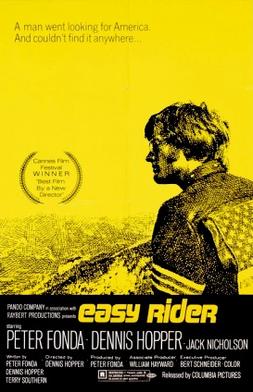
Some of the New Hollywood directors had already made edgy films by the early 1960s, such as Kubrick's 1964 Dr. Strangelove. By the end of the decade, there followed a flood of even younger directors and actors, Frances Ford Coppola, Diane Keaton, Gordon Parks Sr and Jr, Peter Bogdanavich, Melvin and Mario Van Peebles, Cybill Shepard, Peter Fonda, Jane Fonda, Dennis Hopper, LeRoy Jones/Amiri Baraka, Jack Nicholson, and Clint Eastwood, George Lucas and Stephen Spielberg...the list goes on, of still-powerful and still-productive New Hollywood names, many of whom are still powerful and productive in the second decade of the 21st century.
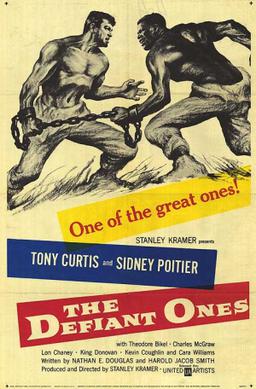
Breaking free from the ideological censorship of the Cold War National Security State (Trumanism and McCharthyism) began significantly earlier than the New Hollywood of the late 1960s, early 70s. It began in the senescence of the Old Hollywood. Even the Hollywood of the Major Studios had the modicum of courage that it took to produce films in the 1950s that addressed addressed racial inequality and Civil Rights. Two Sidney Poitier vehicles: The Edge of the City (M-G-M, 1957) and The Defiant Ones (United Artists, 1958), feature a black-white male bonding. Poitier plays Cassavettes's mentor and friend in The Edge of the City, while Poitier and Tony Curtis are forced by the steel bond of handcuffs to cooperate as they both escape a chain gang in The Defiant Ones. M-G-M and United Artists studio Execs knew that these films would make no box office in the South (no exhibition market). This is a patently segregated spatial market. But because the former Confederate states only held about 25% of US population by 1960, they could afford to address the "topical" questions forced on the American mass public sphere by the Civil Rights movement.
In the main, however, Hollywood had reached the apogee of its original innovations. The Classic Hollywood of the "seamless style" sought ever more refined methods of removing consciousness of a reality/fiction divide in the movie theaters. The seamless style seeks to draw the viewer into the screen virtually, so that she or he forgets that the reality before them is a movie. The eye-level match and "shot-reverse-shot" simulate an actual conversation between the viewer and the actor on screen. Bogart playing Rick conversing with Ingrid Bergman playing Ilsa in Casablanca (1942), is a very convincing simulation of the viewer assuming the POV of the actors themselves. By the 1950s, lighting, staging, cinematography, had all be executed so convincingly, that, ironically, movies actually started to seem unreal again. The lived world is not a "seamless" world, but a messy and chaotic one. That is precisely why Truffaut and Godard introduced the "Jump Cut," an intentional and very visible time-gap in the the action depicted in the film: to puncture a spacetime hole in the "invisible" style of Classic Hollywood.
Hollywood, even with an artful script, could make Rome look sterile and freshly cleaned in Roman Holiday (1953). Gregory Peck and Audrey Hepburn's performances, supplied with Dalton Trumbo's ghostwritten screenplay, make for a very fine product of the cinematic industries. But the strains on Hollywood in the McCarthy-anticommunist repression of the 1950s were very real and constraining as well. Dalton Trumbo was living in exile from the McCarthy-Eisenhower/Nixon repression in Mexico City when he wrote Roman Holiday. Fellow screenwriter Ian McLellan Hunter fronted for Trumbo and received both screen credit and Trumbo's Academy Award for Best Screenplay).
Combined government, industry, political media policing of the 1950s bored the American public into a blandness so insipid that married couples were forced to sleep in separate beds, no one had sex, no one bled to death, no one had political views critical of the two major and official political parties. We can only imagine that the masses thirsted for greater freedom of expression, and such would not be pure speculation. Almost all of the "Blockbusters"--movies grossing or earning hundreds of millions, and eventually billions, of dollars, were all made after 1967.
It was not simply the case that Television came along in the 1950s and stole away the affection of the audience. The movie product itself had outworn its fascination. The industrial sameness of Hollywood films had become all too familiar. By 1948 Americans were watching an average of 33 films per year. Two generations had already been socialized in movie culture, sharing culture-heroes and role models and legends about films and actors and dreams. But the industry had merely perfected a style established in the 1920s, and stopped questioning the format. That is why the New Hollywood has succeeded where the Old Hollywood failed. The New Hollywood broke down the monolithic style and the grand illusion of keeping up the illusion. The New Hollywood disrupted the viewer's attention with reminders of the camera (hand-held in Kubrick's Dr. Strangelove, 1964), or by using non-actors, extras drawn from a real location (Peckinpah's Wild Bunch, 1967). Truffaut and Godard's "Jump Cut" making the movie making visible, and putting movies, television, and radio within the movie frame, as Bogdanovich did in The Last Picture Show, re-introduced a Cervantean reflexivity to filmmaking.
The New Hollywood and the Carnography of Power: Art, Violence, and Sex in the Age of Nixon-Reagan
Leaping into Hollywood's financial "Bloodbath" of the years 1967-74, a breathtaking array of writers, directors, actor-directors, auteurs, and producers with seemingly unlimited ambitions and creative talent typical of any Golden Age suddenly made monthly headlines with films that grabbed America's attention. The New Hollywood was a rebellious and largely youthful movement to make new and critical statements cinematically, while also striking-down the long-standing limits on cinematic expression.
While the New Hollywood is typically dated as emerging suddenly in the late 1960s, it actually grew organically out of the same wave of Romantic cultural production as Beat literature and Bee-Bop jazz music in the 1950s, continuing through Bob Dylan and the Rock revolution in the early 1960s. The pioneering artists of the 1960s resembled Keats and the Shelleys: a romantic and rebellious youthful movement. The New Hollywood was a powerful force not just in striking-down the long-standing limits on cinematic expression, but in the central political and moral debates of the public sphere.
The standard starting-point for the New Hollywood's arrival was Bonnie and Clyde (1967). In its long tradition of endowing events with official media recognition, Time Magazine ran its 8 December 1967 cover story as "The New Cinema: Violence...Sex...Art." The cover image was a still from Bonnie and Clyde (which is partially why Bonnie and Clyde earns the reputation as the movement's coming-out. In reality, the New Hollywood began much earlier, as we shall see).
Many, like Peter Bogdonavich's The Last Picture Show (1971) were hailed as artistic masterpieces. Francis Ford Coppola's The Godfather (1972). while also critically acclaimed as cinematic art, was a huge success at the box office--literally the highest-grossing film ever made, until it was surpassed by Steven Spielberg's Jaws in 1976--proving that art and commerce were once again compatible. The New Hollywood not only transformed but saved Hollywood. Financially, it did so with the Coppola, George Lucas, Steven Spielberg, and James Cameron formulae for blockbuster high-budget/high return productions.
But it also "saved" the Old Hollywood spiritually, perpetuating a deeply institutionalized sexism and racism both of inclusion (the content of the films), and of exclusion (of women and minorities from artistic and management leadership in the cinematic industries).
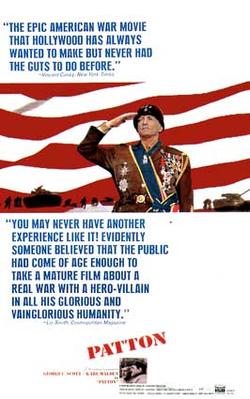
There are many more films and much more to Hollywood than I can address in this essay. I develop my argument from a history and reading of the following films: Bonnie and Clyde (1967; Valley of the Dolls (1967); Rosemary's Baby (1968); 2001: A Space Odyssey (1968); The Wild Bunch (1969); Easy Rider (1969); Kelly's Heroes (1970); Patton (1970); A Clockwork Orange (1971); Shaft (1971) Dirty Harry (1971); The Last Picture Show (1971); Sweet Sweetback's Baaadass Song (1971), Behind the Green Door (1972); The Godfather (1972); Deep Throat (1972); Mean Streets (1973); The Devil in Miss Jones (1973); Enter The Dragon (1973); High Plains Drifter (1973); The Godfather, Part II (1974); Chinatown (1974); Taxi Driver (1976); All the President's Men (1976); Apocalypse Now (1979); Illusions (1982); and Scarface (1983).The Fall of American Censorship
In the 1960s, two frameworks of censorship collapsed simultaneously: the Supreme Court-determined law on pornography; and 2) the Motion Picture Association of America's self-censorship system, called "The Code," which was terminated in 1966 and in 1968 replaced by the "Ratings" system. The MPAA Ratings (which since 1966 have evolved continuously, from SMA (Suggested for Mature Audiences), to M (Mature" and G (General) 1968, to 1970, G (General), R (Restricted) and an unofficial X for explicit content), to further changes through 1990s. Since the late 1990s, the ratings have been: Rated G: General audiences – all ages admitted; Rated PG: Parental guidance suggested – some material may not be suitable for children; Rated PG-13: Parents strongly cautioned – some material may be inappropriate for children under 13; Rated R: Restricted – under 17 requires accompanying parent or adult guardian; Rated NC-17: No children under 17 admitted [1990–1996] / No one 17 and under admitted [1996–present]. Note that "X" was abandoned by the MPAA because "X" was rapidly appropriated by the pornographic film industry in the 1970s, and permanently branded in the popular mind with porn. The Ratings accomplished several things. Implemented under the leadership of MPAA President Jack Valenti (President Johnson's former Press Secretary), the "ratings" to restrict by age had been implemented already, for specific files, as the McCarthy Era thawed in the late 1950s and early 1960s. Elmer Gantry (1960) Splendor in the Grass, and Stanley Kubrick's adaptation of Vladimir Nabokov's Lolita (1962) were all age-restricted (16 and up for Splendor; 18 and up for Elmer Gentry and Lolita). Indeed, the Roman Catholic Church's own Legion of Decency had been pushing for a ratings system for years, to warn parents and youth away from certain content. Note (Casper 2011: 118-9)
It seems that neither the Legion of decency, nor the relatively conservative Jack Valenti, appreciated how many producers and how many movie-goers would prefer to see films rated R or X, and how the creation of these categories virtually invited graphic sex and violence, artistic or not; emancipatory or reactionary and exploitive or not. They were not watching the rapid developments in the un-censoring of pornography.
As historian Roger Darnton has shown, the publishing of political dissent and sexual pornography have long been linked. Rousseau and Voltaire published from Switzerland because it was also an uncensored pornography publishing center (where anything could be published, including explosive political and philosophical works), and books could be smuggled easily enough into France and the rest of Europe. The suppression of free speech in the 1950s U.S.A. shuddered when assailed several times by the Civil Rights movements, broadly conceived. McCarthyite America was a thought-policed, mockery of a marketplace of ideas. But the Civil Rights movement as early as the Montgomery Bus Boycott emboldened thousands to defy the authorities, across numerous branches of life. Beats and Homophiles and Feminists asserted their rights and won them.
From Chicago, Hugh Hefner scored a victory in the mass-market publication of Playboy in its first issued of December 1953 with a virtually pirated and certainly stale feature: Marilyn Monroe's nude 1949 calendar shoot. Because both Playboy/Hefner, Marilyn Monroe, and this set of images are iconic topoi in the past of the modern world, this moment is of considerable interest. And because "Hef," Monroe, and Playboy have gained mass-cultural mythic status, legend and fact need to be parsed.
Monroe originally posed nude for calendar purposes. Sexy pinup calendars were among the most common masculine decorations in blue-collar work-places and bars, and that is the context of her posing. Hefner, scraping together a first issue in a big gamble with his mother's investment money, needed really sexy fireworks to fulfill his promise of a completely uncensored, but classy and not underground, color magazine. For the visual erotics side of the gamble, Hefner pushed aggressively for a very cheap but very valuable set. Monroe by 1953 was famous, a movie star now. By accident, this set of photos was being under-utilized in the nude calendar pinup market. Surviving copies show that the original producer licensed the series to numerous small-scale companies for their annual advertising calendars, traditionally hung in bars and mechanic shops.
When Monroe subsequently "made it" in Hollywood, and soeone recognized the nude model from the memorable 1949 shoot, the story broke in 1952. Marilyn decided not to run from the incipient scandal. Indeed, she brilliantly took the offensive, giving an exclusive interview to Stars and Stripes, with a circulation of millions to U.S. servicemen all over the world in the midst of the Korean War. "I’m not ashamed of it, I’ve done nothing wrong…I was a week behind in the rent ... But when the picture came out, everybody knew me…I’d never have done it if I’d known things would happen so fast in Hollywood for me."Note
Hugh Hefner's position at the intersections of freedom and exploitation are evident in his republication of the Monroe calendar shoot. He essentially bent image-property law to follow Monroe's public admission of having posed, and then "outed" her farther with a cornerstone pornographic moment in the fall of censorship. Hefner later settled a suit for republishing frame-still photos of Cybill Shepard lifted from The Last Picture Show (1971). But Hefner stood solidly for civil rights during the crux of the movement: he was an early and steadfast financier and organizer in the Civil Rights movement, founding, ultimately, in 1980, the Hugh Hefner First Amendment Award.Note
A series of pornography cases came before the U.S. Supreme Court in the 1950s-70s that struggled to create clearer definitions of that "obscene" and therefore not protected by the first Amendment. The 1868 "Hicklin Test" ("deprave and corrupt those whose minds are open to such immoral influences) was abandoned in Roth v. United States, 354 U.S. 476 (1957), restricted definition s of unprotected "obscene" material to that whose "dominant theme taken as a whole appeals to the prurient interest" to the "average person, applying contemporary community standards." The new keywords were "taken as a whole" and "community standards." Roth allowed the flourishing of a range of relatively explicit material, so long as it belonged to a work that taken as a whole was not "prurient," (that is, was serious), that the standard for this distinction would be "community standards."
Under Nixon's 1969 Chief Justice appointee, Warren Burger, a majority of the Supreme Court agreed to crack down on the proliferation of pornography, imposing in 1972-1975 a new and clarified three-prong test of "obscenity," Miller v. California 413 U.S. 15 (1973). This three-part "Miller Test" is stated as follows:- "Whether the average person, applying contemporary community standards", would find that the work, taken as a whole, appeals to the prurient interest,
- Whether the work depicts or describes, in an offensive way, sexual conduct or excretory functions, as specifically defined by applicable state law; and
- Whether the work, "taken as a whole, lacks serious literary, artistic, political, or scientific value." (Miller 413 U.S. at 24-25.)
LA's Beat Avant-garde of the late 1950s and early 1960s displayed grotesquely explicit bodies in sexual ecstasy and violent agony, often metaphoric. Edward Kienholz's angriest work was his Psycho-Vendetta Case (1965), protesting the execution of condemned murderer Caryl Chessman. The titles on the work instruct the viewer to lick Chessman's arse. "Limit three Times." He also began in that year a gruesome trifecta savaging the whole tormented suburban-corporate American family, with John Doe (1959), Jane Doe (1960), and Boy, Son of John Doe (1961).
Television and the Hollywood Movies of the Code Era (1934-1966) were not able to differentiate their product very widely. All genres needed to be acceptable to a certain definition of "family" morality: literally meant to be "mass" consumed by all genders, age groups, social classes, races, etc. Television before the Cable era remained committed to a universal, uniform mass audience. The rise of Cable after the mid-1970s broke this logjam, as the Ratings system did for movies after 1968, and unleashed all forms of expression in Television, which became majority-cable by the 1990s.
The fall of censorship meant that it was Prague Spring in Euro-America in 1968. The year of Nixon's triumph was also a global rebellion for equality, labor rights, peace, democracy, and freedom, when totalitarian and capitalist imperial states were equally reviled in the name of human emancipation. The films of the New Hollywood are a triumph of that Thaw, when Capital ironically invested in the mass portrayal of its own bankruptcy. The films of the New Hollywood were highly political, but their politics varied from Left to Right. As historian Steve Ross has shown, when Hollywood has flexed its political muscles, it has done so in support of the Right more often than in support of the Left.NoteCorporate Origins of the New Hollywood
Staggering from the mortal wounds of the Paramount Decision and the rise of television, the aging studio system succumbed to corporate takeovers while the movie business was at its low ebb. Emboldened by the sudden fall of censorship, and energized by the Civil rights and antiwar movements, a revolt of sons against the fathers under the permissive oversight of new, distant owners. Just as though it had been written by Hollywood screenwriters, Media conglomerates and even larger conglomerates such as Gulf+Western, operating from Wall Street gobbled-up most of the Big Eight studios in an appropriately melodramatic way.
The burst of New Hollywood films at storied Paramount was predicated on a corporate takeover of that venerable studio, and overthrow of the house that DeMille and Laskey had built, still helmed by Adoph Zukor until 1959, who then became Chairman Emeritus until his death at the age of 102 in 1976. Yesterday's innovators were now presiding over an antique Paramount, near bankruptcy by the early 1960s
Then in 1966, with Paramount, ranking #9 in ticket sales, Charles Bluhdorn, "The Mad Austrian of Wall Street," (actually an Austrian-born naturalized U.S. citizen and US Army World War II veteran), swooped-in, bought the studio and put Robert Evans in charge, who powered Paramount back to No. 1 in annual ticket sales, with their string of hits, many of them iconic breakthroughs of the New Hollywood: Barefoot in the Park (1967), The Odd Couple (1968), Rosemary's Baby (1968), True Grit (1969, written by former Communist and Blacklist hero, Marguerite Roberts), Love Story (1970), Harold and Maude (1971), The Godfather (1972, highest-grossing film ever made, until Jaws in 1976); Serpico (1973); Save the Tiger (1973, Academy Award Best Actor, Jack Lemmon), The Conversation (Written, produced, directed by Francis Ford Coppola, winner of Palm D'Or at 1974 Cannes Film Festival), The Great Gatsby (1974, written by Coppola), and then Coppola's 1974 trifecta, The Godfather, Part II, which swept six Academy Awards, including, for Coppola himself, Best Picture, Best Adapted Screenplay and Best Director. Surely 1974 was the high-water mark of Coppola's brand of the New Hollywood. The acting talent of these films also established a large batch of the New Hollywood's stars: Al Pacino, Diane Keaton, Robert Redford, James Caan, with brilliant reprises of older masters: Marlon Brando and Sterling Hayden. Paramount under Evan's reign recovered, really, Laskey and DeMille's original formula: "Famous Players in Famous Plays": quality literature, high production values, the greatest talents.
As though it had been written by Hollywood screenwriters, media conglomerates and even industrial conglomerates such as Gulf+Western, operating from Wall Street, gobbled-up most of the Big Eight studios in an appropriately melodramatic way. The rapid rise of Rupert Murdock, 1981-1986, with his acquisition of 20th Century Fox and Metromedia group, to create the Fox Broadcasting Company, riding in from Australia to take ownership of the old Fox brand, 20th-Century Fox, and his construction of an American right-wing media empire under his own US citizenship. Murdock represented a newly-minted William Randolph Hearst by the end of the 1980s. The successor to Murdock’s electronic broadcast and cable media empire, 21st Century Fox, reported assets of greater than $50 Billion in 2013, and the Fox network can be accessed in 98% of American households. It had, like Hearst’s Examiner and American brands,become heavily vested in major metropolitan newspapers, including eventually the iconic Wall Street Journal. The print interests were split off in 2012-3, however, following the yellow journalism scandals of Murdock’s London-based News of the World. In short, Murdock reproduced Hearst’s sensational, red-bating manipulative journalism very closely. It was a formula that took the worst tendencies of media exploitation of social and cultural and racial difference,
That patricidal revolt, however, re-inscribed Hollywood’s age-old, Griffith-founded patriarchy and racism, however. The actual liberating revolt took place outside and against Hollywood's dominant features. By the Star Wars blockbusters of the 1980s, the liberating potential of the 1967-74 cycle of the New Hollywood had failed. Hollywood's solid assets of the DeMille and Thalberg style hits and blockbusters with name-brand lead actors, remained the ultimate prize, despite the innovations of Kubrick, Coppola, Bogdanovich, Peckinpaugh, DePalma, Eastwood, Scorsese, Spielberg, Ridley Scott, and James Cameron. Indeed, what these directors achieved was something that had eluded their founding hero, Orson Welles: commercially-successful films that enjoyed artistic freedom and created new standards for artistic liberty. But Hollywood continued to be owned by distant financial empires, and ultimately would favor the Star Wars model: big investment in production costs, expectations of blockbuster returns and global sales.
The New Hollywood was the New Old Hollywood: still trading on the paradigmatic tropes of racial inequality, cross-class fantasies, and melodramatic exploitation of sexual violence. Next we examine the art of the New Hollywood with an eye on the art of the "LA Rebellion," the real rebellion of the Bloodbath era.Artistic Apotheosis of the New Hollywood
Art, which the West Coast avant-garde had already transformed by the early 1960s, can be taken to mean many things. (See Mating Dance and Love with Strangers). In the LA Rebellion of 1969-1980s, the principles of artistic film emerged in stark relief even from the New Hollywood's achievements. The LA Avant Garde of the 1950s-60s and Black Independent Cinema's "LA Rebellion" serve as the serious standard for a legitimate claim to "art," and serve as revealing benchmarks against which to assess the sexpolitative pretensions of New Hollywood's addiction to the formulae of commercial-success leveraged from inter-racial and inter-gender/sexual inequalities.
The most honored dimension of the New Hollywood was the return of Art to Hollywood. The greatest were works of auteurs: writer-director-producers, Bogdanovich, Kubrick, and Allen most prominently. But Art had always been interwoven withe Business in Hollywood: both had shone brightly in every decade, so this alone was not enough to set the New Hollywood apart from the Old. Indeed, there was an extraordinary continuity, overlapping mentors and innovators from the very earliest Hollywood of 1914-15, to the 1970s.
That continuity is nowhere more visible than in the close relationship between Orson Welles and Peter Bogdanovich, an extreme cinephile and incisive film critic in the 1950s and 60s. Like the French Nouvelle Vague critic-directors with whom he allied, Francois Truffaut and Jean-Luc Godard, Bogdanovich viewed hundreds of films a year (that in an age when films were still handled physically, on large heavy reels of 35-mm film, and viewed only in theaters, 21st-century readers must be reminded). Bogdanovich, an intensive film researcher and widely-publish film critic, had always studied Welles' Citizen Kane as a particular masterpiece. Welles, in turn had studied John Ford's Stagecoach (1939) as his inspiring film masterpiece. Bogdanovich had just written a masterful book on John Ford by the time he met Welles in 1970 on the set of a film.
Welles immediately became Bogdanovich's mentor and friend, influencing most directly Bogdanovich's best-regarded film, The Last Picture Show, released in 1971. Shot in black and white at the suggestion of Welles, The Last Picture Show was, like Citizen Kane, a great work of art more than a commercial success. From their first meetings through Welles death, spanning almost two decades, Bogdanovich collaborated with Welles in numerous ways. The two conducted hundreds of hours of taped interviews, and collaborated on composing the transcripts (made by Bogdanovich himself) into Welles' "autobiography," the posthumously published, This Is Orson Welles (1992).
Together, Bogdanovich and Welles were a formidable encyclopedia of film, and their joint work, This is Orson Welles is as much a book by Bogdanovich about the entire history of Hollywood, as it is Orson Welles's memoir and autobiography. Welles grew up in a theatrical family in New York and was old enough to remember, first-hand, the Broadway of Belasco, Vaudeville, the transition to "sound" in the 1927-1931 years. "When I first came to Hollywood," Welles recalled, "I wanted to make a movie about the great days of the silents." This led to a discussion of Hollywood's founding directors. Asked by Bogdanovich whether D.W. "Griffith is the best director in history," Welles avers that only Mozart and Shakespeare can easily claim "best" status in their arts. But Griffith was certainly the "founding father," who "influenced everyone who's ever made a movie." (Bogdanovich and Welles 1992: 21-22). Bogdanoovich as editor inserts at this point in the interviews, an excerpt from an article Welles wrote in 1960, a highly insightful and symbolic account of a conversation Welles had with Griffith in 1939:I met with Griffith only once and it was not a happy meeting. A cocktail party on a rainy afternoon in the last days of the last year of the 1930s....The motion picture which he had virtually invented had become the product--the exclusive product--of America's fourth-largest industry, and on the assembly lines of the mammoth movie factories there was no place for Griffith. He was an exile in his own town, a prophet with out honor, a craftsman without tools, an artist without work.
"No wonder he hated me," Welles recounts. "I, who knew nothing about films, had just been given the greatest freedom ever written into a Hollywood contract. It was the contract he deserved." Welles here traces a clever apostolic succession from the original Hollywood "artist" to himself. Welles also contrasts the factory of the 1930s, Hollywood's Golden Age, with artistic freedom. Griffith had been squeezed out of the money-making business because his art did not fit, Welles implies, and Welles only achieved artistic freedom through a contract with that very factory. Welles won such freedom on the strength of his spectacular success in October 1938 with his radio performance of his crypto-antifascist War of the Worlds (adapted by Dalton Trumbo from H.G. Wells's anti-imperialist novel of 1901.)
Bogdanovich and Welles were encyclopedic, with a twist. Their films reference and quote countless topoi of the ancestral landscape of Hollywood cinema (Welles was a close observer of Griffith's leading protege, W.S. "Woody" Van Dyke, for example). But they also participated in the massive forgetting of women in the founding of Hollywood, and just as massive forgiving of Griffith for his leading role in the advancement of White Supremacy and the revival of the Ku Klux Klan. It cannot be stressed too often, that the KKK was America's version of transnational fascism. All such movements took their "type" name from the Italian model founded in the early in 20s. But the American version of a mass, spectacle-oriented, costumed, violent, political, intolerant, racist, and white supremacist organization really came first. it was breathed into life by Griffith's masterpiece, Birth of a nation.To exonerate Griffith for his undisputed role of re-igniting the KKK terrorist organization, with the alibi that he was a great artist, is nothing less than to apologize for fascism. But it may say even more, about fascism, which adored the cinema as a vehicle for propaganda, that the white-uniformed American fascists were inspired by a mass entertainment / didactic epic that reached more than 100 million viewers by the end of the 1920s.
By the time Welles was old enough to look seriously at Hollywood, the memories of the once-prolific women founders was already erased: Lois Weber, Mabel Normand, Jeannie McPherson, each with hundreds of directorial screenwriting credits. All were pushed out of Hollywood when it consolidated into eight "major" corporations in the early 1920s.Note
The "Hollywood" that became dominated by studio production and distribution corporations by the 1930s, to constitute the nation's fourth largest industry, were also home-grown products of Southern California's political culture of authoritarian, exploitive territorial regimes. The omnipotent Studio Chief ruled thousands of employees on vast real/fantasy landscapes of production autocratically; the omnipotent Director, wearing DeMille's trademark jodpurs, leather knee-boots, a riding crop symbolic of a whip, and a pith helmet symbolic adventurous conquest, ruled casts of thousands autocratically. These later-day Croeses had all the fresh female amusement they wanted, and women could never challenge such a system so long as they were excluded from any major decision-making position, especially that of studio chief and director.
Here we can reflect on the apostolic succession of Artists in Hollywood: Griffith, Welles, Bogdanovich. All three failed to find a mass audience. All three tired to reconcile Hollywood and Art. All three ended in bankruptcy.The LA Rebellion, 1969-1980s
A. The LA Rebellion
A genuine cinematic rebellion did take place during the rise of the New Hollywood, specifically in Westwood, on the campus of UCLA. Black Independent Cinema, today known as the "LA Rebellion," emerged from the UCLA School of Theater, Film and Television "as part of an Ethno-Communications initiative designed to be responsive to communities of color (also including Asian, Chicano and Native American communities)." Given the powerful political pressures of the late 1960s, the founding of such programs was not unusual. This one, however, attracted just the right mix of instructors and students, along with an esprit de corps shared by young artists of color who had something very important to say.
Los Angeles School of Black filmmakers"
Charles Burnett (Killer of Sheep); To Sleep With Anger; Glass Shield, ; Julie Dash, Illusions (1983?) (Daughters of the Dust)
Jamaa Fanaka (Penitentiary)
Ben Caldwell (I and I),
Julie Dash (Daughters of the Dust)
Project One films
" UCLA School of Theater, Film and Television for nearly 50 years, Project One films were undertaken by aspiring filmmakers before most of them ever set foot in a production class. Armed with an 8-millimeter semi-automatic camera, the students were expected to write, direct and edit a motion picture with sound during their first academic quarter. "
Haile Gerima's
https://www.cinema.ucla.edu/la-rebellion/haile-gerima
ery important artisitic independent films
They took up the situation of minorities in America, and portrayed them from teh inside, resisiting Hollywood's objectifications.
B. Sweet Sweetback's Baadass Song (1971) Melvin Van Peebles, with Mario Van Peebles
C. Shaft, (1971) Gordon Parks Superfly (1972) Gordon Parks Jr. Note on Parks Jr death 1979
Shaft's Big Score (1972) Gordon Parks
*******]Welcome to the Terrordome: Sex, Violence, and Sexual Violence
Mixing blood, sex, and politics, the plot of this historical screenplay now thickens. Before anything else, let us consider the mere facts of exclusion in the cinematic industries (movies, TV, and Digital)
Justified before U.S. law as "art," sex, violence and sex-violence were rapidly appropriated simply as vehicles for mass profit extraction, fear-based political scripts, and male supremacy in society and the culture industries overall.
Excursus: Dangerous Worlds
Hollywood-dominated mass media generated a frighteningly violent screen world, but the virtual violence of movies and TV has been extremely unrepresentative of the actual violence in society. Most violence is committed by whites, but media violence most often represented a minority as the perpetrators. Most violence against women, including rape, takes place in or near the home, but most media violence against women, including sexual assault, takes place in public, on dark streets. Media violence combines with state violence to target communities of color and women.
A typical alphabetized list of the leading writers and directors of the New Hollywood is remarkable for one fundamental fact. None were women: Woody Allen, Robert Altman, Hal Ashby, John G. Avildsen, Robert Benton, Peter Bogdanovich, John Boorman, Mel Brooks, John Cassavetes, Michael Cimino, Francis Ford Coppola, Brian De Palma, Clint Eastwood, Miloš Forman, Bob Fosse, William Friedkin, Monte Hellman, George Roy Hill, Dennis Hopper, Norman Jewison, Stanley Kubrick, George Lucas, Sidney Lumet, Terrence Malick, Paul Mazursky, John Milius, Paul Newman, Mike Nichols, Alan J. Pakula, Sam Peckinpah, Arthur Penn, Roman Polanski, Sydney Pollack, Bob Rafelson, Franklin J. Schaffner, John Schlesinger, Paul Schrader, Martin Scorsese, Steven Spielberg, Robert Towne.
Women as actors, however did figure prominently among the greatest new talents of the New Hollywood: Ruby Dee, Diane Keaton, Ali MacGraw, Cybill Shepherd, Angelica Huston, Shelley Duvall.
But in the New Hollywood's old hierarchy, even the best women talent were paired with the Leading Men: Polanski landed Sharon Tate as a starlette-trophy wife; Bogdanovich left his first wife and collaborator Polly Platt for the 21-year old Cybill Shepard in 1971, then left her for the 20-year-old Playboy Centerfold Dorothy Stratten in 1980; Robert Evans, the transformative producer who saved Paramount with New Hollywood films Rosemary's Baby, Love Story (1970), The Godfather (1972) and Chinatown (1974), snapped-up Ali MacGraw, who later chose to leave Evans for Steve McQueen. Diane Keaton collaborated with, acted for, loved and lived with Woody Allen, and then loved and lived with Al Pacino when they both had roles in The Godfather, Part II. These were power couples, to be sure, and it must be said that many of these women flexed their independence and strength, especially Keaton.
The overall trajectory for women in Hollywood remained stalled at at ceiling of trophy wives to the new male masters of an industry that remained addicted to women's weak and erotic contribution to profit margins across the cinematic industries. The story of rising new wave of women directors and producers does not begin until the 1990s, but women as creators of mass media content remained in an almost vanishing minority well into the 21st century (see Moby-Dick: On the White Maleness of Hollywood)
With the graphic violence of the Vietnam War saturating the press and television news across America and the world, Sam Peckinpah, thought America needed a Western that showed how unromantic violence really is. He said of his intent in The Wild Bunch (1969), "I wanted to show what it is like to be gunned-down." Roger Ebert declared, in his initial 29 June 1969 review that The Wild Bunch was "possibly the most violent film ever made," and yet he recognized its serious message. Peckinpah's opening scene is one of civilians slaughtered in the crossfire of armed gangs with no good guys in sight. The years of the New Hollywood's rise was also America's descent into darkness. Martin Luther King and Bobby Kennedy were assassinated in April and June of 1968; the Manson Murders took place in August of 1969; the My Lai Massacre was revealed in November of 1969; the Jackson and Kent State killings were to follow in May of 1970.
It must say something significant about the New Hollywood that the landmark film signaling its arrival was noted first of all for setting a new standard for screen violence. Warren Beatty (producer/star) and Arthur Penn did set a new standard for gun violence in Bonnie and Clyde (1967), but new freedoms to portray other forms of violence would outstrip Bonnie and Clyde in the coming years. Indeed, while justly hailed as a serious film with strong anti-establishment message, it is almost predictable as a vehicle for the rebellious New Generation, recycling the genre of Romantic Bank Robber as folk culture hero of the 1930s Depression (which is also "when" it is set of course).
In 1967 Roman Polanski cast Sharon Tate as the Vampire Bride Sarah Shagal and promptly fell in love with her, marrying her in the following year. A sexy-tease comedic spoof on the Dracula genre, Polanski achieved a macabre sensuality throughout. Tate next landed the role of Jennifer North in Mark Robson's 1967 Valley of the Dolls. It was based on the best-selling potboiler novel by Jacqueline Susanne of 1966 -- "Dolls" being a euphemism for barbituate tranquilizer. The melodrama revolves around physical pleasure and emotional pain, lead characters all begin with promising careers in acting, but descend into drugs, affairs, and face the consequences of bad decisions. Sharon Tate's character Jennifer North resorts to soft-core pornography films, is diagnosed with breast cancer, and commits suicide.
The following year, 1968, Polanski got to the heart of Hollywood's misogynistic sex-violence: his victim the titular character: Rosemary (Mia Farrow), who is deceived, kidnapped, drugged, and raped by Satan himself and her body forced to bear a monster. Polanski had desired, but was unable to cast his own wife Tate in the role, overruled by ). The artistry of Rosemary's Baby lies in Polanski's psychological explorations in script and in directing the superb performances of John Cassavettes and Mia Farrow. True at least to the premise of Ira Levin's bestselling 1967 novel and Polanski's film adaptation, the violence toward Farrow is sadistic, visually graphic. The near-addiction of Hollywood to violations of female vulnerability is an element so essential to the movie business that cannot be overstated. Rape is the ever-present patriarchal cudgel and also trap of contemporary society. As practice, it keeps women in subjection. As screen portrayal, it warns women and girls that they are unsafe, and until very recently, presents the violent male as the solution to this vulnerability.
In Rosemary's Baby (1968), Polanski embarked, little could he know it, on a real-life march of Horror. The movie climaxes with the very Devil fathering a child in a Satanic colony disguised as respectable New Yorkers. Polanski's bloody scene in which Mia Farrow's character is raped by Satan, marketed the slashed female body for mass consumption. A year later, Charles Manson, targeting both Polanski and his wife Tate, perpetrated cruel murder of the Polanski-Tate and the La Bianca households for mass media consumption--for political terror.
Sharon Tate was the "It Girl" of 1969, her celebrity and beauty made her the target Manson sought, someone whose gruesome death would shock the Whites of Los Angeles into a murderous rampage against people of color. All of this is about bodies and horror. Race war fantasies, as Mike Davis showed in his brilliant and unique essay, The LIterary Destruction of Los Angeles, have been surprisingly common motif. In Manson, the fantasies escaped the bound of slasher-genocide pulp novels and science fiction movies, to invade the public sphere in a mounting Age of Terror.
By 1969, the United States was ruled now by Nixon's New Right. His promised plan for Law and Order was given its best chance during his first year in office. He escalated the Vietnam War, and all hell literally broke loose, in battlefields and city streets. It was in this context that two major films, The Wild Bunch (1969) and Dirty Harry (1971), again set new standards for screen violence, but in very different ways.
Sam Peckinpah's Western, set on the Texas-Mexico border in 1913 during the Mexican Revolution, is loosely based on an actual band of outlaws of the same name. An aging gang of train robbers has their last ride as modern society overtakes them. The Wild Bunch stars William Holden, who plays a grizzled veteran in his 50s who maintains a code of dignity, even honor. Holden's role in Billy Wilder's Sunset Boulevard (1950) had also marked the passing of an era, but in that film, he had represented the new, rather than the old order (in Sunset, of "Hollywood," in Wild Bunch, of "The West"). From the opening to the final scene, the film offers ridicule and satire of established authorities. Pike's gang first appears as impostors wearing U.S. Army uniforms. During the Vietnam War, in the same year as the My Lai Massacre, dressing criminals in military uniform had rather obvious connotations. The railroad men, supposedly representing the Law, are also criminals, even less savory than Pike's Wild Bunch gang.
While The Wild Bunch is remembered first of all for its extreme, graphic violence, Peckinpah neither romanticized nor fantacized violence. Peckinpah wanted the violence to be horrible , not glorious. He features children throughout in contrast tot eh age and gravity of the gunfighters, and to make the audience feel their fragile vulnerability in a ruthless world. Killing is sheer waste in The Wild Bunch, so the film clearly qualifies as a critical protest--ironically enough--against the incessant violence of the Nixon era.
Not so Dirty Harry, released two years later in 1971, directed by Peckinpah's mentor, Don Siegel. Siegel's experience spanned both Old and New Hollywood, and shows in many ways how indebted the latter was to the former. Dirty Harry had a long development cycle. The screenplay is officially credited to Harry Julian Fink, R.M. Fink and Dean Riesner. The Finks wrote the first version inspired by the real-life but still (2015) unidentified "Zodiac" serial killer who murdered at least seven victims in the San Francisco Bay area in 1968 and 1969. The script revolves around a no-nonsense San Francisco cop, "Dirty Harry" Callahan, determined to capture a serial killer known as "Scorpio." That lead role was offered to a surprising number of men before Clint Eastwood assumed the role, beginning with Frank Sinatra and John Wayne. Burt Lancaster, Robert Mitchum, and even Steve McQueen and Paul Newman were offered the role. Mitchum and Newman both reportedly refused the role because it was so reactionary and unjust.
Along the way, legendary screenwriter-directors Terence Malik and John Melius had a hand in the script. Once Eastwood signed-on, he insisted on the version of the script that favored the heroic cop in defiance of a liberal establishment.
Dirty Harry, the character, is an almost seamless proponent of Richard Nixon's Law and Order political and policy agenda. This is evident throughout eh film, as Dirty Harry Callahan disrespects protocol and his hapless superiors in single-minded pursuit of a serial killer. But the complete political agenda of the film is on full display in the District Attorney scene in the last Act of the film, in which Callahan is informed by the District Attorney Rothko (Josef Sommer) that because Callahan had violated so many laws protecting suspects' rights during arrest and detention, the serial killer "Scorpio" will be released. From beginning to end of this scene, Rothko represents the "liberal" Warren Court rulings, Escobedo and Miranda are both named specifically. Written and produced at the height of Nixon's Law and Order campaign, the Dirty Harry script is practically a verbatim restatement of the Law and Order attack on the limitations placed on law enforcement in the 1960s. Dirty Harry is not just a tough cop: he represents the Republican position in 1971: that cops should be given full freedom to get tough on criminals. In this view, suspects' "rights" are a joke. Cops know well enough when they have a real bad guy, and real bad guys deserve to be either beaten, tortured to give up evidence, or summarily shot. The scene justifies naked state violence by portraying the criminal procedure protections as only helpful to criminals.
Rape in Cinema-Television
Start with Clint Eastwood in High Plains Drifter
From the advertising copy for a videocassette film anthology, titled The Best of Film Gore: "See bloodthirsty butchers, killer drillers, crazed cannibals, zonked zombies, mutilating maniacs, hemoglobin horrors, plasmatic perverts and sadistic slayers slash, strangle, mangle and mutilate bare-breasted beauties in bondage."Note.
[move this to American 1989]:
The great turning-point for Hollywood movies was achieved with Callie Khouri's screenplay and Ridley Scott's film, Thelma and Louise (1991). In the climax of Act I, the central plot element is the killing by Louise (Susan Sarandon) of Harlan (Timothy Carhart), who attempts to rape Thelma (Geena Davis) in a parking lot behind a bar where they had been dancing. Nineteen ninety-one however, was a long time to wait since the beginnings of cinema 100 years earlier. Khouri, born in 1957, was twenty years younger than the New Hollywood generation. Scott, while he began in television the 1960s, did not direct a feature film until 1977 (with the Napoleonic The Duellists) played a major role thereafter with Alien (1979) and Blade Runner (1982) to generate a new era of blockbuster thrillers with an edge.
Screen types are really literary-dramatic types. The Knighthood and Gallant Chivalry of the protector-from-rape masculinity Hollywood descends directly from Don Quijote. (More accurately, from 12th-century Arthurian legend, 14th-century Amadis de Gaula, and its sequel by Garci Rodríguez de Montalvo's Las Sergas de Esplandián, (1495-1510) the romances of chivalry that drove Don Quijote mad (but which we only remember now because of Miguel de Cervantes's 1605-15 satire). In the medieval romances of chivalry, the villain is quite literally a rapist, and the hero a highly sexed defender of women's virtue) Since Griffith's Birth of a Nation (1915) rape, attempted rape, forced marriages have assumed an institutional permanence in Hollywood. It's a classic protection racket: We warn you that you can be sexually assaulted, and offer our services to keep you safe. It could be that movie portrayals of women's bodily vulnerability and desirability and powerlessness is more honest than banning that from the screen. Real chronic and lethal sexual violence against girls and women is an ongoing chronic horror.
So the next significant condition to evaluate is how are sexual assaults portrayed in the films? If freedom of expression must include freedom of sexual expression, for consensual pleasure not only of the participants, but of millions of freely consenting adults worldwide, then sex on the screen is not in itself inherently wrong in any way. While it usually is and certainly can be exploitative, demeaning, and morally wrong, it certainly does not need to be so.
The crucial question then, is: How are women's and girl's dignity and worth and value portrayed? On this crucial point movies vary from left to right. In Clint Eastwood's first film as writer-director-star, High Plains Drifter (1973), his character opens the movie with an attacker-sympathetic rape scene. An apparently middle-class woman named Callie Travers (played by Marianna Hill) insults Eastwood's "Drifter" and rather symbolically knocks a cigar from his mouth. "I'll to teach you some manners," Drifter says, grabs her wrist and drags her resisting and screaming into a nearby barn, where forces her into the hay, has unambiguously forceable penetration, while she verbally and physically resists in no uncertain terms: "what are you doing?" and "stop!", "no!" Eventually Callie Travers begins to enjoy the rape as pure sensual pleasure. This is nothing short of the rapist's fantasy and one of the oldest justifications men have made for sexual violence.Note
Rape is violence, of course, and the Horror genre has, since the New Hollywood, profited mightily from the fear of sexual violence,and the intersection of sex and violence in sadism. The contemporary "Ripper" genre appropriately honors "Jack the Ripper's" disemboweling and severing sadism of London's Whitehall district in the 1880s. While it is unfair to class Polanski's 1968 Rosemary's Baby with the 1974 Texas Chainsaw Massacre, Polanski in effect broke the dike with a crack that opened into a mighty flood by the end of the 20th century. It is instructive, then that in his "ultra-violent" A Clockwork Orange (1971), while he does exploit strip-tease visual arousal and rape fear, Stanley Kubrick, unlike Clint Eastwood in High Plains Drifter (1973), honestly and consistently portrays female victims as hurting and terrified.
Scarface and the Reagan 1980s
The peak years of the New Hollywood Bloodbath (1967-1974) had long passed by the time Brian di Palma ushered-in the New Carnography of the Reagan repression, directing the Oliver Stone script for a remake of Public Enemy (1931). The 1983 Scarface is a real landmark in the the carnographic mass media. As with so many Hollywood films, it was deeply embedded in the realities of its fictions. Oliver Stone was then still a regular cocaine user, and went above cover to establishments with known drug cartel ties. He wanted to meet the actual gangsters who conducted the brutal Caribbean drug smuggling business. Stone and Di Palma knew they had a perfect match-up with the 1931 Paul Muni Scarface starring Paul Muni and directed by Howard Hawks. A "retro" remake set in Prohibition Chicago was not interesting to Stone. But a fully contemporary story set in Reagan-Era Miami presented a real opportunity. Al Pacino, who spoke only rudimentary Spanish, saw it as a very serious challenge. His performance alone puts the movie in a category of classics, despite the inherent cheesiness of all blood-soaked Brian Di Palma films. (Alfred Hitchcock, responding to Di Palma's claim that Dressed To Kill was his hommage to Hitchcock's murder thrillers, responded, "you mean frommage" (cheese).
The film took shape in a highly political environment during its 1982-3 production cycle. The Reagan Revolution was in full effect, a pliant Congress giving Southern California's finest spokesman for the New Right. The corporate titans of the 1890s, the 1920s, and the 1950s, made yet another comeback with deregulation of markets, and the repeal of New Deal regulatory controls on Wall Street. Oliver Stone directed another movie in Reagan's second term, Wall Street, starring Michael Douglas as the predatory Gordon Gekko, who portrayed just this top-end manipulation of free-enterprise capitalism. As screenwriter Stanley Weiser recalled:
"In developing the character of Gordon Gekko, I formed an amalgam of disgraced arbitrageur Ivan Boesky, corporate raider Carl Icahn, and his lesser-known art-collecting compatriot Asher Edelman. Add a dash of Michael Ovitz and a heaping portion of, yes, my good friend and esteemed colleague Stone (who came up with the character's name) -- and there you have the rough draft of 'Gekko the Great.'"Note.
The Reagan Eighties were the dream day for the old Goldwater and Nixon masses. But the Cold War was also in full swing. Indeed it was in the Endgame. This Reagan administration, staffed by the Hawks of the previous two decades, sought not just containment of the Communist world, but roll-back. Cuba, and the long saga of Exiles in Miami, had loomed large in the US National Security State's golden years (1950s-1980s), as the Nemesis at the gates. Richard Nixon's long affiliation with the Havana gangsters and Bay of Pigs insurrectionists, had sealed that Cold War commitment through the end of the Watergate crisis. Now Stone had a perfect opportunity for a reality-based immigrant-rises-in-the mob, one that was highly linked to the Cold War endgame struggles.
During the entire presidential campaign cycle of 1980, 15 April-31 October 1980, Fidel Castro allowed a makeshift "Muriel Boat lift" to evacuate, mixed cynically with common criminals to empty his jails. The mixture of the majority numbers fleeing an authoritarian state, with Cuba's Least Wanted, created a serious crisis in Florida in particular. But Florida also represented, the High Life, Miami Beach setting the lifestyle standard for the Deregulated 1980s, a veritable re-play of the roaring 20s. The symbolic headline vice of the 1980s was cocaine, drug of the newly-rich especially. Stone and DiPalma set-out to re-make the 1932 Scarface in the same way as Howard Hawks had from real drug lords and the post-War immigrant story to match the Italian's of the 1920s-30s.
[END ON SCARFACE AND REAGANISM???
LYNNM CHENY AND TEH AMERICAN FASCISM -
1
2018-07-13T23:39:18-07:00
The Fall of American Censorship, 1953-1973
2
plain
2018-07-14T00:10:54-07:00
The Fall of American Censorship
In the 1960s, two frameworks of censorship collapsed simultaneously: the Supreme Court-determined law on pornography; and 2) the Motion Picture Association of America's self-censorship system, called "The Code," which was terminated in 1966 and in 1968 replaced by the "Ratings" system. The MPAA Ratings (which since 1966 have evolved continuously, from SMA (Suggested for Mature Audiences), to M (Mature" and G (General) 1968, to 1970, G (General), R (Restricted) and an unofficial X for explicit content), to further changes through 1990s. Since the late 1990s, the ratings have been: Rated G: General audiences – all ages admitted; Rated PG: Parental guidance suggested – some material may not be suitable for children; Rated PG-13: Parents strongly cautioned – some material may be inappropriate for children under 13; Rated R: Restricted – under 17 requires accompanying parent or adult guardian; Rated NC-17: No children under 17 admitted [1990–1996] / No one 17 and under admitted [1996–present]. Note that "X" was abandoned by the MPAA because "X" was rapidly appropriated by the pornographic film industry in the 1970s, and permanently branded in the popular mind with porn. The Ratings accomplished several things. Implemented under the leadership of MPAA President Jack Valenti (President Johnson's former Press Secretary), the "ratings" to restrict by age had been implemented already, for specific files, as the McCarthy Era thawed in the late 1950s and early 1960s. Elmer Gantry (1960) Splendor in the Grass, and Stanley Kubrick's adaptation of Vladimir Nabokov's Lolita (1962) were all age-restricted (16 and up for Splendor; 18 and up for Elmer Gentry and Lolita). Indeed, the Roman Catholic Church's own Legion of Decency had been pushing for a ratings system for years, to warn parents and youth away from certain content. Note (Casper 2011: 118-9)
It seems that neither the Legion of decency, nor the relatively conservative Jack Valenti, appreciated how many producers and how many movie-goers would prefer to see films rated R or X, and how the creation of these categories virtually invited graphic sex and violence, artistic or not; emancipatory or reactionary and exploitive or not. They were not watching the rapid developments in the un-censoring of pornography.
As historian Roger Darnton has shown, the publishing of political dissent and sexual pornography have long been linked. Rousseau and Voltaire published from Switzerland because it was also an uncensored pornography publishing center (where anything could be published, including explosive political and philosophical works), and books could be smuggled easily enough into France and the rest of Europe. The suppression of free speech in the 1950s U.S.A. shuddered when assailed several times by the Civil Rights movements, broadly conceived. McCarthyite America was a thought-policed, mockery of a marketplace of ideas. But the Civil Rights movement as early as the Montgomery Bus Boycott emboldened thousands to defy the authorities, across numerous branches of life. Beats and Homophiles and Feminists asserted their rights and won them.
From Chicago, Hugh Hefner scored a victory in the mass-market publication of Playboy in its first issued of December 1953 with a virtually pirated and certainly stale feature: Marilyn Monroe's nude 1949 calendar shoot. Because both Playboy/Hefner, Marilyn Monroe, and this set of images are iconic topoi in the past of the modern world, this moment is of considerable interest. And because "Hef," Monroe, and Playboy have gained mass-cultural mythic status, legend and fact need to be parsed.
Monroe originally posed nude for calendar purposes. Sexy pinup calendars were among the most common masculine decorations in blue-collar work-places and bars, and that is the context of her posing. Hefner, scraping together a first issue in a big gamble with his mother's investment money, needed really sexy fireworks to fulfill his promise of a completely uncensored, but classy and not underground, color magazine. For the visual erotics side of the gamble, Hefner pushed aggressively for a very cheap but very valuable set. Monroe by 1953 was famous, a movie star now. By accident, this set of photos was being under-utilized in the nude calendar pinup market. Surviving copies show that the original producer licensed the series to numerous small-scale companies for their annual advertising calendars, traditionally hung in bars and mechanic shops.
When Monroe subsequently "made it" in Hollywood, and soeone recognized the nude model from the memorable 1949 shoot, the story broke in 1952. Marilyn decided not to run from the incipient scandal. Indeed, she brilliantly took the offensive, giving an exclusive interview to Stars and Stripes, with a circulation of millions to U.S. servicemen all over the world in the midst of the Korean War. "I’m not ashamed of it, I’ve done nothing wrong…I was a week behind in the rent ... But when the picture came out, everybody knew me…I’d never have done it if I’d known things would happen so fast in Hollywood for me."Note
Hugh Hefner's position at the intersections of freedom and exploitation are evident in his republication of the Monroe calendar shoot. He essentially bent image-property law to follow Monroe's public admission of having posed, and then "outed" her farther with a cornerstone pornographic moment in the fall of censorship. Hefner later settled a suit for republishing frame-still photos of Cybill Shepard lifted from The Last Picture Show (1971). But Hefner stood solidly for civil rights during the crux of the movement: he was an early and steadfast financier and organizer in the Civil Rights movement, founding, ultimately, in 1980, the Hugh Hefner First Amendment Award.Note
A series of pornography cases came before the U.S. Supreme Court in the 1950s-70s that struggled to create clearer definitions of that "obscene" and therefore not protected by the first Amendment. The 1868 "Hicklin Test" ("deprave and corrupt those whose minds are open to such immoral influences) was abandoned in Roth v. United States, 354 U.S. 476 (1957), restricted definition s of unprotected "obscene" material to that whose "dominant theme taken as a whole appeals to the prurient interest" to the "average person, applying contemporary community standards." The new keywords were "taken as a whole" and "community standards." Roth allowed the flourishing of a range of relatively explicit material, so long as it belonged to a work that taken as a whole was not "prurient," (that is, was serious), that the standard for this distinction would be "community standards."
Under Nixon's 1969 Chief Justice appointee, Warren Burger, a majority of the Supreme Court agreed to crack down on the proliferation of pornography, imposing in 1972-1975 a new and clarified three-prong test of "obscenity," Miller v. California 413 U.S. 15 (1973). This three-part "Miller Test" is stated as follows:- "Whether the average person, applying contemporary community standards", would find that the work, taken as a whole, appeals to the prurient interest,
- Whether the work depicts or describes, in an offensive way, sexual conduct or excretory functions, as specifically defined by applicable state law; and
- Whether the work, "taken as a whole, lacks serious literary, artistic, political, or scientific value." (Miller 413 U.S. at 24-25.)
LA's Beat Avant-garde of the late 1950s and early 1960s displayed grotesquely explicit bodies in sexual ecstasy and violent agony, often metaphoric. Edward Kienholz's angriest work was his Psycho-Vendetta Case (1965), protesting the execution of condemned murderer Caryl Chessman. The titles on the work instruct the viewer to lick Chessman's arse. "Limit three Times." He also began in that year a gruesome trifecta savaging the whole tormented suburban-corporate American family, with John Doe (1959), Jane Doe (1960), and Boy, Son of John Doe (1961).
Television and the Hollywood Movies of the Code Era (1934-1966) were not able to differentiate their product very widely. All genres needed to be acceptable to a certain definition of "family" morality: literally meant to be "mass" consumed by all genders, age groups, social classes, races, etc. Television before the Cable era remained committed to a universal, uniform mass audience. The rise of Cable after the mid-1970s broke this logjam, as the Ratings system did for movies after 1968, and unleashed all forms of expression in Television, which became majority-cable by the 1990s.
The fall of censorship meant that it was Prague Spring in Euro-America in the late 1960s and early 1970s. The years of Nixon's tyranny were also those of a global rebellion for equality, labor rights, peace, democracy, and freedom, when totalitarian and capitalist imperial states were equally reviled in the name of human emancipation. The films of the New Hollywood are a triumph of that thaw, when capitalists ironically invested in proliferating opposition to its global exploitation. Perhaps this is because it also invested in the portrayal of its own beneficence and in the justness of the authoritarian regimes that kept it safe. The films of the New Hollywood were highly political, but their politics varied from Left to Right. As historian Steve Ross has shown, when Hollywood has flexed its political muscles, it has done so in support of the Right more often than in support of the Left.Note