Scalar's 'additional metadata' features have been disabled on this install. Learn more.
Final ProjectMain MenuIntroductionExploring Integration and Free Black Perspectives in Harriet Beecher Stowe's Uncle Tom's CabinThe EndingThe Fate of Black Characters at the Close of Uncle Tom's CabinImagining AmericaWhite Characters' Viewpoints on Emancipation and IntegrationUncle Tom's Cabin and African ColonizationShould They Stay or Should They Go?The Missing Black PerspectiveAfrican-American Perspectives on Integration and ColonizationConclusionWorks CitedCaitlin Downey521f243cb92cfaab1942063a8e5df11231bf5acc
Liberia as it Is
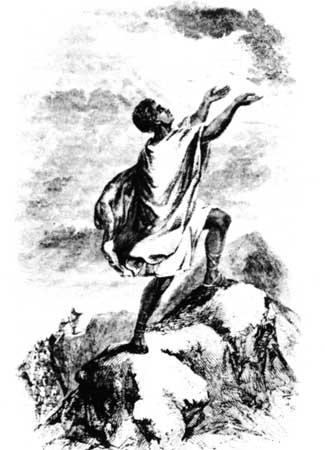
12016-12-14T13:16:40-08:00Caitlin Downey521f243cb92cfaab1942063a8e5df11231bf5acc141101Liberia and the Centennial Exhibition - Liberia as it Is, wood engraving c. 1876plain2016-12-14T13:16:41-08:00Caitlin Downey521f243cb92cfaab1942063a8e5df11231bf5acc
12016-12-13T13:02:09-08:00Uncle Tom's Cabin and African Colonization8Should They Stay or Should They Go?plain2016-12-16T07:43:49-08:00When Stowe published Uncle Tom’s Cabin, the American Civil War was nine years into the future and the questions of nation-wide emancipation and how integrate thousands of former slaves were open for debate. One of the solutions born from this debate was African colonization: encouraging free African-Americans to immigrate to Africa (or simply deporting them). The republic of Liberia was founded in 1821 by the American Colonization Society to put the immigration plan into action, and by the end of the Civil War 15,000 Americans had settled there (Stowe 393).
African colonization was popular with white Americans for a number of reasons. Some of the white arguments were blatantly racist: free African-Americans had no place in a “white” society and a “white” country, and it would be better long-term for white Americans and free black Americans to live separately. Others feared violent retribution for slavery, citing slave revolts as evidence of African-Americans’ innate barbarity and brutish tendencies. Some arguments were more subtly racist, claiming that introducing African-Americans (who were literate, skilled Christians) to Africa would bring “civilization” to a “heathen” land. Some white proponents encouraged African colonization out of concern for African-Americans’ welfare: even though free African-Americans were free, they were still in danger of being (re)enslaved and faced discrimination in every aspect of their lives.
Some black immigrants and supporters of African colonization, such as Martin Delany (author of the 1852 tract The Condition, Elevation, Emigration, and Destiny of the Colored People of the United States) agreed with white colonization supporters that they did not fit into “white” American society and never would. “White” society had never welcomed black people and was not likely to change; even after the abolition of slavery, the majority of black people lived in poverty and in constant fear of racist violence. African-Americans, black proponents argued, needed to return to the one place where they had prospered: Africa, their ancestral home. In Africa, they would not be “black”, they would be ordinary citizens, unburdened by racist prejudices and assumptions. In a new country, African-Americans could leave behind their slave past and reinvent their lives.
Other African-Americans had no intention of leaving. David Walker, author of the highly-publicized Appeal to the Colored Citizens of the World (1829), warned readers that African colonization was another white attempt to subjugate people of color, this time by convincing them that America was a “white” country that African-Americans did not have the right to live in (Walker 55). Walker argued that African-Americans (all people of color, really) should stand their ground and refuse to leave; if all men were truly created equal, then African-Americans had as much of a right to settle in America as any white person. If anything, African-Americans had more of a right to stay than white Americans, as America’s wealth and splendor had been built on the backs of African slaves.
At the end of Uncle Tom’s Cabin, George Harris and his family choose to immigrate to Liberia. George was content to live in Canada, but he still felt he never quite fit into “white” Canadian society, despite his light complexion. George identified more with his black mother’s family and culture than his white father’s, and immigrated to Liberia out of a desire to return to his African roots (Stowe 393). He was also attracted to the idea of a building a new nation from the ground up, at getting the chance to help create new, free republic that would one day take its place among the other free nations of the world (Stowe 394). It is likely that Stowe chose to have George and his family move to Africa out of concern for their imagined wellbeing in a “white” society, even in a country where slavery was illegal. However, her concern was misguided. The argument that black Americans should leave the United States “for their own good” ultimately and wrongly places the blame on black Americans for their plight instead of the racist white society that created an environment so intolerable of racial differences.