Exploratory Essay : Climate Change
Climate change, which can also be referred to as global warming, refers to the average change (rise) in the earth’s temperature. Climate change is caused by a number of reasons; however, these reasons can be divided into two major causes: natural causes and human activities. One of the natural causes that have contributed to climate change is volcanic eruptions. These eruptions discharge both carbon dioxide and sulfur dioxide which are called aerosols. As said by NASA, “Volcanic Aerosols can block a percentage of sunlight and cause a cooling that may last for 1-2 years.” This cooling can cause a disruption in the earth’s climate for a long period of time. Another natural cause for climate change are ocean currents. The ocean makes up 71% of the earth and can absorb majority of the suns radiation. When there is wind, ocean currents are driven and can disturb them. Also, oceans plat a big role in the concentration of carbon dioxide. These disturbances in the ocean patterns cause a fluctuation in the carbon dioxide the earth is receiving and letting out into the atmosphere. This can also cause a change in the earth’s climate. (CSI, Paragraph 3-6)
Humans also play a big role in the disturbance of the climate on the planet. Fossil fuels play an enormous role in this issue. In the 19th century, fossil fuels were being burned big time for usage in factories. These emissions would be emitted into the atmosphere and cause the depletion of the ozone layer. Humans are also to blame for the consumption of natural resources. These natural resources are used for construction, industries, transportation and for own human consumption. Water, oil, coil, and forests/timber are a few of the top ten natural resources that are used heavily by humans all over the world. (Rinkesh) Due to this, greenhouse gas emissions have gone up immensely. According to the United States Environmental Protection Agency, greenhouse gases are gases that “…trap heat in the atmosphere…” The danger of these gases comes to play when these gasses stay trapped in the atmosphere for years and result in making the planet warmer. (EPA, paragraph 1)
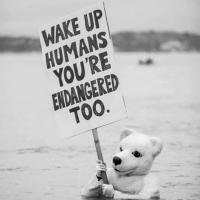
One of the biggest effects that climate change has had on the planet is the rise of sea levels and the shrinking ice sheets. NASA reports that, “The planet’s average temperature has risen about 2.0 degrees Fahrenheit since the late 19th century…” (NASA, section 3) This warming of the planet has caused ice caps to shrink and sea levels to rise due to the melting of these ice caps. These effects have been seen greatly in the Arctic, where melting of ice caps and the rising of sea levels is nothing new. Alun Anderson, a professor at Duke University, explains how climate change affects the oceans by saying, “White ice reflects sunlight back into space like a giant mirror, but when it turns back into dark water, the heat is soaked up instead. The seas then warm, the ice melts and even more heat is absorbed in a destructive feedback loop that amplifies temperatures.” Sea levels can rise to potentially high levels and can cause mass destruction to society due to flooding and erosion. (Anderson, pp 53) Nonetheless, these effects don’t affect humans only, they affect animals too. The habitats of various species living underwater will be lost like those of fishes and plants. The most alarming one, however, is the habitat destruction of the polar bear. (Nationalgeographic.com)
One of the most alarming places in which climate change is affecting greatly is the Arctic. The arctic is one of the locations on the earth where the vast majority of our sea ice is located. It is also home to a large amount of species. However, this has been changing over the last couple of years due to the rise of temperatures and the melting of ice. When the Arctic loses ice, what is left is rocks and water. These do not help the issue much since they trap heat from the sun making the ocean even warmer. The shifts in temperatures in the Arctic are causing drastic consequences to not only the animals but to the planet as well. Fisheries in the Arctic may begin to disappear along with animals that live on the ice. Coastal communities that live by the Arctic will suffer more storm damage and forest fires are more likely to occur. Due to the warming of these waters, the Gulf Stream is likely to slow down bringing warm water and temperatures to north-western Europe. (wwf.panda.org) The melting of ice is causing mass destruction of habitats to animals like the polar bear.
Polar bears typically live 20-30 years. Both males and females reach maturity from ages 4-5. Female bears are able to conceive when they reach maturity, yet males start mating around the age of 8-11. Polar bears are found in a vast area of land all throughout the Arctic and other polar regions of the planet. Polar bears are marine animals and spend most of their time in the Arctic sea. Their diet consists of seals, whales, and vegetation (rarely). Their sharp claws and thick fur help them survive in the icy area in which they live in. The World Conservation Union estimates that there are between 20,000-25,000 polar bears in the world. However, these numbers are drastically going down due to climate change. Polar bears depend heavily on sea ice so the melting of it makes them very vulnerable in this situation. Not only do they rely on the ice for their daily activities which include resting, traveling and mating, but they also rely on it for food consumption. (Defenders.org) Majority of their prey are found on the ice and melting ice caps could trouble the bears in their search for food. In a study addressed in Worldwildlife.org, it was said that 40% of the polar bear population was lost in northeast Alaska and the Northwest territories. This rate is alarming and scientists predict that American polar bears could face extinction in the next 50 years if action isn’t being taken to help them. (Worldwildlife.org)
In order to understand the magnitude in which climate change is affecting polar bears, taking a closer look at their habitat is crucial. As said earlier, polar bears use up ice in order to carry about their daily activities. As USGA states, “Over the past 25 years, summer sea ice melt period has lengthened, and the summer sea ice cover has declined by over half a million square miles.” According to studies made by the Alaska Science Center, longer ice-free seasons have reduced the survival of polar bears and a population decline in the past 20 years. In their observations they have noticed cannibalism between polar bears as a result of lack of food. Scientists are still trying to understand how polar bears are moving and changing in response to the climate change in order to predict their future. (Alaska.usgs.gov)
The destruction of the habitats of this animal is crucial since they play a big role in the ecosystem. Polar bears are known as umbrella species in which they connect to various other animals in the food web. They are at the top of the food chain in the Arctic and Antarctic. The decreasing population of the polar bear will cause an uprising in the population of the animals polar bears feed on. Since there are less polar bear eating animals such as seals and whales, more and more of these animals will remain alive and disturb the balance of the ecosystem. This causes a big disturbance since for example; a rise in seals would mean more seals eating fish. This will cause the population of fish to decrease for human consumption and humans will eventually begin to hunt for other animals thus decreasing their population and so on. (defenders.org)
Climate change will be an ongoing problem for years if humans don’t contribute to helping with climate change. Even though climate change can be caused naturally, humans have contributed to the rise in the earth’s temperature in many different ways. This not only causes problems in society and to the human population, but it also has a great impact on animals too. The polar bear, being one of the animals that have greatly been affected by this change in climate is heading towards extinction. Not only is their habitat being destroyed, but their food source is also melting away with the ice. Climate change is one of the biggest issues in today’s society and the advancement of this issue will cause a domino effect on many if not all ecosystems, including us humans.
This page has paths:
- Final Portfolio: How Did I Grow From The Beginning of The Semester to Now? Laura Lopez Lozano