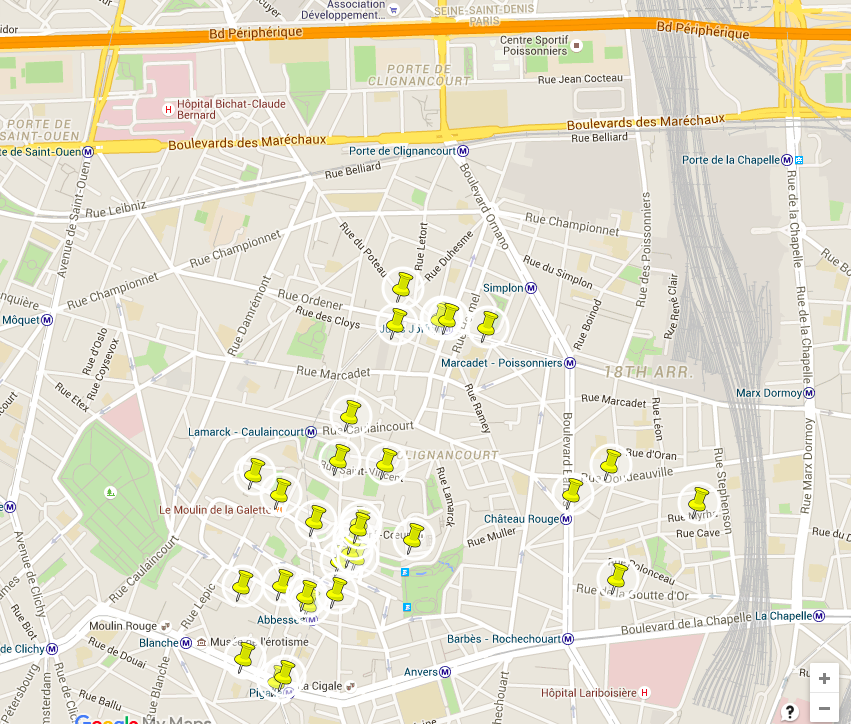
Like Harlem and like all the ghettos of the world. The men he saw through the window of the bus had whiter skins and less frizzly hair, but they were in other ways like Negroes in the United States. They adopted the same poses; “stashing” on the corners, ready for the scared of the ever-possible “trouble,” eyes sullen and distrusting, dressed in pegged pants, flashy shirts and narrow pointed shoes. He could almost hear them saying, “Whatchu putting down, man?” (86-7)
In this passage, Smith compares the neighborhood of la Goutte d’Or to neighborhoods in the USA that are largely populated by African Americans. He expands this comparison by way of their visibility on the street corner and their fashion sense. He says they “stash” on the street corner, which suggests that they are in hiding but also highly visible. The street corner increases their visibility, but their eyes are not engaging through displaying sullenness and distrust. The passage also implies that their hiding is due to the threat of “trouble.” This trouble they hide from is being harassed for As soon as he stepped out of the car, Ricky checked out the crew of tan-complexioned teenagers who were checking him out. There were four of them. Ricky figures they were Beurs—the French-born children of North African immigrants. They stood on the walkway leading to the building that, when compared with most of Paris’s architecture, looked like a prison. They each sported a shiny warm-up suit, immaculate basketball shoes and a fashionable banlieue homeboy haircut: straight and greasy on the top, totally shaved on the sides and the back of the head. (261)
Here, Lamar discusses the visibility and fashion sense of the “