Thanks for your patience during our recent outage at scalar.usc.edu. While Scalar content is loading normally now, saving is still slow, and Scalar's 'additional metadata' features have been disabled, which may interfere with features like timelines and maps that depend on metadata. This also means that saving a page or media item will remove its additional metadata. If this occurs, you can use the 'All versions' link at the bottom of the page to restore the earlier version. We are continuing to troubleshoot, and will provide further updates as needed. Note that this only affects Scalar projects at scalar.usc.edu, and not those hosted elsewhere.
Refuge and Return : Stories of a Resettled Community in El SalvadorMain MenuRefuge and Return: An IntroductionThe History of Our CommunityOral HistoriesArchive of PhotographsContributorsJoseph Wiltberger & Carlos Baltazar Flores, coeditorsc75d2c28ecf735c18870b54b176b24dd7099201d
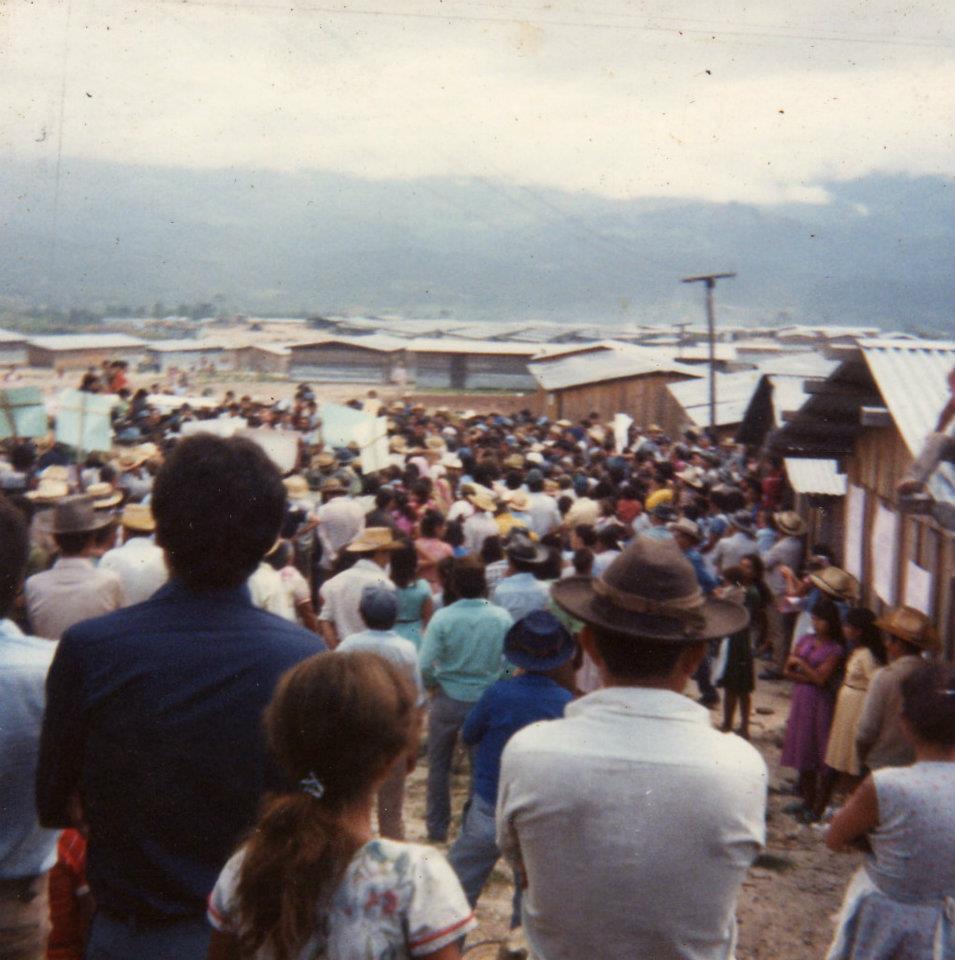
Assembly with the government commission of President Duarte and the refugees when they decided to return from Mesa Grande to El Salvador, 1987
12019-07-30T13:24:25-07:00Joseph Wiltberger & Carlos Baltazar Flores, coeditorsc75d2c28ecf735c18870b54b176b24dd7099201d169763Assembly with the government commission of President Duarte and the refugees when they decided to return from Mesa Grande to El Salvador, 1987plainpublished2020-01-11T16:48:19-08:00Joseph Wiltberger18e3f47e29a835cf09d67bd8516fd45738cef754
This page has tags:
12019-08-08T18:49:08-07:00Joseph Wiltberger & Carlos Baltazar Flores, coeditorsc75d2c28ecf735c18870b54b176b24dd7099201dThe ReturnJoseph Wiltberger14structured_gallery899039published2022-05-22T13:32:12-07:00Joseph Wiltberger18e3f47e29a835cf09d67bd8516fd45738cef754
12020-01-11T16:25:38-08:00Joseph Wiltberger & Carlos Baltazar Flores, coeditorsc75d2c28ecf735c18870b54b176b24dd7099201dThe Decision to ReturnJoseph Wiltberger3structured_gallerypublished2022-05-17T22:12:56-07:00Joseph Wiltberger18e3f47e29a835cf09d67bd8516fd45738cef754
This page is referenced by:
1media/296750_105150442930273_2051371197_n.jpg2018-05-12T20:48:28-07:00The Return from Mesa Grande30plainpublished2022-05-17T21:20:37-07:00The inhabitants of Mesa Grande grew tired of living as refugees and longed to return to their land. They started to make plans for their resettlement. They hoped that peace would soon return to El Salvador. The Salvadoran government strongly opposed the idea of the refugees’ return, arguing that the repatriations were supported by the FMLN and were not in the national interest, since the war continued. UNHCR also did not support the initiative. So, the refugees themselves orchestrated the resettlement, forming a committee that decided the terms and strategies of the resettlement.
They began preparing the return of thousands of refugees in a series of trips. In the end, Salvadorian officials started to negotiate with the commission of refugees of Mesa Grande, who insisted that these would-be massive repatriations rather than a gradual process of small groups, despite the resistance of military officials.
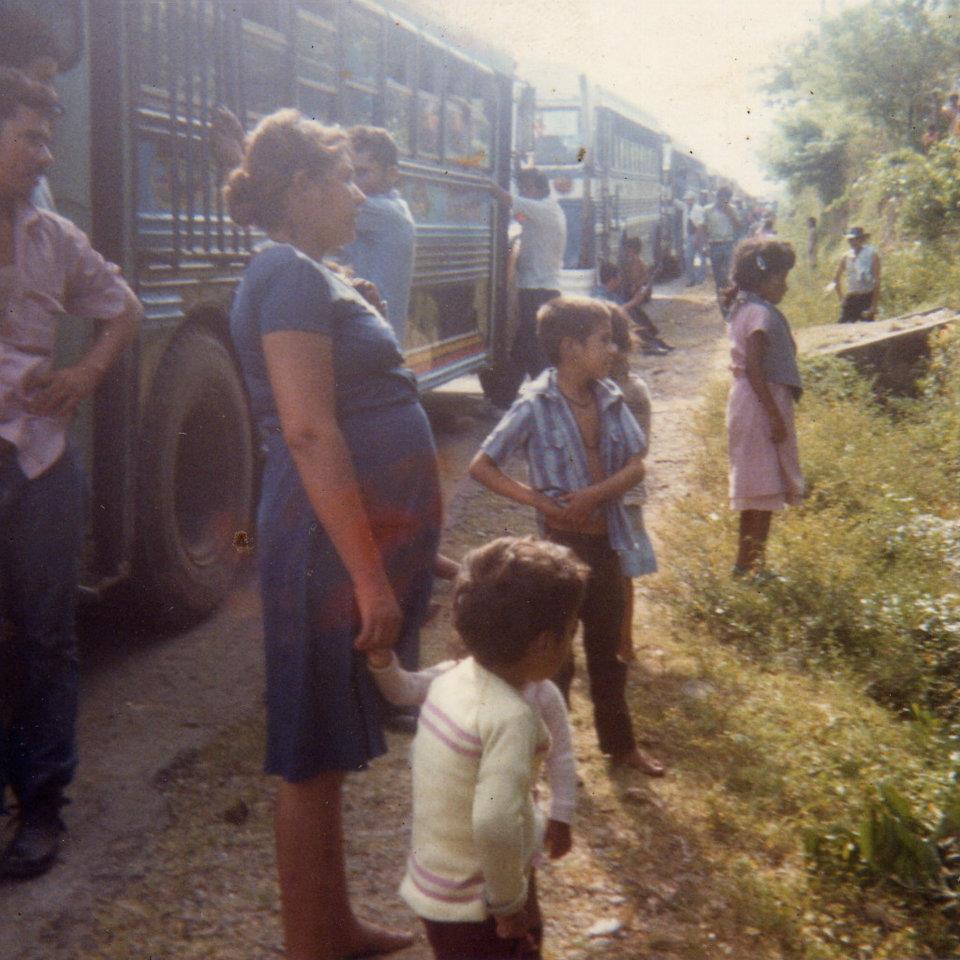
The series of massive resettlements of thousands of refugees to the north of El Salvador was a well-organized effort and a very risky one. In October of 1987, more than four thousand refugees returned to El Salvador to resettle five communities that had been collectively and strategically chosen in the departments of Chalatenango, Cabañas, and Cuscatlán. This became the largest resettlement in the history of Latin America. This initial resettlement, which included Guarjila and its neighbor, Los Ranchos, was the first of a total of seven resettlements during the following two years. Those that came from Mesa Grande were willing to make the trip by foot, but at the last minute UNHCR supported them with buses to transport people. On the border of El Salvador and Honduras, a line of buses extended for kilometers as Salvadoran military officials interrogated and registered all the people that wanted to cross over to Salvadoran territory. The presence of international observers facilitated the crossing. The people of Guarjila remember that it was a hot and long day. Some looked for shade and slept under the buses. But they also felt immense joy to return to their country. The road to the abandoned hamlet of Guarjila was impassable by bus. The last part of the trip was done by foot, and they had to prune the brush that was in the way.