Thanks for your patience during our recent outage at scalar.usc.edu. While Scalar content is loading normally now, saving is still slow, and Scalar's 'additional metadata' features have been disabled, which may interfere with features like timelines and maps that depend on metadata. This also means that saving a page or media item will remove its additional metadata. If this occurs, you can use the 'All versions' link at the bottom of the page to restore the earlier version. We are continuing to troubleshoot, and will provide further updates as needed. Note that this only affects Scalar projects at scalar.usc.edu, and not those hosted elsewhere.
Early Indigenous LiteraturesMain MenuThe Child Who Would be Sovereign: Settler Colonial Frustrations and the Figure of the Child in Gertrude Simmons Bonnin's American Indian StoriesBy: Kai ChaseIllicit Relations: The Challenges and Possibilities of Black and Indigenous Relationssoumya rachel shailendraLegibility and Ambivalence in 19th Century Indigenous Women's WritingAn exhibit on E. Pauline Johnson and Sarah Winnemucca by Emma CohenLyric Histories: An Investigation of Early Black (and) Native America through Poetic Vignettesby Kira TuckerMarriage and Empire in 19th Century Native American Women's Literatureby Angad SinghNot-not blood quantum: the Dawes Act and ambivalent Indigeneityby Yasmin YoonReading Indigenous Authorial Presence in 18th- and 19th-century ParatextsTitle Page for Isabel Griffith-Gorgati's ExhibitResistance on and off the Page: A Collaborative Conversation between Black and Indigenous Literary ContributorsFeaturing James Printer, Katherine Garret, Phillis Wheatley, and John Marrant (17th-18th Century Early Print Culture Participants)- By Lauren JohnsonSpiritual Armies, Resurrected Bones, and “Boundless” Continents: How Indigenous Activists in Early New England Reconfigured Puritan Millennialist NarrativesFeaturing texts of Samson Occom, William Apess, and the Wampanoag Bible. By Surya MilnerSovereignty or Removal: The Conflicting Indigenous Policies of 1835 in the Continental United StatesJulia GilmanWhat Does Water Do For Indigenous Peoples of the Great Lakes Region?Featuring Heid E. Erdrich, Simon Pokagon, Black Hawk, and Simon Kofe by Sarah Nisenson(Re)introducing Black Hawk and The Life (1833)BHR 1-IntroYasmin Yoonf7f231e474bf43796f973cd0ee560919050f7427Lydia Abedeen321b94302eca10e499769fd0179e64cd33bc4cd5Kira Tuckeracf97d948460e98cd439646cc2db7ae17c5ebd9dsarah nisenson7cb5d2c1682fbd145e76716f3924f03bf25c616aKai Chased7cab5968a3a916efd1a14a48cc4832d5d5514aeSoumya Shailendra86c246fcc4aea83787381bffd2b839885bef5096Bennett Herson-Roeserc8289125445a56c819045a0091daf0402b3e0875Surya Milner077f837f3d662fd5ef9055f8258e5c47bb11f714Julia Gilmanb860a8277eea484f91a1a9e0423cab4b52bae522Lauren Johnson98dac03e7c9c1ad41e1c0a8583704e55802f98baAngad Singhd2b8d1d68ec374981c9e99b7cb400803bc678231Emma Cohen146e757b9fc3b3b416edecbf79592e8d743d4ba1Charlotte Goddu2d4c020870148128c7824ece179e04cffe180d95Isabel Griffith-Gorgati985a05928a67a856791fffac3dbba8acc85f6f37
Conclusion
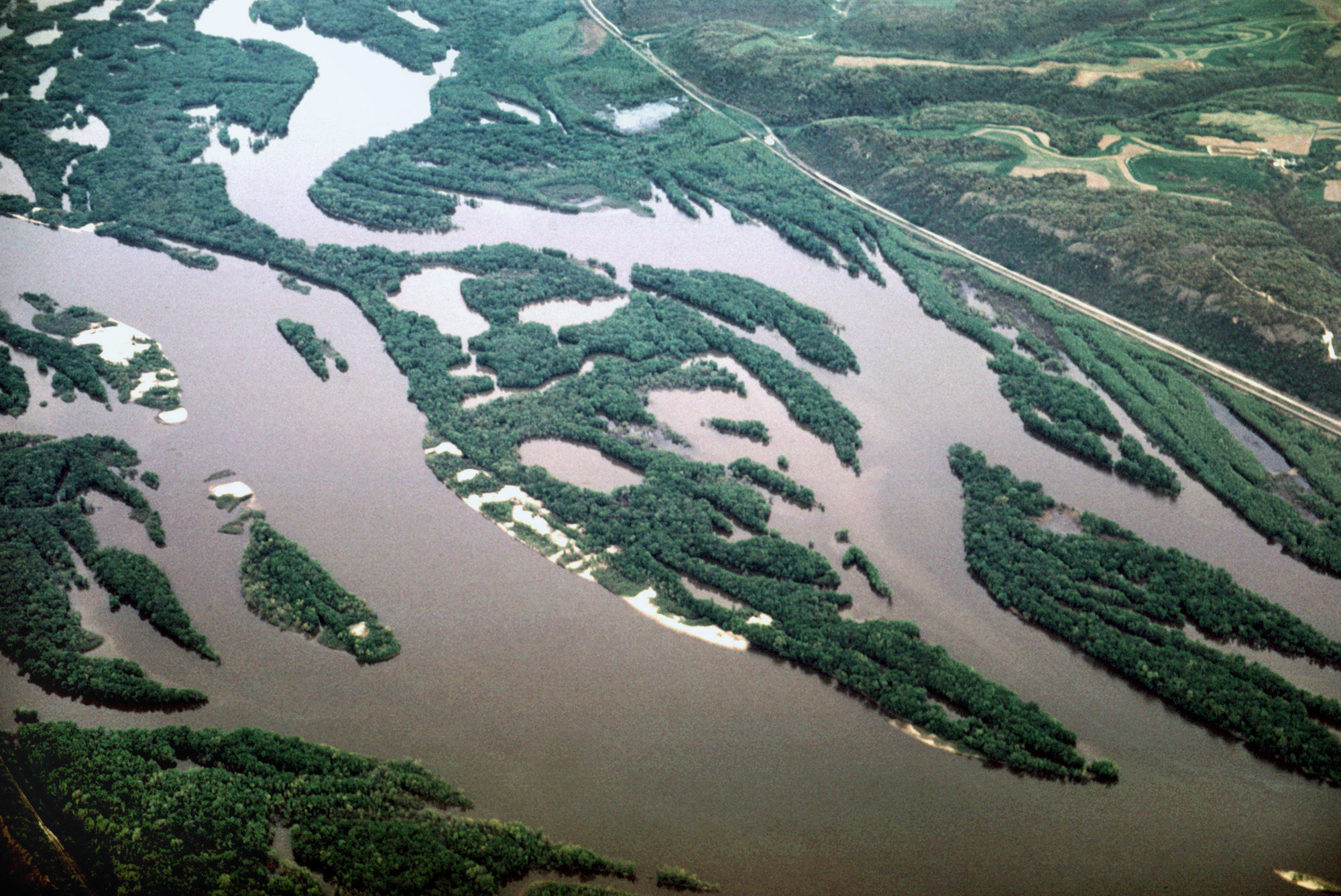
1media/mississippi river.jpeg2022-12-06T07:25:37-08:00sarah nisenson7cb5d2c1682fbd145e76716f3924f03bf25c616a416965plain2022-12-07T06:30:21-08:00sarah nisenson7cb5d2c1682fbd145e76716f3924f03bf25c616aFor Indigenous peoples in the Great Lakes region, the centrality of water extends beyond its provisionary status and grounds Potawatomi, Sauk, and Ojibwe place-making. The flow of the river ecologically manifests temporal copresence and simultaneity, allowing these Indigenous authors a way to articulate the ongoing violence of settler colonialism upon their lands in the form of dispossession.
Contained and confined by the settlers’ appetites for Indigenous objects and exhibits, Simon Pokagon negotiates legibility through transformative processes of birch bark booklet production and frames his biting critiques of settlers and fairgoers in watery language. For Black Hawk, there is little distinction between landed places and watery ones which reformulates dispossession in terms of the interrelationality between his people and the water that constitutes them and their homelands. Heid Erdrich centers temporal and geographic copresence in the Mississippi River to refute the myth of settler colonialism that relegates Indigenous peoples to archival statuses, imagines them as caricatures, and attempts to erase them from the endless forward momentum of settler colonial nation building. Simon Kofe, in his introduction to Tuvalu’s presence in the metaverse, situates his peoples’ homeland on the brink of an inevitable physical disappearance and explains the need to map it virtually to preserve and protect future generations’ sovereignty and place-making potential.
In the wake of climate change, a process intimately fused with settler colonialism and imperialism, Indigenous peoples reassert their connection to place in the hopes to preserve these spaces in spite of their expected demise and transformation. The violence of settler colonialism not only dispossesses Indigenous peoples of their homelands, but it also creates ruptures in the knowledge of how to care for these spaces. These authors insist on the situatedness of their peoples; they highlight the loss of familiarity, intimate connectivity, and relational care between places and its inhabitants when Indigenous peoples are dispossessed. New technologies make possible new ways of articulating and preserving these relationships, and as Indigenous peoples have been forced to do since first contact with settlers, renegotiating these relationships with and to watery places is not just a method of endurance, but one of resistance, survival, and a means to flourish.
This page has paths:
1media/mississippi river.jpegmedia/mississippi river.jpeg2022-11-30T16:35:18-08:00sarah nisenson7cb5d2c1682fbd145e76716f3924f03bf25c616aWhat Does Water Do For Indigenous Peoples of the Great Lakes Region?sarah nisenson36Featuring Heid E. Erdrich, Simon Pokagon, Black Hawk, and Simon Kofe by Sarah Nisensonimage_header2022-12-07T14:35:53-08:00sarah nisenson7cb5d2c1682fbd145e76716f3924f03bf25c616a